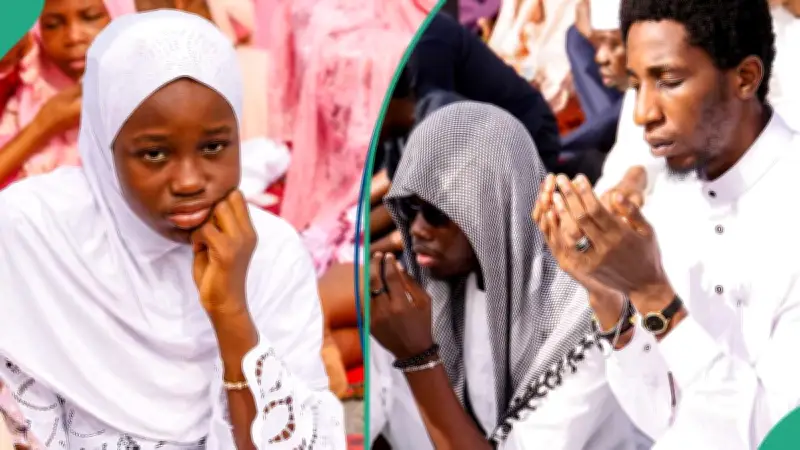
Nigeria has maintained its position as the African country with the largest Muslim population, recording an estimated 104.7 million Muslims in 2024. This figure places Nigeria ahead of Egypt, which follows with 90.4 million Muslims, according to newly released data from StatiSense.
Nigeria's Lead Over Egypt Widens
The gap between Nigeria and Egypt now stands at approximately 14.3 million people, underscoring Nigeria's significant demographic weight in the continent's Islamic landscape. Combined, the two nations account for over 195 million Muslims, representing a substantial share of Africa's total Muslim population.
The data, which reflects 2024 estimates, highlights the continued dominance of West and North African countries in the rankings. Algeria, Sudan, and Morocco complete the top five, with Muslim populations of 39.4 million, 38.4 million, and 35.5 million respectively.
Top 10 African Countries by Muslim Population
According to the StatiSense data, the complete list of the 10 African countries with the largest Muslim populations in 2024 is as follows:
- Nigeria — 104.7 million
- Egypt — 90.4 million
- Algeria — 39.4 million
- Sudan — 38.4 million
- Morocco — 35.5 million
- Niger — 21.7 million
- Mali — 19.6 million
- Senegal — 15.5 million
- Burkina Faso — 14.2 million
- Somalia — 12.1 million
Africa's Role as a Global Islamic Hub
The combined Muslim population of these 10 countries exceeds 391 million, reinforcing Africa's position as one of the world's major centres of Islam. The continent's Islamic heritage is deeply rooted in history, culture, and religion, with significant Muslim communities spanning from the Atlantic coast to the Horn of Africa.
While North and West Africa dominate the rankings, East African nations also contribute significantly to the continent's Muslim population, reflecting the widespread diffusion of Islam across the continent.
Context: Public Holidays in Africa
In related news, several African countries are set to observe public holidays in August 2026, including independence anniversaries, national commemorations, and religious festivals. Notable observances include Benin's Independence Day on August 1 and Nigeria's Eid Milad un-Nabi celebration later in the month.
These holidays highlight the diverse historical, cultural, and religious traditions that coexist across the African continent, with Islam playing a central role in many nations' identities.