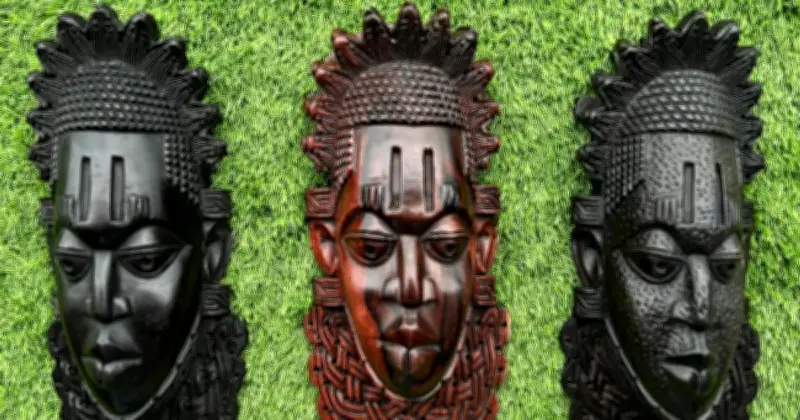
Joseph Alufa Igbinovia Obayagbona, a carver from Benin City, was given one of the most important commissions of his life in 1976: to recreate the famous ivory mask of Queen Idia for Nigeria's FESTAC '77 festival. However, he was never paid for his work, and the official credit went to another artist, Erhabor Emokpae. A 2024 biography titled 'Pa Joseph Alufa Igbinovia Obayagbona: The Account' argues that Obayagbona, not Emokpae, was the true carver of the mask, a claim that remains contested.
Why Nigeria Needed a New Queen Idia Mask
The country was preparing to host FESTAC, a festival meant to bring the Black world together in Lagos. Organisers wanted the real thing for its emblem: the original ivory mask of Queen Idia, looted from Benin City by British soldiers in 1897 and held ever since by the British Museum in London. Nigeria asked to borrow it, even briefly, but the museum refused, citing fragility. Reports at the time said several million pounds had been offered for the loan; however, it made no difference. So Nigeria decided to build its own.
The Commission and the Carvers
Obayagbona was among several carvers in Benin City selected for the task of recreating Idia's likeness from scratch. The mask he carved would go on to become the face of the entire festival, cast in bronze and printed across posters, murals, clothing and stage sets throughout FESTAC '77.
Someone Else Took the Credit
The mask's official credit went instead to Erhabor Emokpae, a sculptor and painter already well known in Nigerian art circles. Emokpae died in 1984 and has since been remembered as one of Nigeria's most significant modern artists, with the FESTAC mask listed among his defining works in galleries, textbooks and tributes. Emokpae is known to have overseen the overall visual branding and graphic/bronze adaptations for the festival. Obayagbona's name rarely appears in official documentation of that history.
The Aftermath and Unresolved Legacy
A biography of Obayagbona's life, along with reporting on his present circumstances, argues that the credit was misplaced from the start, pointing to accounts from the US Library of Congress and figures present at the time as support. Whether the full record will ever be corrected remains unclear. No reward or recognition followed the commission that was promised to Obayagbona. He was also never paid, according to his family's account, for a separate piece called Olokun, created around the same period for the festival. Decades later, he is still alive in Benin City, his eyesight and hearing failing, living in an incomplete building that he started in 1981 but could not finish, giving no hint of the national symbol he may have helped create.
The bronze mask from FESTAC '77 remains one of the most recognisable images in Nigerian history, a symbol of cultural pride invoked whenever the subject of looted African art comes up. The original it was based on is still in London, part of an unresolved restitution debate that continues today, tied to a new museum being built in Benin City to eventually house it.