Sixteen years ago, on October 1, 2010, Nigeria's 50th Independence Day celebration at Eagle Square in Abuja was shattered by a series of bomb explosions that killed at least 12 people and injured 17 others, according to Al Jazeera reports at the time. The attack occurred as President Goodluck Jonathan inspected a guard of honour, and despite the chaos, the celebration continued. Henry Okah, a MEND figure, was later convicted in South Africa, while other alleged conspirators, including Charles Okah and Obi Nwabueze, were sentenced to life imprisonment in Nigeria.
Warning Before the Blasts
About an hour before the explosions, journalists received an email from a person identifying himself as Jomo Gbomo, the spokesman for the Movement for the Emancipation of the Niger Delta (MEND). The message warned that explosives had been planted around the Independence Day venue and urged people to leave the area, specifically advising them to keep away from vehicles and rubbish bins. Security officials had already taken measures, including removing abandoned vehicles, but the attackers still managed to get explosives close to the celebration area.
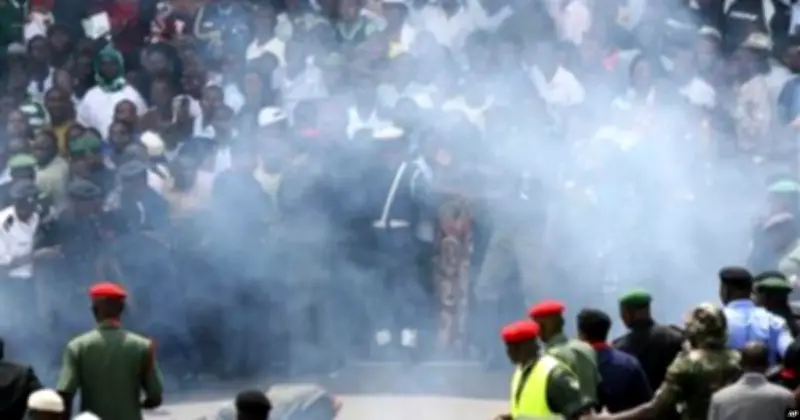
The first major explosion occurred outside the main celebration area, followed minutes later by a second car bomb that appeared to strike as emergency workers and police rushed toward the first blast. Another smaller blast was reported closer to Eagle Square. Contemporary accounts differed on casualties: Al Jazeera reported at least 12 killed and 17 injured, while an early Guardian report put the confirmed death toll at eight. Later court proceedings produced different figures depending on whether they referred to victims who died at the scene, those taken to particular hospitals, or overall casualties.
President Jonathan Remained at Eagle Square
The attack happened while the country's political leadership was gathered nearby. President Jonathan was inspecting a guard of honour when the explosions occurred. Despite the chaos unfolding just outside the security perimeter, the President was not evacuated. He remained at Eagle Square, completing the review of the military parades and staying until the event concluded. His traditional Independence Day broadcast had already aired earlier that morning.
The celebration itself did not stop. Army bands continued performing, children continued with parts of the programme, and military displays went ahead. The extraordinary images of a national celebration continuing while an attack had just taken place nearby captured the strange reality of that Independence Day. For many Nigerians, October 1 was usually associated with speeches, parades, flags and celebrations, but in Abuja that year, those familiar symbols were unfolding against the sound and aftermath of a bombing.
Why the Attack Happened
The attack came at the end of a decade in which the Niger Delta had been consumed by militant activity. Groups including MEND had fought the Federal Government over oil revenues, environmental degradation and the treatment of communities in the oil-producing region. Just a year earlier, the Federal Government had introduced an amnesty programme for militants who surrendered their weapons. The programme reduced violence in the Niger Delta and offered former fighters financial support, training and opportunities for reintegration. The Independence Day bombing therefore represented a dramatic return of the conflict to the national stage.
The group claiming responsibility presented the attack as a political statement, arguing that 50 years after independence, the grievances of the Niger Delta had not been resolved. But responsibility quickly became contested. MEND claimed the attack, but there were also denials and disagreements over whether the organisation's leadership had authorised it. Jonathan said the bombings were carried out by terrorists rather than describing them simply as an operation by MEND, while Nigerian security officials pursued individuals they believed were connected to the plot.
Convictions and Aftermath
Henry Okah, a senior figure associated with MEND living in South Africa, was arrested there shortly after the bombing and charged in connection with the attacks. He denied involvement. His case went before a South African court, where he was convicted in 2013 on terrorism-related charges connected to the Abuja and Warri bombings. He was sentenced to 24 years in prison, with part of the sentence specifically relating to the Abuja attack.
In the years that followed, other people accused of involvement were prosecuted in Nigeria. Edmund Ebiware was convicted over allegations that he had prior knowledge of the planned attack and failed to disclose the information to authorities. His conviction and life sentence were later considered on appeal. In 2018, a Federal High Court in Abuja sentenced Charles Okah and Obi Nwabueze to life imprisonment after finding them guilty in connection with the bombing.
Court proceedings years later continued to revisit the victims and the evidence surrounding the attack. Reflecting on the tragedy, Jonathan later described October 1, 2010, as "one of the darkest phases in the history of Nigeria." He also said, "It is extremely painful that when some Nigerians are … working hard to take care of their families and train their children, others are busy planning to kill people and intimidate." The day Nigeria turned 50 became a stark reminder that the country's political and security problems had not disappeared simply because the nation was marking an important anniversary.