Jesse Jackson: The Civil Rights Preacher Who Championed Lost Causes
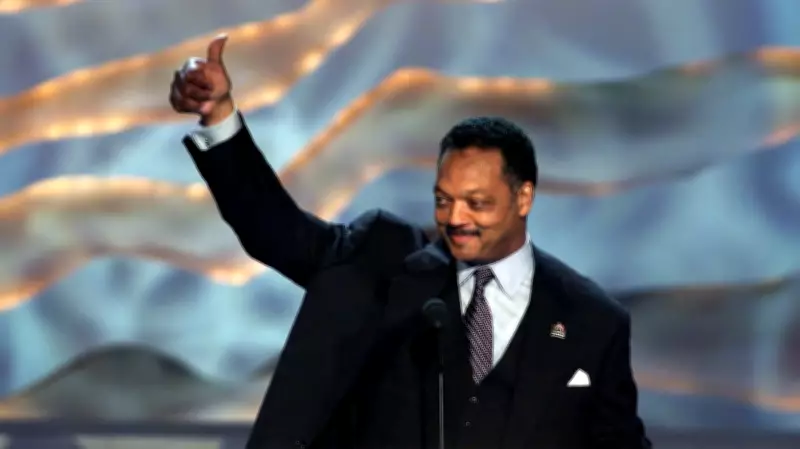
Jesse Jackson, the African-American civil rights preacher who recently passed away at the age of 84, was described by the New York Times's Peter Applebome as "the nation's most influential Black figure in the years between the civil rights crusades of the Rev. Dr Martin Luther King Jr. and the election of Barack Obama." Remarkably, Jackson never held any elected office, yet his legacy is deeply woven into the fabric of American history through his relentless civic struggles and two memorable U.S. presidential campaigns in 1984 and 1988.
Early Life and Formative Years
Born Jesse Louis Burns on October 8, 1941, in Greenville, South Carolina, Jackson faced early hardships. His mother, Helen Burns, was a 16-year-old cosmetologist, and his father, Noah Robinson, rejected him, leaving lasting emotional scars. Adopted by his mother's husband, Charles Jackson, he later lived with his grandmother, Mathilda "Tibby" Burns, who, despite being illiterate, encouraged his education by acquiring books from wealthy white families. Jackson recalled, "She never stopped dreaming for me." He attended the University of Illinois Urbana-Champaign on a football scholarship but faced racial abuse, leading him to transfer to North Carolina Agricultural and Technical State University, where he became student body president and married Jacqueline Lavinia Brown in 1962.
Civil Rights Activism and Mentorship Under Martin Luther King Jr.
Jackson's involvement in civil rights began with leading anti-segregation marches in Greensboro in 1963. He later studied at the Chicago Theological Seminary and was inspired by Martin Luther King Jr.'s "I Have a Dream" speech in 1963. After witnessing police brutality in Selma in 1965, he mobilized seminarians to join protests, meeting King, who became his mentor. Jackson joined the Southern Christian Leadership Conference (SCLC), heading its Chicago branch and organizing boycotts to pressure businesses to hire black workers. However, his self-promoting tendencies alienated many SCLC members. He was with King in Memphis in 1968 when the civil rights leader was assassinated, and Jackson's subsequent actions, including wearing a blood-stained sweater on television, sparked controversy and led to his suspension from the SCLC.
Presidential Campaigns and Political Influence
Jackson's 1984 and 1988 presidential bids were historic, making him only the second black candidate after Shirley Chisholm. His speeches at Democratic conventions galvanized supporters, with crowds chanting "Run, Jesse, Run." He advocated for full employment, healthcare, and taxing the rich, echoing King's push for economic equality. In 1984, he declared, "My constituency is the desperate, the damned, the disinherited, the disrespected and the despised." Despite winning 3.2 million votes in 1984 and nearly 7 million in 1988, his radical ideas were often cheered but not embraced by the centrist Democratic Party. His campaigns faced setbacks, such as his use of a racist slur and associations with controversial figures like Louis Farrakhan.
Legacy and Later Years
Jackson's work extended beyond the U.S., including anti-apartheid efforts in South Africa and peace missions in Africa as Special Envoy under President Bill Clinton, who awarded him the Presidential Medal of Freedom in 2000. He popularized the term "African-American" and advocated for black pride. However, his later years were marred by personal scandals, including fathering a child out of wedlock and his son's legal troubles. Diagnosed with Parkinson's disease in 2017, Jackson remained a symbol of resilience until his death. His funeral in Chicago was attended by dignitaries like South African President Cyril Ramaphosa, highlighting his global impact.
Jackson's legacy is complex: a preacher of lost causes who paved the way for Barack Obama's presidency, yet faced criticism for ambition and moral lapses. He will be remembered as a tireless advocate for civil rights and black dignity, whose efforts inspired generations across the Black World and beyond.