From Radio Waves to Lecture Halls: A Journalist's Academic Awakening
In a revealing conversation, Professor Owojecho Omoha, a former radio journalist turned academic, opened up about his unexpected transition from the newsroom to the classroom. This dialogue, initiated by columnist Tony Afejuku, delves into pressing educational issues and literary critiques, shedding light on the complexities of Nigeria's academic landscape.
A Fateful Career Shift
Professor Omoha recounted how destiny intervened in his life twenty-six years ago. "My dream was to be a journalist, and destiny was kind to me," he began. "I was thriving as a radio journalist in Makurdi with Radio Benue, owned by the Benue State Government, and even served as Secretary of the Benue State Council of the Nigerian Union of Journalists." However, a divine pull led him away from journalism into academia, a move he initially believed would offer a better environment. "When I left journalism for academia after twenty-six years of practice, I thought that the academia was better off or would be better off," he admitted. "I got into the classroom to be shocked." He hinted at undisclosed details that prompted this career change, leaving readers intrigued about the challenges he faced.
Debating King's College London's Grammar Policy
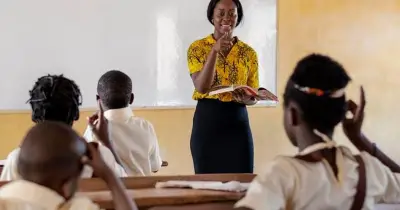
The conversation also tackled a controversial policy at King's College London, where lecturers are instructed to ignore students' poor grammar as part of a diversity and inclusion drive. Professor Omoha expressed strong skepticism, labeling it a revenue generation strategy disguised as inclusivity. "This is not applicable here in Nigeria and in Africa as a whole," he asserted. "It would mean nothing, but the end to the use of English." He predicted a decline in black student enrollment and a drop in academic standards, arguing that such measures could admit only those with subpar language skills, akin to the "namu, namu" fallouts in Nigeria. This critique highlights global educational tensions and their potential ripple effects on Nigerian students abroad.
Literary Insights and Humorous Critique
Shifting to literary matters, Professor Omoha discussed Professor Sophia Ogwude's recent book, published by Aboki Press in Makurdi. He praised her work with poetic flair, noting how it critiques Nigeria's socio-political space through fiction. "What makes Sophia Ogwude's criticism of Nigeria's socio-political space fiction 'discourse for all seasons' is the science of thieving in the Nigerian novel," he explained. He referenced authors from Wole Soyinka to Chimamanda Adichie, emphasizing how thieving themes expose leadership flaws. Despite his humorous tone, he assured that Professor Ogwude, his senior colleague at University of Abuja (now Yakubu Gowon University), would appreciate his insights, describing her as a "radiant scholar."
Reflections on Journalism and Academia
Professor Omoha's journey underscores a broader narrative about career transitions and the realities of Nigerian education. His initial optimism about academia contrasted with the shocks he encountered, suggesting unmet expectations in the sector. This story resonates with many professionals navigating similar shifts, offering a candid look at the intersections of media, education, and literary criticism in Nigeria.
As the conversation concluded, Professor Omoha hinted at more to come, leaving audiences eager for further revelations. His experiences serve as a reminder of the dynamic paths individuals take in pursuit of their dreams, shaped by destiny and personal resolve.