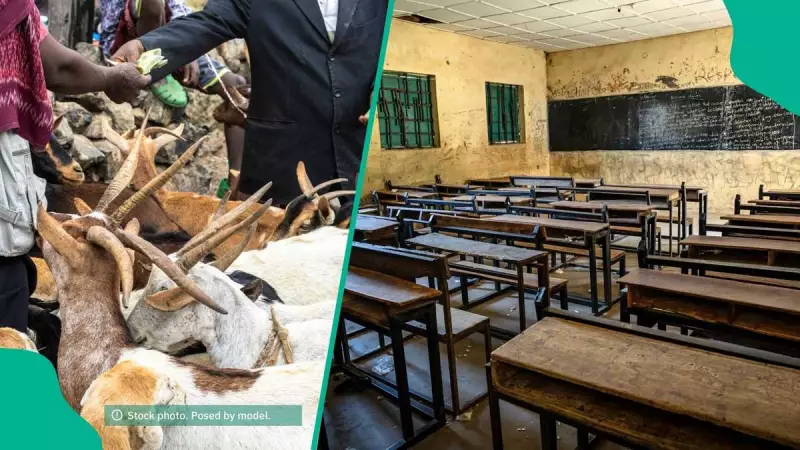
Kwara South Faces Educational Crisis as Schools Remain Shut While Cattle Markets Resume
Residents and stakeholders in Kwara South have expressed deep concern over what they perceive as contradictory government actions regarding insecurity in the region. While schools have been closed for months due to bandit threats, cattle markets previously associated with banditry have been allowed to reopen, sparking outrage and questions about priorities.
Prolonged School Closures Threaten Youth Future
Educational institutions across Kwara South have remained shuttered since November 2025 following state government directives aimed at protecting students and staff from rising insecurity. The closure, initially described as temporary, has now extended for several months, leaving thousands of children without access to formal education.
Sheikh Dr. Taofiq Sanusi, the Chief Imam of Oro, voiced strong criticism of this situation, questioning why children in Kwara South bear the brunt of educational disruption when insecurity affects multiple areas. "The future of our children in Kwara South is at risk because of what is happening currently," he stated, highlighting the disproportionate impact on the region.
The religious leader emphasized the long-term consequences of educational deprivation, noting that "how can someone who does not have an education become a governor of the state in the future? How can he even be a commissioner in the future?" His comments reflect growing anxiety about leadership development and regional progress.
Cattle Markets Reopen Despite Security Concerns
In stark contrast to the ongoing school closures, cattle markets locally known as Kara have resumed operations after brief shutdowns. These markets were initially closed over alleged connections to banditry activities, but the restrictions were lifted within days, allowing economic activities to continue.
Imam Sanusi pointed out this inconsistency, stating that "the same government could ask our children to stay at home without schools for a good three months in some communities in Kwara South" while quickly reversing market closures. He suggested that revenue collection might influence these decisions, noting that "the same people who opened Kara market so as to enable them collect taxes now find it comfortable to shut down schools against our children."
Legal Expert Warns of Systematic Marginalization
Titilope Akogun Esq., a prominent legal practitioner from the region, described the situation as symptomatic of broader neglect. "The painful shutdown of the Oke Ode School of Nursing and the persistent neglect and now looming threat facing the College of Education, Oro, reveal a troubling and undeniable pattern of abandonment in Kwara South," she asserted.
Akogun emphasized that these are not isolated incidents but rather "symptoms of a deeper and more dangerous problem: political silence, weak advocacy, and a culture of fear among those who ought to speak boldly and act decisively in defence of the people." She called for collective action against marginalization, warning that "when vital institutions are allowed to decay, relocate, or shut down without resistance, the future of our youth is deliberately compromised."
Broader Security Context and Institutional Responses
The educational crisis in Kwara South occurs against a backdrop of persistent insecurity that has affected multiple institutions. Kwara State University recently relocated students from its Ilesha-Baruba campus to the main Malete campus amid fears of terrorist plots targeting students for mass kidnappings.
This precautionary move, while described by university management as related to convocation preparations, has heightened anxiety among students and parents about security measures. The situation underscores the complex challenges facing educational institutions in regions affected by banditry and extremist threats.
Calls for Accountability and Equitable Development
Stakeholders are demanding greater accountability from government officials and more consistent security policies. Akogun challenged regional leaders to "confront these injustices head-on, demand accountability, and insist on fairness and equitable development," warning that anything less constitutes "a betrayal of our collective future."
Residents express particular concern about the absence of strong opposition voices and independent advocacy. Akogun posed critical questions: "Who exactly is expected to speak out? Who is mandated to defend the interests of Kwara South? And why have those entrusted with this responsibility chosen silence?"
As the situation continues, communities in Kwara South fear that prolonged educational disruption will have lasting consequences for regional development, youth opportunities, and social equality unless urgent and balanced action addresses both security concerns and educational needs.