Nigerian Researcher Drives Environmental Innovation with Computational Models
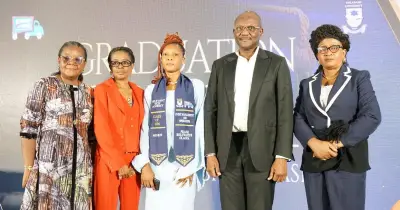
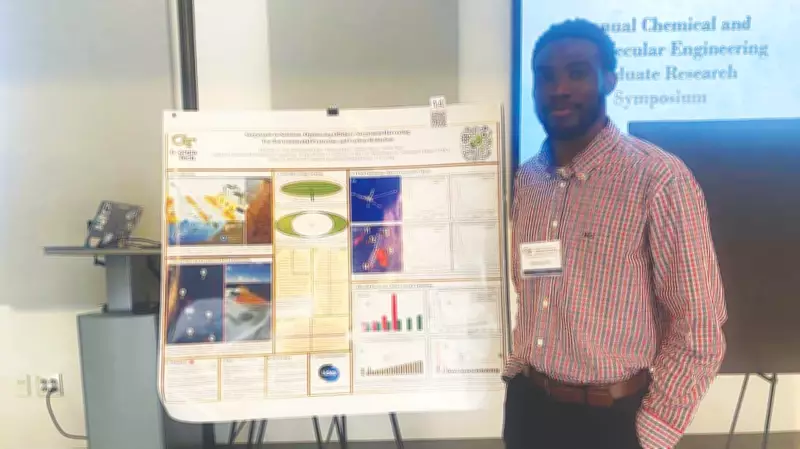
Aderinsola Aliu, a young Nigerian scholar, has established himself as a prominent figure in environmental science by leveraging data, optimization techniques, and chemical engineering to confront critical global challenges. As a PhD candidate in Chemical and Biomolecular Engineering at the Georgia Institute of Technology, Aliu specializes in creating computational models that enhance the efficiency, scalability, and sustainability of industrial and environmental systems.
Addressing Global Environmental Issues
His research spans a wide array of pressing issues, including carbon sequestration, renewable fuel development, and circular bioeconomy systems. By employing advanced optimization tools such as Python and PYOMO, Aliu has engineered energy-efficient harvesting and conversion systems. These innovations illustrate how computational engineering can expedite the shift toward sustainable resource utilization.
One notable aspect of his work involves the sustainable harvesting and utilization of sargassum seaweed, transforming an environmental nuisance into a valuable bio-resource. This approach not only mitigates ecological problems but also contributes to economic opportunities.
Academic Journey and Research Focus
Aliu's path to scientific innovation began at the University of Lagos (UNILAG), where he studied chemical engineering and graduated with an impressive cumulative grade point average (CGPA) of 4.8 out of 5.0. During his undergraduate years, he cultivated a keen interest in mathematical modeling and computational methods for chemical processes, leading to research on mechanistic modeling of biodiesel production using the modified Hattori mechanism.
At Georgia Tech, he is advancing interdisciplinary research that integrates optimization, data science, and sustainable process design. His projects include developing computational frameworks for biomass conversion using black soldier fly larvae (BSFL) to produce renewable biofuels and modeling ocean-based carbon sequestration systems.
Recognition and Future Goals
In 2025, Aliu's contributions gained significant recognition within the scientific community when his research proposal was selected as one of the best in his department, underscoring the originality and potential impact of his ideas. Additionally, one of his research papers has been accepted for publication in Nature Communications, a leading multidisciplinary scientific journal with an impact factor above 17.
Beyond his research endeavors, Aliu is dedicated to mentorship and academic engagement. At Georgia Tech, he has served as a teaching assistant in chemical engineering design and kinetics, helping undergraduate students grasp complex engineering principles and process design strategies. He emphasizes his goal to develop scalable engineering solutions that enable industries to transition to more sustainable, circular systems, reinforcing his commitment to environmental stewardship and innovation.