NUC Launches Sweeping Regulatory Offensive Against Honorary Doctorate Industrial Complex
In a decisive move to restore the traditional values of character and learning within Nigerian academia, the National Universities Commission (NUC) has initiated a comprehensive regulatory campaign targeting the widespread abuse of honorary doctorate awards. This intervention comes in response to a concerning investigation that uncovered 32 institutions operating as honorary degree mills, exploiting public demand for prestigious titles through unaccredited foreign universities and unlicensed local entities.
Strict 16-Point Framework Aligned with Keffi Declaration
The commission has established a rigorous 16-point regulatory framework that aligns with the principles outlined in the 2012 Keffi Declaration. This directive effectively implements strict controls on the system, mandating that only mature universities with established PhD programmes are permitted to confer honorary degrees, with a maximum limit of three recipients per convocation ceremony. Perhaps the most controversial aspect of these reforms is the complete prohibition on honorary awardees using the Dr prefix, restricting this title exclusively to individuals who have earned academic or medical qualifications through rigorous research and study.
Global Standards and Nigerian Context
This regulatory approach mirrors international standards observed in countries like Germany, where unauthorized use of the Doctor title constitutes a criminal offense, and the United Kingdom, where honorary titles remain strictly post-nominal. As Nigeria's Federal Ministry of Education advocates for comprehensive educational reforms, the NUC's firm stance signals a potential return to sanity within a system that has been criticized for trading prestige for political patronage and financial gain.
The era of purchased titles appears to be giving way to a global standard that emphasizes genuine achievement. Even in nations with well-established academic traditions, debates continue regarding the politicization and commercialisation of honorary degrees. The global problem of degree mills and unaccredited institutions selling credentials has prompted international efforts to combat fraudulent practices, as highlighted by the NUC's investigation into foreign degree mills operating within Nigeria.
Historical Context and Recent Developments
Six years ago, former Governor Babatunde Fashola expressed concern about the abuse of honorary degrees by Nigerian universities, revealing that he declined 17 offers during his eight-year tenure between 2007 and 2015. Fashola, who halted the award of honorary degrees at Lagos State University, emphasized that such honors should be conferred based on merit rather than political office or socioeconomic influence.
On February 26, 2026, the NUC issued comprehensive guidelines aimed at regulating what it described as the indiscriminate conferment and misuse of honorary doctorates within the Nigerian University System. This watershed moment in the battle to salvage academic integrity addresses a system that critics argue has been compromised by commercial interests and political vanity.
Investigation Reveals Staggering Scale of Abuse
For years, the conferment of honorary degrees in Nigeria has been clouded by allegations of a pay-to-play culture. The NUC's damning investigation in November 2025 revealed the staggering scale of this abuse, uncovering that 32 institutions—including 10 unaccredited foreign universities, four unlicensed local universities, 15 professional bodies without degree-awarding powers, and three other non-degree-awarding institutions—were operating as honorary doctorate mills. Even more shocking were the price tags attached to these titles, with some institutions charging substantial fees for unearned honors.
Key Provisions of the New Regulatory Framework
The new NUC guidelines, backed by the Education Act CAP E3 of 2004, establish a strict 16-point framework with several crucial provisions:
- Strict Eligibility: Serving elected or appointed public officials are now explicitly excluded from consideration for honorary awards.
- No Self-Nomination: Universities are prohibited from considering self-nominated candidates, addressing the common practice of wealthy individuals lobbying for awards.
- Caps on Numbers: Institutions are restricted to awarding a maximum of three honorary degrees per convocation ceremony.
- End of Dr Title: Recipients are prohibited from using the prefix Dr and must instead append the designation Honoris Causa (h.c.) after their name.
Academic Community Response and Enforcement Challenges
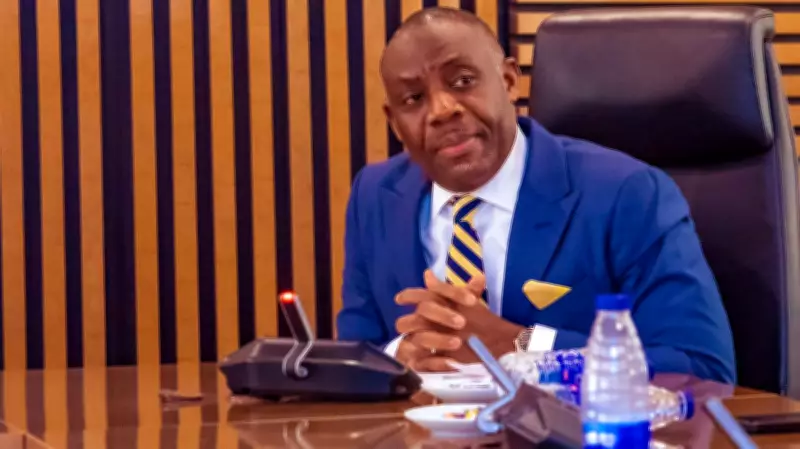
NUC Executive Secretary Prof. Abdullahi Ribadu has been at the forefront of this initiative, stressing that the indiscriminate conferment and misuse of honorary titles diminish public trust in the education system. He emphasized that using Dr based on an honorary degree without proper clarification amounts to false representation, which is punishable under various fraud-related laws in Nigeria.
Stakeholders within the academic community have expressed mixed reactions to the new guidelines. Emeritus Professor Adetola Ademuwagun of the University of Ilorin noted that when a university trades character and learning for financial contributions from honorary degree recipients, it essentially sells its soul. Prof. Usman Adamu of Bayero University, Kano described the indiscriminate award of doctoral degrees as a ticking time bomb that could ultimately devalue Nigerian degrees and undermine global credibility.
Dr. Okon Inyang of the Nigerian Academy of Science emphasized that awarding doctoral degrees without proper scrutiny constitutes academic malpractice, while Prof. Ike Nwosu of the University of Nigeria, Nsukka warned that universities engaging in this practice compromise their reputation and undermine the value of Nigerian degrees. Student activist Emmanuel Ude, representing the National Association of Nigerian Students, called on universities to prioritize academic integrity over financial gain.
Looking Forward: Implementation and Impact
The NUC's directive represents a robust effort to restore integrity to the honorary degree system, with explicit bans on serving public officials and strict rules regarding title usage directly addressing the bastardization of awards highlighted in investigations. However, the effectiveness of these measures will largely depend on consistent enforcement. The commission plans to collaborate with law enforcement agencies for a nationwide clampdown on institutions and individuals abusing these titles, signaling serious intent beyond mere guidelines.
Public reaction has been mixed, with strong support for the reforms tempered by skepticism about enforcement capabilities. If consistently implemented, these measures could potentially check abuse and re-establish the true meaning of character and learning in the context of academic honors. The NUC's initiative marks a significant step toward sanity in a system that has been compromised by commercial interests, but the true test will be whether the 32 identified degree mills are effectively shut down and whether genuine scholars can reclaim the value of their hard-earned titles.