Bridging Theory and Practice: The Role of Political Scientists in Nigerian Governance
In introductory political science or political philosophy courses, a common pedagogical exercise involves comparing the roles of a politician and a political scientist. Instructors often prompt students to consider how each profession contributes to our understanding of politics as both an art and a science. This raises critical questions: Can a political scientist effectively function as a politician? Is one profession inherently superior in its contribution to political discourse, with one serving as a practitioner and the other as a theoretician? These inquiries extend far beyond academic settings, touching on real-world implications for governance and public policy.
The Common Conflation of Political Science and Politics
A personal anecdote illustrates this point well. After graduating with a degree in political science from the University of Ibadan, my late mother anxiously inquired whether I would need to wait for the return to civilian rule and the era of politicians before securing employment. Later, when I began working as a research assistant for the late sage, Chief Obafemi Awolowo, my parents assumed my career path was clear—they believed studying political science inevitably led to becoming a politician or working for one. This reflects a widespread tendency to equate political science education with the vocation of politics.
A politician's vocation involves the practical pursuit of politics, often through seeking elected office to gain political power and make decisions impacting the community. A political scientist, conversely, is professionally tasked with theoretically understanding political behavior and systems. Despite this distinction, the possibility of merging these roles cannot be dismissed, as evidenced by numerous examples globally and specifically in Nigeria.
Global Precedents: From Academia to Political Leadership
Several prominent figures demonstrate this transition. Woodrow Wilson, the 28th President of the United States, was also a foundational theorist in public administration, holding a doctorate in history and political science. He contributed significantly to the theoretical foundations of the discipline, alongside figures like Max Weber, and was instrumental in establishing the League of Nations after World War I.
Henry Kissinger, another notable example, was a political scientist before serving as the 56th United States Secretary of State from 1973 to 1977. His pragmatic approach to geopolitics, advocating for realpolitik, showcased how academic insights can shape foreign policy. In Spain, Pablo Iglesias Turrion transitioned from teaching political science to becoming a member of the European Parliament, further illustrating this trend.
Nigerian Examples: Scholars in the Political Arena
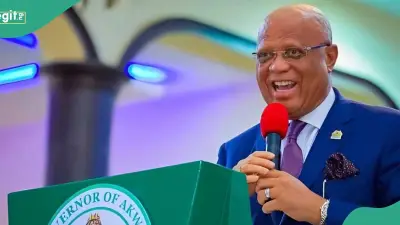
In Nigeria, this phenomenon is equally prevalent. Professors Humphrey Nwosu and Attahiru Jega, both political scientists, entered practical politics as chairmen of the Independent National Electoral Commission (INEC), where they played pivotal roles in transforming electoral institutions and processes. Professor Tunde Adeniran, another political scientist, served as Minister of Education and later as Nigeria's ambassador to Germany.
Other key figures include Ukpabi Asika, Dr. Chuba Okadigbo, and Professors Bolaji Akinyemi, Omo Omoruyi, Isawa Elaigwu, Adele Jinadu, Yayale Ahmed, Amal Pepple, Hakeem Baba-Ahmed, Eghosa Osaghae, Julius Ihonvbere, and Taiye Simbine. These individuals have significantly influenced policy articulations in areas such as federalism, foreign policy, governance, bureaucracy, and politics. Their successes or failures are subject to historical analysis, often judged within the complex circumstances of their decision-making that affected millions of citizens.
Theoretical Knowledge Versus Practical Politics
An intriguing aspect of this discourse is whether a political scientist's theoretical understanding of politics can translate into effective political leadership. Did Woodrow Wilson's scholarship in public administration adequately prepare him for the presidency and the turbulent political landscape of 19th-century America? How did Humphrey Nwosu's academic background enable him to navigate the annulment of the June 12 presidential election by the military junta?
Generally, does the sanitized environment of theoretical debate equip a political scientist for the murky realities of politics? How many Nigerian professors and vice-chancellors are prepared to engage in the zero-sum competitiveness of electoral processes, especially when many participate out of necessity? Scholarship operates on rational models of argumentation and analysis, whereas politics often follows a modus operandi that may not align with logical frameworks. In postcolonial contexts like Nigeria, the variables influencing politics and power dynamics frequently defy rational study in controlled environments.
Socratic Insights and Modern Governance
Socrates' critique of Athenian democracy offers valuable insights. He posed a scenario: when a ship faces a storm, should critical decisions be made by fellow passengers lacking nautical knowledge or by expert sailors? Applied to democracy, this questions whether decision-making should be entrusted to the uneducated masses or to the deliberate wisdom of knowledgeable few. In Plato's Republic, Socrates argues that until philosophers become kings or kings become philosophers, political communities cannot achieve peace, emphasizing governance as a function of knowledge rather than mere popular acclamation.
However, Socrates may have underestimated the complexities of politics, particularly in modern states like Nigeria with postcolonial dynamics. His warning about democracy potentially leading to tyranny through demagoguery seems validated by the rise of fascism and nationalism in democracies worldwide, from the United States and Hungary to India and Brazil.
Collaborative Governance: Beyond the Politician-Scientist Divide
Both political scientists and politicians are engaged in understanding governance and promoting the common good to enhance citizens' lives. This necessitates a collaborative approach in the complex task of political decision-making. Governance is too critical to be left solely to politicians' whims, implying several key points.
First, governance is not the exclusive domain of politicians; it is open to all with the intent and capacity to effect positive change. The failures of academics in politics are not solely due to their scientific background, as the political vocation can lead anyone to falter. Being a politician does not guarantee success, and some non-politicians have thrived in political roles.
Second, successful governance requires cooperative efforts. Politicians, whether purely political or academically inclined, need assistance in fulfilling governance imperatives. This critiques the anti-intellectualism prevalent in Nigeria's political space, where governments often hesitate to recruit intellectual and academic expertise to address complex governance challenges.
Politicians require all possible support, particularly from those whose vocation involves theoretically understanding political dynamics, contestations, and policy frameworks. The goal is not to subordinate intellectual power to partisan agendas but to foster a grand alliance for articulating policies that serve the common good. In this vision, the distinction between politician and political scientist becomes obsolete, as both are essential players in the endeavor to govern effectively and justly.