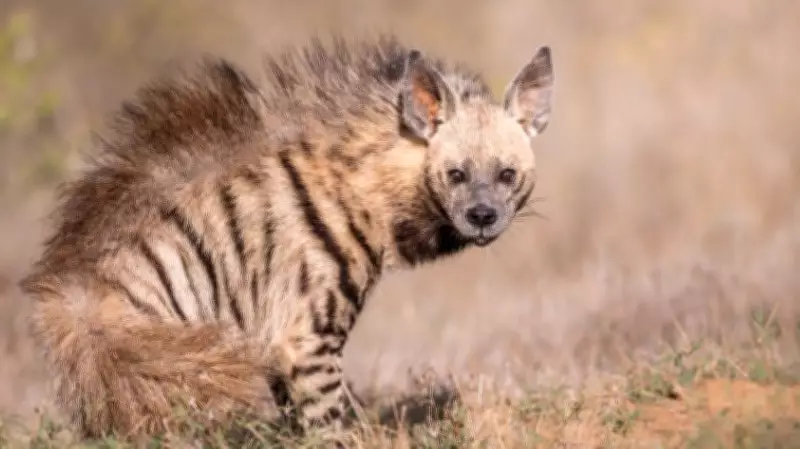
WCS Demands International Action to Protect Striped Hyena as Populations Plummet
The Wildlife Conservation Society (WCS) has issued an urgent call for global intervention to protect the striped hyena, a species experiencing a steady and alarming decline across its vast range. With fewer than 10,000 mature individuals estimated to remain worldwide, the organization is pushing for immediate conservation measures to prevent further population losses.
Critical Proposal at CMS CoP15 Meeting in Brazil
During the 15th Meeting of the Conference of the Parties to the Convention on the Conservation of Migratory Species of Wild Animals (CMS CoP15) in Brazil, WCS urged participating nations to support a crucial proposal. The proposal seeks to list the striped hyena (Hyaena hyaena) on both Appendix I and Appendix II of the CMS, which would provide enhanced international protection and cooperation.
Currently classified as Near Threatened (NT) on the IUCN Red List, the striped hyena's global population continues to decline due to multiple severe threats. These include widespread habitat loss, escalating human-wildlife conflicts, and illegal hunting and trade activities that further endanger the species.
WCS Leadership Highlights Conservation Gap
Sue Lieberman, WCS Vice President for International Policy, emphasized that the striped hyena is moving toward a more precarious conservation status while remaining largely overlooked in global policy frameworks. "Listing this species on CMS Appendices I and II will help catalyze urgently needed international cooperation to protect remaining populations of this fascinating and ecologically important species," Lieberman stated.
The striped hyena inhabits diverse regions across Africa, the Middle East, Central Asia, and South Asia, occupying environments ranging from savannas and grasslands to semi-deserts and mountainous areas. Despite this broad geographical distribution, populations are typically small, fragmented, and highly vulnerable to local extinction events.
Dual Listing for Comprehensive Protection
WCS explained that adding the striped hyena to CMS Appendix I would provide the highest level of international protection, requiring countries to strictly safeguard the species, conserve and restore its habitats, remove barriers to movement, and prohibit direct killing or capture except under extremely limited circumstances.
Simultaneous listing on Appendix II would complement these protections by promoting coordinated international action, encouraging countries across the species' range to collaborate through formal agreements, action plans, and shared conservation strategies. This dual approach would ensure both strict protection and the international collaboration necessary for conserving a species that regularly crosses national borders.
Migration Patterns and Growing Threats
Striped hyenas are highly mobile animals that depend on large, connected landscapes for survival. They exhibit diverse movement patterns, from daily foraging activities to long-distance dispersal, often crossing international boundaries in search of food and water resources. In arid regions, individuals may travel more than 12 kilometers in a single day, with recorded dispersal distances exceeding 80 kilometers.
These extensive movements are essential for maintaining genetic connectivity and long-term population viability. However, this mobility also increases vulnerability to numerous threats. Expanding road networks, habitat fragmentation, and physical barriers such as fences and border infrastructure disrupt critical movement corridors essential for the species' survival.
Habitat loss driven by agricultural expansion and urbanization continues to shrink available space, while declines in prey and carrion sources further stress populations. Human-wildlife conflict remains a significant threat, with striped hyenas often killed in retaliation for livestock predation (whether real or perceived) or due to negative cultural perceptions.
Illegal hunting and trade for body parts used in traditional practices also contribute substantially to ongoing population declines, creating additional pressure on already vulnerable populations.
Urgent Need for International Cooperation
"Striped hyenas depend on connected landscapes that span international borders. CMS provides the framework for countries to work together to conserve migratory species like this one. Without that cooperation, their future remains uncertain," Lieberman emphasized during the conference proceedings.
Despite growing threats, the striped hyena is not currently listed under CMS, which significantly limits opportunities for coordinated conservation efforts across its extensive range. WCS further highlighted that available population data are outdated and incomplete, reinforcing the critical need for precautionary action before the situation becomes irreversible.
CMS CoP15 Meeting Context and Implications
The CMS CoP15 meeting, which began on March 23 and is scheduled to conclude on March 29, 2026, in Campo Grande, Brazil, marks the first time this important conservation gathering has been hosted in Brazil. The country is home to some of the world's richest biodiversity, including the iconic Pantanal region.
Convened under the theme "Connecting Nature to Sustain Life," the meeting brings together governments, scientists, indigenous peoples, and conservation leaders to address urgent challenges facing migratory species worldwide. Decisions taken during this gathering are expected to have far-reaching implications for biodiversity conservation, ecological connectivity, and sustainable development initiatives globally.