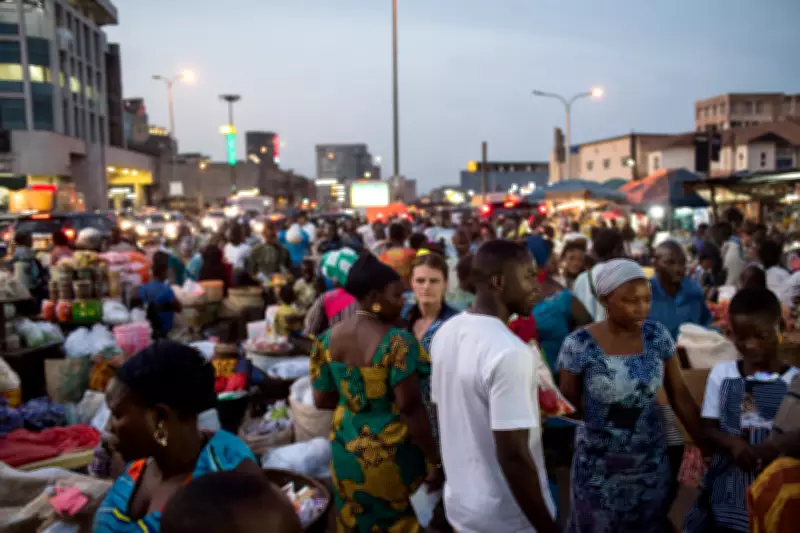
Nigeria's population as of 2026 is approximately 242 million, making it the most populous nation in Africa and the sixth most populous globally. The proportion of the population classified as white by international racial standards is minuscule, estimated at 0.01% to 0.015% of the total. This translates to roughly 20,000 to 35,000 individuals of predominantly European heritage.
Understanding the White Population in Nigeria
Nigeria's census framework does not formally record racial breakdowns, focusing instead on ethnicity, religion, and geography. With 371 ethnic groups, the country has more meaningful distinctions than racial categories. The white population in Nigeria consists primarily of expatriates in specific sectors: oil and gas workers in Port Harcourt and the Niger Delta, diplomats in Abuja and Lagos, missionaries, NGO workers, business executives, and academics. Long-term residents who married Nigerians or built lives over decades also form part of this community.
Geographic Distribution
White residents cluster in three main cities: Lagos, the commercial capital, hosts the largest share; Abuja, the federal capital, houses diplomats and international organization staff; Port Harcourt draws oil industry workers. Outside these centers, white residents are rare. The Nigeria Immigration Service's CERPAC system provides structure for legal residency, but it does not fully capture all long-term white residents.
How to Comprehend Nigeria's Expatriate Population
Understanding this demographic requires context. Nigeria does not classify by race; any racial percentage is an estimate. Distinguish between white Nigerians (those born to European parents who may hold citizenship) and temporary expatriates. The petroleum sector has historically attracted European and American technical workers, but numbers have fluctuated with oil prices and local talent growth. Development organizations, faith missions, and academic exchanges bring white individuals to states like Borno, Kaduna, Cross River, and Enugu in small numbers.
Key Sectors Employing White Expatriates
- Oil and gas: engineers and technical workers
- Diplomacy: embassy staff
- International development: NGO workers
- Faith-based organizations: missionaries
- Business: executives and entrepreneurs
- Academia: lecturers and researchers
The 0.01% figure should be contextualized. In absolute terms, 20,000 to 35,000 individuals contribute to the economy, teach at universities, fund development projects, and raise families in Nigeria. The data will always be approximate due to the lack of a census question on race and the presence of informal foreign residents.
Which City Never Sleeps in Nigeria?
Lagos is universally recognized as the city that never sleeps. It generates approximately 30% to 35% of Nigeria's GDP, driven by commerce, services, technology, and relentless informal economic activity. Buka restaurants serve jollof rice at 2 a.m., okada riders navigate the Third Mainland Bridge before sunrise, and market traders in Mile 12 begin at 4 a.m. The informal economy employs millions around the clock. Abuja and Port Harcourt have nocturnal activity, but Lagos remains the undisputed champion.
What Sells Very Fast in Nigeria?
Fast-moving consumer goods (FMCG) dominate quick sales. Noodles (especially Indomie), packaged water sachets, cooking oil, soap, and seasoning cubes like Maggi and Knorr sell in massive volumes. Mobile data and airtime move faster than almost anything else, with over 220 million active SIM cards. Ready-made food like suya, pepper soup, jollof rice, and shawarma sells with minimal lag. Second-hand clothing (okrika) remains a massive market, and smartphones and accessories have explosive growth.
Fastest-Selling Product Categories
| Product Category | Primary Market | Typical Margin | Monthly Volume Estimate | Key Retailers | Growth Trend |
|---|---|---|---|---|---|
| Packaged water (sachets) | Nationwide | 20-35% | Billions of units | Street vendors, kiosks | Stable |
| Instant noodles (Indomie) | Urban/semi-urban | 15-25% | 4.5 million packs/day | Shops, open markets | Growing |
| Airtime and mobile data | Nationwide | 3-8% | N500bn+ monthly | POS agents, resellers | Rapid growth |
| Fast food and street food | Urban centres | 30-60% | N200bn+ monthly | Vendors, restaurants | Growing |
| Second-hand clothing | Urban markets | 50-150% | 3,000+ containers/year | Okrika markets | Stable |
| Smartphones and accessories | Lagos, Abuja, PH | 10-25% | 2 million units/quarter | Computer Village, Slot | Growing |
High-volume, low-margin products compete differently from high-margin specialty goods. Successful traders understand that velocity beats margin at scale.
Which State in Nigeria Is the Best to Make Money?
Lagos State generates roughly 30% to 35% of Nigeria's GDP from 4% of its land area, leading in internal revenue generation. However, living costs are high. For most sectors, Lagos remains the champion: technology, finance, entertainment, fashion, media, trade, and professional services. Rivers State offers high earning potential in oil and gas with lower housing costs. Abuja is best for government, politics, law, and consulting. Delta and Akwa Ibom benefit from oil revenue. Kano offers opportunities in trade and agriculture processing. The best state depends on individual skills, network, and risk tolerance.
Frequently Asked Questions
What is the white population in Nigeria?
Estimated at 20,000 to 35,000 individuals, representing 0.01% to 0.015% of the national population. This community consists primarily of expatriate workers and a small number of long-term residents.
What percent of Nigeria's population is white?
Less than 0.02%. Nigeria does not have a historically settled white population of significant size.
Is there a formal census of white people in Nigeria?
No. The census focuses on ethnicity, religion, and geography, not race. Any figure is an estimate.
Where do most white people in Nigeria live?
Concentrated in Lagos, Abuja, and Port Harcourt. Small communities exist in other states.
Which city never sleeps in Nigeria?
Lagos, driven by commerce, entertainment, and informal economic activity.
What sells very fast in Nigeria?
Packaged water, instant noodles, airtime, street food, second-hand clothing, and smartphones.
Which state is best to make money?
Lagos for most sectors, Rivers for oil and gas, Abuja for government work.
Are white people born in Nigeria considered citizens?
Not automatically. Nigeria follows jus sanguinis; at least one parent must be a citizen.
Why is the white population so small?
Colonial policy discouraged permanent settlement, and post-independence policies limited foreign settlement.
How has the expatriate population changed?
Decreased since the 1960s-70s peak due to local training and tightened quotas.
What industries employ the most white expatriates?
Oil and gas, international development, diplomacy, faith-based organizations, financial services, and multinational consumer goods.
Can white foreigners own businesses in Nigeria?
Yes, with some sectors requiring local partnerships. The Nigeria Investment Promotion Commission provides frameworks.
Understanding the white population in Nigeria reveals a country so vast and complex that even communities in the tens of thousands become statistically invisible. The story of diversity is fundamentally about 371 ethnic groups, over 500 languages, and six geopolitical zones. The white population contributes to specific sectors, but the larger narrative is about Nigeria's dynamic cities, markets, and ambitions.
Three actionable takeaways: when reading demographic percentages, ask what framework produced them; match skills to the right state for earning; and build businesses around meeting daily, non-negotiable needs.