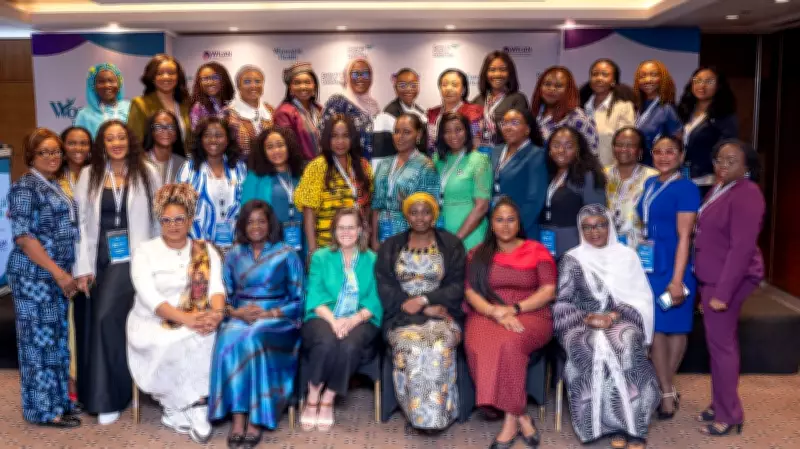
A new study has underscored the critical need for institutional support systems to enhance women's leadership within Nigeria's legal profession. Titled "Barriers and Bridges: Women's Advancement to Leadership in Nigeria's Legal Profession," the research highlights the obstacles women encounter in ascending to senior positions and advocates for deliberate policies to foster their growth.
Study Overview and Collaboration
Commissioned by Co-Impact with the Women Advocates Research and Documentation Centre (WARDC) as the technical partner, the study was conducted by Ms. Agbaje Amina Suzanna, Director of the Centre for Safeguarding/Human Rights at the Faculty of Law, University of Lagos and former FIDA President, along with Prof. Kehinde Olabode, a Lecturer in Governance and International Relations at Obafemi Awolowo University. The initiative is headquartered at the University of Lagos (UNILAG) and will collaborate with 12 law faculties across Nigeria's six geopolitical zones in its next phase.
Key Recommendations
The report emphasizes the importance of supportive human resource policies, including the establishment of crèches, clear promotional pathways, and gender-friendly work environments that promote work-life balance. It also advocates for mentoring networks to prepare women for leadership roles.
Findings Presentation
Presenting the findings at a workshop themed "Advancing Women's Rights and Breaking Barriers for an Inclusive Future for Law Faculties in Nigeria," Dr. Akiyode-Afolabi noted that while women's experiences in Nigeria's legal profession mirror global trends, cultural and societal norms continue to impede progress. The study identifies recurring obstacles such as sexual harassment, entrenched patriarchal perceptions of women's capacity, and rigid professional structures that overlook women's caregiving responsibilities.
Statistical Disparities
Despite women's significant presence in the public sector, their representation in senior roles remains disproportionately low. Statistics reveal the imbalance: in 2020, women constituted only 32 percent of judicial officers in the Supreme Court and Court of Appeal. By early 2022, women accounted for 28 percent of Supreme Court justices, 27 percent of Court of Appeal judges, and 35 percent of Federal High Court judges—figures that fall short of the 35 percent benchmark set by Nigeria's National Gender Policy.
Leadership within the Nigerian Bar Association (NBA) also reflects this disparity, with only five of 128 branches headed by women as of 2023. In 2024, just 35 of 720 Senior Advocates of Nigeria (SANs) were women, and only four of 37 attorneys-general were female. Since independence in 1960, Nigeria has elected only two female chief justices. The imbalance extends to private practice and academia, where senior positions in law firms and faculties are largely dominated by men. Representation in the National Assembly is similarly low, with Nigeria ranked among the countries with the least female parliamentary presence by the Inter-Parliamentary Union.
Stakeholder Reactions
At the workshop, stakeholders shared personal experiences and called for reforms to improve working conditions and opportunities for women. Dean of the Faculty of Law at UNILAG, Prof. Abiola Olaitan Sanni, described the programme as a response to systemic challenges in legal education, stressing the need to support young female lecturers to ensure equity in career advancement. He praised the research team for pioneering a project of this scale in Africa, noting that the pilot programmes across Nigeria's six geopolitical zones could reshape the future of legal education.
Initiative Coach from Kenya, Wairu Kinyori-Gugu, added that the project could serve as a model for other African faculties. She emphasized the importance of reforming institutions to create a pipeline of women leaders in law, enabling them to influence legislation and policies that advance women's rights.