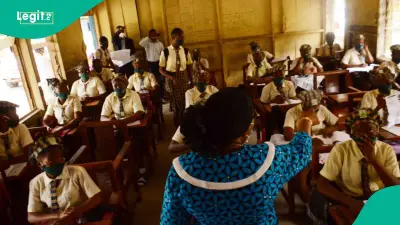
Yoruba Student's Unique French Pronunciation Captivates Social Media
A video featuring a Nigerian Yoruba student attempting to pronounce French words during a classroom session has taken social media by storm, generating widespread amusement and engagement across various platforms. The clip, which originally surfaced on TikTok, showcases the student and her classmates repeating vocabulary after their instructor, with her distinctive pronunciation becoming the focal point of viral attention.
Classroom Moment Sparks Internet Frenzy
The viral footage was posted by TikTok user @momzzz, capturing the Yoruba student in an educational setting where she was actively participating in French language exercises. In the video, she can be seen diligently following along with her teacher's guidance, attempting to articulate French terms that resulted in humorous phonetic outcomes. The student accompanied her post with a caption that read: "POV: You're a Yoruba girl studying French. New vocabulary."
This authentic classroom moment quickly gained traction, accumulating thousands of views and engagements as viewers found both entertainment value and inspiration in the student's earnest efforts. Despite the comedic elements of her pronunciation, many observers have commended her determination and commitment to mastering a foreign language, highlighting the challenges and rewards of linguistic education.
Social Media Reactions Range from Hilarious to Heartwarming
The comment section beneath the viral video exploded with diverse reactions from TikTok users worldwide. Some responses focused on the humorous aspects of the pronunciation, while others offered encouragement and shared similar experiences.
- @Ngong Blandine commented: "I'm a Cameroonian but this your French I've never heard it before."
- @Enitan_Oluwapelumi inquired: "Is it a general course or you're a French major?"
- @Temmieee expressed: "Guyy I swear it's the best course I wish I studied it I need am."
- @ADEIFE humorously noted: "No bring me back I usually speak French fluently before she don spoil it now."
- @Eze Cecilia shared a personal connection: "This was me in French classes when I was in school, guess who is now in a French speaking country and has to do business with them."
Additional comments continued to pour in, with @Buney joking: "I don't want to laugh because mosquitos in my room will notice I'm around," and @Affordable braided-wigs Yab teasing: "Nah question 1 of impromptu test you dey play with no worry." The conversation expanded as @prettyadeshola123 questioned: "Esan. Abi no be wetin I hear she Esan tun ke nhi French class nhi," while @Anike Alagbo added: "Omo laff don finally shift my belle o. This lady no go kpai me."
Broader Implications for Language Education and Cultural Exchange
Beyond the immediate entertainment value, this viral phenomenon underscores several important aspects of contemporary education and digital culture. The student's willingness to share her learning journey publicly demonstrates how social media platforms can serve as spaces for educational transparency and community building around academic pursuits.
Her experience also highlights the linguistic challenges faced by Nigerian students when acquiring foreign languages, particularly those with phonetic systems distinct from indigenous Nigerian languages. The viral attention has sparked conversations about language education methodologies, pronunciation techniques, and the importance of perseverance in academic endeavors.
Furthermore, the widespread engagement with this content illustrates how digital platforms can bridge cultural divides, allowing international audiences to appreciate and participate in localized educational moments. The mixture of supportive and humorous responses creates a dynamic online discourse that celebrates both the struggles and triumphs of language acquisition.
This incident follows previous viral educational content from Nigerian institutions, including a recent story about a University of Ibadan graduate who shared her academic journey despite not achieving her initial goal of graduating with first-class honors. Such narratives collectively contribute to a richer understanding of the Nigerian educational experience and its representation in digital spaces.