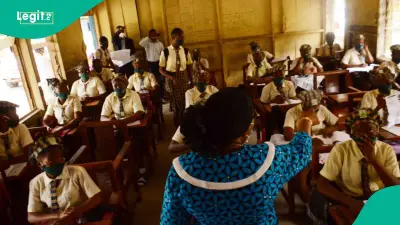
As a journalist who has spent years traversing Nigeria's diverse educational landscape, from bustling urban schools in Lagos to remote classrooms in the North-East, I have witnessed firsthand the complex story of literacy in our nation. The latest figures present a picture of both progress and profound challenge, a narrative defined as much by regional inequality as by national aspiration.
The Current State of Nigerian Literacy: A Tale of Two Nigerias
The national literacy rate for adults aged 15 and above is approximately 70.4% as of 2024. This means about seven in ten Nigerians can read and write a simple statement about their daily life. However, this single statistic is dangerously misleading. It conceals what is arguably one of the world's most extreme educational disparities within a single country.
Progress has been uneven. From 68.11% in 2010, literacy climbed to 77.62% by 2021. Recent data, however, shows a confusing picture, with some measurements indicating a dip to 59.57% in 2024, while other credible sources maintain the 70.4% estimate. This conflict underscores the difficulty of data collection across Nigeria's vast territory and the use of different methodologies.
Flipping the figure reveals the scale of the challenge: roughly 30% of Nigeria's adult population, or about 60 million people, lack basic literacy skills. This number is nearly twice the entire population of Ghana. The Universal Basic Education Commission (UBEC) has worked for decades, yet illiteracy remains entrenched, particularly in specific regions and demographics.
The Stark Geography of Literacy: From Imo's Success to Yobe's Crisis
A state-by-state analysis paints a heartbreaking map of inequality. The high-performing states are concentrated in the South.
Imo State leads the nation with a literacy rate of 96.43%, followed closely by Lagos at 96.3%, Ekiti at 95.79%, and Rivers at 95.76%. These states benefit from historical investments in education, stronger economic foundations, safer environments, and a deep-seated cultural emphasis on schooling. Lagos, for instance, has invested billions in initiatives like Eko Excel, focusing on teacher training and digital literacy.
In tragic contrast, the North-East and North-West zones bear the brunt of the crisis. Yobe State has Nigeria's lowest literacy rate at a devastating 7.23%. Katsina follows at 10.36%, and Zamfara at 19.16%. The reasons are a painful confluence of factors: the devastating impact of the Boko Haram insurgency which destroyed schools and displaced communities; deep-rooted poverty that forces children into labour; cultural barriers that disproportionately keep girls out of classrooms; and decades of systematic under-investment in educational infrastructure.
The gap between Imo's 96.43% and Yobe's 7.23% is not just a statistical difference; it represents a chasm of opportunity, economic potential, and human development. This divide has historical roots in colonial policies and has been perpetuated by post-independence governance failures.
The Twin Engines of the Crisis: Out-of-School Children and Gender Disparity
Compounding the adult literacy challenge is a generational time bomb: the out-of-school children crisis. UNICEF reports that a staggering 18.3 million Nigerian children are not in school—a number larger than the population of the Netherlands. The North-West region alone accounts for over 8 million of these children.
These children are not merely missing lessons; they are being denied the fundamental key that unlocks participation in the modern economy and society. Without intervention, they are likely to swell the ranks of the adult illiterate population in the coming years.
Gender further fractures the landscape. Nearly two-thirds of illiterate Nigerian adults are women. While southern states show minimal gender gaps, in states like Yobe and Zamfara, girls face significantly higher barriers due to early marriage and cultural norms that deprioritise female education. Encouragingly, youth female literacy (ages 15-24) has improved to 81.43%, suggesting a slow but positive shift among younger generations.
Pathways to Improvement: Lessons from Home and Abroad
Countries like Finland, Norway, and Luxembourg achieve 100% literacy through sustained investment (often over 6% of GDP), excellent teacher training, and a societal consensus on education's priority. Finland, for example, invests heavily in its teachers, who are drawn from the top graduates and enjoy high social status.
Within Africa, nations like Seychelles (96%), South Africa, and Sao Tome and Principe (95-96%) demonstrate that high literacy is achievable on the continent with political will and consistent policy.
For Nigeria, systemic change is non-negotiable. This includes:
1. Adequate Funding: Nigeria's education budget, typically 5-8% of federal spending, must rise to meet UNESCO's recommended 15-20% for developing nations.
2. Teacher Quality and Welfare: Investing in rigorous teacher training and providing living wages is fundamental. Programmes like UBEC's Teacher Professional Development show promise but need scaling.
3. Safe Schools and Infrastructure: Learning cannot happen in fear or in dilapidated buildings. Ensuring security and building proper classrooms are basic prerequisites, especially in the North.
4. Mother-Tongue Instruction: Evidence shows children learn to read faster in their native language. Programmes like Jolly Phonics, which incorporates local languages, have shown remarkable success and should be expanded.
5. Targeted Girls' Education: Keeping girls in school through secondary level requires addressing early marriage, providing safe transportation, and community engagement.
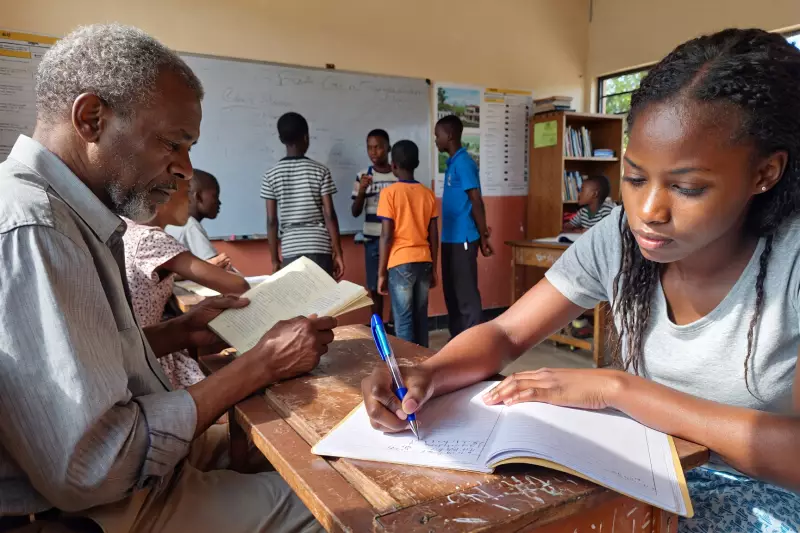
On an individual level, adults can improve their literacy by starting in their mother tongue, establishing a daily reading routine, using phonics-based methods, and leveraging technology through apps and mobile learning platforms.
The Cost of Inaction and the Promise of Change
The economic cost of illiteracy is immense. It limits productivity, confines workers to the informal sector, hampers agricultural innovation, and worsens health outcomes. States with the lowest literacy rates invariably have the highest poverty rates, creating a vicious cycle that is difficult to break.
Yet, the path forward is clear. With sustained political will, Nigeria can replicate the success of nations like South Korea and Vietnam, which transformed their literacy rates within a generation. The resources and knowledge exist. What is required is the collective commitment from government at all levels, communities, and every Nigerian citizen to prioritise education not as an expense, but as the most critical investment in our national future.
The story of Nigerian literacy is still being written. The 70.4% national figure is not a destination, but a signpost on a long road. By confronting the stark realities of Yobe's 7.23% and harnessing the proven models of Imo's 96.43%, Nigeria can begin to close the gap and build a truly literate, and thereby more prosperous and equitable, nation.