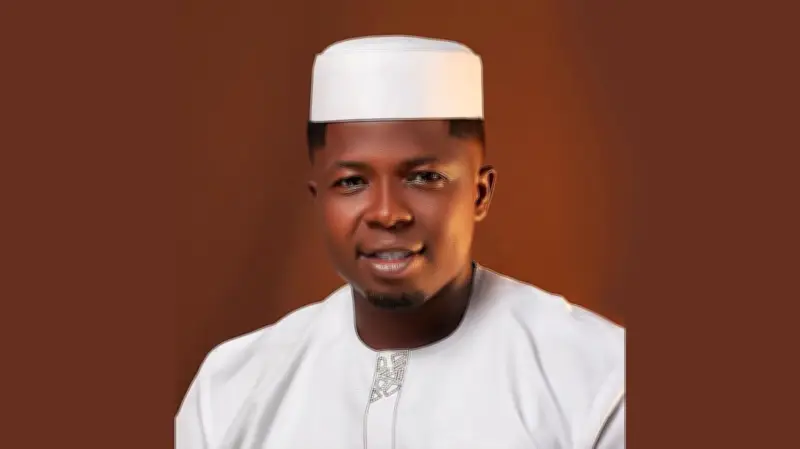
Moses Abolade is a renowned African peacebuilding practitioner, conflict transformation specialist, and peace educator dedicated to promoting sustainable peace across Africa. As the Founder and Executive Director of the Peace Education and Practice Network (PEPNET), he has led over 80 programmes focused on peacebuilding, governance, education, and community development, impacting thousands of lives. In this interview, Abolade speaks on advocating for change, transforming institutions, and society.
Growing Up and Shaping a Path
If someone had told me as a young boy growing up in Nigeria that I would dedicate my life to peacebuilding, education, leadership, and social transformation, I would probably have smiled politely and moved on. Peacebuilding was not a profession I knew much about, and certainly not one I imagined for myself. What I did know was that I was curious. I have always been fascinated by knowledge, ideas, and the stories that shape society. As a child, I loved asking questions. I wanted to understand why things happened the way they did, why people behaved the way they did, and why some communities seemed to thrive while others struggled. I was also drawn to communication and storytelling. For a long time, I imagined myself becoming a broadcaster or journalist because I loved the idea of informing people and helping them understand the world around them. Looking back now, I realized that those interests never disappeared. They simply evolved. My journey into peacebuilding really began through education. As a teacher, I became increasingly interested in how people learn, how values are formed, and how behavior can be influenced positively. This curiosity pushed me to pursue a Professional Diploma in Education while running a tutorial centre in Lagos.
How can teachers inspire discipline, responsibility, and excellence without relying on fear, intimidation, or violence? This question was both professional and personal. As someone who experienced bullying during my junior secondary school years, I understood the impact that violence and abuse of power can have on young people. What many people dismiss as ordinary school experiences often leave lasting emotional and psychological effects. I wanted to understand whether there were better ways of building respect, encouraging learning, and managing relationships. That search eventually led me to study Peace and Conflict Studies. What began as an academic journey gradually became something much deeper. Peacebuilding gave me a framework for understanding people, institutions, communities, and societies. It helped me see the connections between education, governance, security, leadership, and development. In many ways, peacebuilding became the meeting point of everything that had always interested me. What began as curiosity eventually became purpose.
The Defining Moment
Unlike many people, I cannot point to one dramatic moment where everything suddenly became clear. For me, it was a process of discovery. As I advanced through my studies and professional experiences, I became increasingly fascinated by the depth and breadth of peacebuilding. I realized that peacebuilding was not simply about ending conflict or mediating disputes. It was about creating the conditions that allow individuals, communities, and societies to flourish. I often say that peacebuilding taught me to see society as a system rather than a collection of separate problems. That was a major turning point in my thinking. Another reason I embraced peacebuilding was its versatility. It allowed me to combine my background in education, my passion for media and communication, my interest in leadership, and my commitment to development. I realized that this was not merely a career choice. It was a calling to contribute to the transformation of Nigeria, Africa, and humanity in whatever way I could.
Founding PEPNET
You founded PEPNET in 2018. What problem were you trying to solve, and what keeps that mission urgent today? PEPNET was born from a question that would not leave me alone. During my studies, I realized that many of the people most affected by violence, insecurity, conflict, and social division would never have the opportunity to study peacebuilding formally. Ironically, these are often the people who need peace education the most. The young person vulnerable to recruitment into violence. The community leader struggling to manage conflict. The teacher trying to shape young minds. The citizen trying to navigate a divided society. The future peacebuilder who has never encountered peace education. I began asking myself a simple but important question: If peace education has the power to transform individuals and societies, why should it remain confined to university classrooms? That question became the foundation of PEPNET. The initial mission was straightforward: increase access to peace education. We wanted to democratize peace education and make it available to ordinary people regardless of their background, location, or educational level. Over time, however, our vision evolved. Today, we are not only concerned about educating individuals. We are equally concerned about transforming institutions and systems.
Lessons from the Field
You have worked in communities affected by conflict and division. What have those experiences taught you about people, resilience, and hope? One of the most important lessons I have learned is that people are often far more resilient than we imagine. I have met individuals and communities that have experienced violence, displacement, trauma, and hardship, yet continue to demonstrate extraordinary courage, dignity, and determination. These experiences have also challenged many assumptions. For example, conflict often creates the impression that people are fundamentally different from one another. Yet when you sit with people, listen to their stories, and understand their aspirations, you discover that most people want remarkably similar things. What often separates communities is not hatred but fear, misinformation, historical grievances, manipulation, and the absence of trusted spaces for dialogue. This is why I often say that peacebuilding is not primarily about changing enemies. It is about rebuilding relationships and restoring trust where trust has broken down.
Challenges to Peace in Nigeria
In your view, what are some of the biggest challenges threatening peace and social cohesion in Nigeria today? Nigeria's greatest challenge is not a single issue. It is the interaction of multiple challenges that reinforce one another. We often discuss insecurity, unemployment, governance, poverty, misinformation, and social division as separate problems. In reality, they are deeply connected. Insecurity weakens trust. Weak trust creates space for misinformation. Another challenge is youth exclusion. Nigeria has one of the youngest populations in the world. This should be a tremendous advantage. Yet, when young people lack opportunities, meaningful participation, or a sense of belonging, the consequences can be significant. We also face the challenge of strengthening institutions. Strong societies are built on strong institutions. Sustainable peace requires institutions that are trusted, responsive, accountable, and capable of serving citizens effectively.
Advice for Aspiring Changemakers
Many people want to make a difference but do not know where to start. What advice would you give them? Start with learning. Every meaningful journey begins with understanding. Before we attempt to solve problems, we must first understand them. Read widely. Ask questions. Seek mentors. Attend trainings. Volunteer. Engage with people who are already doing the work. Learning provides direction. But learning alone is not enough. At some point, you must begin. Many people spend years waiting for the perfect opportunity, the perfect qualification, or the perfect circumstances. Those moments rarely arrive. Start where you are. Use what you have. Contribute with the skills and resources available to you.
A Personal Story
Looking back, is there one story or encounter that has stayed with you and continues to inspire your work? There is one experience that remains deeply personal and continues to strengthen my commitment to this work. In 2021, I organized the Ore Community Peace and Development Programme in my hometown of Ore, Ondo State. It was a two-day initiative focused on peacebuilding, community dialogue, mediation, and development. For me, it was more than just another programme. It was an opportunity to bring the knowledge and experiences I had gained back to the community that helped shape me. What made that experience particularly meaningful was my father's presence. He attended the programme and witnessed firsthand the conversations, the community engagement, the mediation efforts, and the impact it was having on participants. He saw community leaders, young people, and residents engaging in discussions about peace, development, and collective responsibility. After the programme, he expressed how proud he was and prayed for me. Just one month later, he passed away. That moment has remained with me ever since. Whenever the journey becomes difficult, whenever resources are limited, whenever the challenges seem overwhelming, I remember that experience.
Proudest Impact
You have impacted thousands of people through training, advocacy, and community engagement. What impact are you most proud of? The impact I am most proud of is not a single event, project, or achievement. It is people. Over the years, one of the most rewarding experiences has been meeting individuals who tell me that something they learned through a PEPNET programme, training, dialogue, publication, or engagement changed the way they think, work, or lead. There is something deeply fulfilling about seeing someone discover purpose, develop confidence, strengthen their leadership, or become more committed to serving their community. Impact multiplies through people. Beyond individuals, I am proud of the systems and platforms we have built. One of the lessons I have learned is that sustainable change requires institutions and structures that continue creating value long after a programme ends.
The Role of Youth
What role do young people have in building a more peaceful and just society? Young people are not simply the leaders of tomorrow. They are stakeholders in today's decisions and partners in today's solutions. One of the misconceptions we often hear is that young people should wait their turn. I disagree. Young people are already shaping economies, influencing public discourse, driving innovation, transforming communities, and contributing to governance. Young people possess creativity, energy, adaptability, and the ability to challenge outdated assumptions. They bring fresh perspectives to longstanding problems and often demonstrate a willingness to embrace innovation and change.