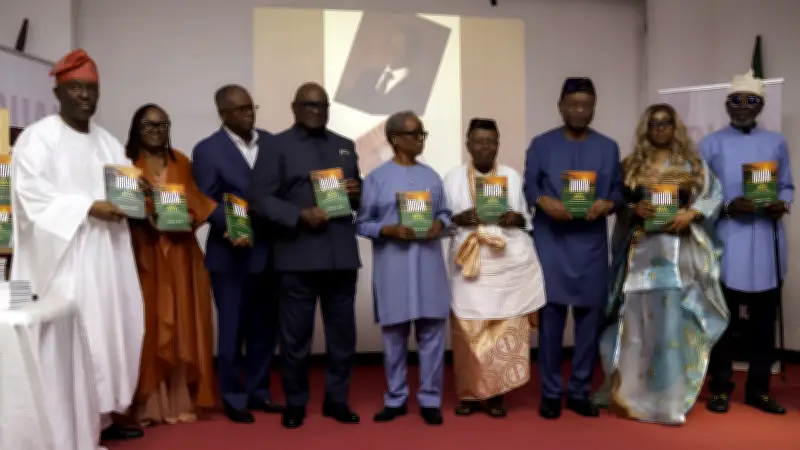
On Monday, June 15, the Nigerian Institute of International Affairs (NIIA) in Victoria Island, Lagos, hosted an event that initially appeared to be another book presentation. The gathering featured distinguished guests, scholarly reviews, cultural performances, and the ceremonial unveiling of a newly published work. Prominent personalities from Akwa Ibom State and beyond filled the hall, including business leaders, retired military officers, accomplished professionals, and public servants. However, beneath the formalities lay a deeper significance.
The presentation of Uruan: The Iboku People of the Geographical South Eastern Nigeria and Their Bakassi Economic Zone, authored by economist and former Group Executive Director of the Nigerian National Petroleum Corporation (NNPC), Mr. Efiong D. Akan, was an intervention against collective amnesia. It served as a reminder that nations are sustained not only by constitutions and institutions but also by memory.
The Stories We Forget
Across Africa, profound histories have traveled through oral traditions—folk tales, songs, proverbs, rituals, and communal ceremonies. However, oral traditions are fragile, dependent on memory and vulnerable to migration, urbanization, and the passage of time. Entire chapters of communal identity can disappear within a generation if not documented. This urgency underpins Akan’s work. The Uruan people, one of the oldest Efik-speaking communities in present-day Akwa Ibom State, have contributed significantly to public service, commerce, academia, and national development. Yet much of their story remains outside mainstream Nigerian historiography. The question echoes: Who tells the story of a people if they do not tell it themselves?
More Than Geography
Chairman of the occasion, Otuekong Captain Augustine Okon, noted that Uruan identity transcends physical location. Identity is rooted in language, customs, values, and shared heritage—not merely administrative boundaries. For communities navigating modernity, preserving cultural identity becomes an act of survival. This challenge is not unique to Uruan; across Nigeria, minority histories struggle for visibility. Indigenous languages face declining usage, and younger generations know little about the journeys, sacrifices, and institutions that shaped their communities. Documentation becomes preservation, and books become bridges between generations.
The Bakassi Dimension
Akan’s work treats Bakassi with contemporary relevance. For many Nigerians, Bakassi is a geopolitical issue of international adjudication and territorial disputes. However, behind the legal arguments lie communities, histories, and emotional attachments rarely featured in public discourse. By situating Bakassi within the historical and economic experiences of the Uruan people, the author broadens the conversation beyond cartography. He asks readers to recognize that territories are repositories of memory, livelihoods, and identity. His appeal for legal minds, including former Minister Senator Udo Udoma, to support Bakassi reclamation may generate debate, but it succeeds in reopening a conversation many assumed had ended. Some national questions deserve revisiting through the experiences of affected communities, not just law and diplomacy.
The Responsibility of the Elite
The event featured notable attendees: former Minister Senator Udo Udoma, corporate leader Larry Ettah, professional Udeme Ufot, reviewer Sir (Dr.) Opeyemi Olukayode Agbaje (Chairman of the National Pension Commission), and Rear Admiral Francis Dan Akpan (Rtd). Their presence reflected an often-overlooked truth: communities flourish when accomplished sons and daughters remain invested in their collective story. Success carries responsibility—to mentor, preserve, give back, and remember. A society that forgets its origins risks losing its sense of direction.
Why This Matters
Nigeria is a nation of extraordinary diversity, with hundreds of ethnic nationalities coexisting within a shared political framework. The challenge is building national cohesion without erasing local identities. The answer cannot be cultural amnesia. National unity does not require uniformity but mutual respect for histories that make up the Nigerian experience. When communities document their stories, they enrich the national archive and expand the country’s understanding of itself. In preserving Uruan history, Akan has contributed not only to his people but to Nigeria.
Beyond the Launch
As final photographs were taken and copies exchanged hands, it became clear that the event at NIIA was more than a ceremonial launch. It was a declaration that history matters, identity matters, and future generations deserve records, context, and knowledge of who they are. Long after the applause fades, this may be the enduring legacy of Efiong D. Akan’s work. The true value of history lies not in nostalgia for what has been lost but in its power to illuminate what can still be preserved.