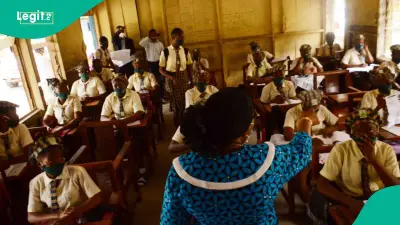
Federal Government Bans Street Begging by Almajiri Pupils
The Federal Government has officially banned Almajiri pupils from begging on the streets, warning that any registered learning centre that violates this directive could face sanctions, including being shut down. This is part of the newly approved National Policy for the Enhancement of Almajiri Education, which aims to modernise the traditional Qur'anic education system while preserving its religious identity.
The policy, approved by the Federal Ministry of Education, explicitly states: "No learner(s) shall be sent out to beg in the street or do menial jobs." It further warns: "Any registered learning centre that sends learners out to beg shall face appropriate action such as sanction from operation."
Almajiri Curriculum Expanded with Digital and Vocational Skills
Beyond ending street begging, the government wants Almajiri learners to acquire practical skills that can help them earn a living. For the first time, literacy, numeracy, digital education, civic education, life skills, and vocational training will become part of the curriculum in Almajiri learning centres across the country.
The policy states: "Literacy and Numeracy shall be infused into the curriculum of the Almajiri teaching and learning." It also adds: "Relevant digital skills shall be included in the training of the facilitators and learners." Learners will have the opportunity to choose vocational and technical skills based on their interests or with the approval of their parents or guardians.
Graduates to Receive Official Certificates
One of the biggest changes is that graduates of recognised Almajiri schools will now receive official certificates after completing their studies. The policy states: "A structured certification process for learners shall be established by the National Commission for Almajiri and Out-of-School Children Education in collaboration with relevant federal government agencies." It also says: "Learners who complete the Almajiri education shall be awarded a certificate." This is expected to make it easier for graduates to continue their education or access employment opportunities.
Mandatory Registration and Biometric Data for All Almajiri Schools
The Federal Government is also tightening regulation of Almajiri schools. All learning centres will now be required to register with the appropriate state or local government authorities. Schools must also keep proper records of every learner, including biometric data. According to the policy: "All learning centres shall be registered with relevant state or local government authority working on Almajiri Education." It also says every school must: "keep records of all learners manually and/or electronically as well as biometric data."
Health Checks and Better Living Conditions
The new policy introduces minimum standards for both day and boarding schools. Children must undergo health screening before admission, while teachers and facilitators will also have regular medical checks. Schools are expected to provide clean water, proper toilets, adequate ventilation, first aid facilities, and avoid overcrowding. Separate learning spaces for boys and girls are also required, and boarding facilities must meet approved standards.
Registered Schools to Benefit from Government Support
The reforms are not just about stricter rules. Registered Almajiri schools will be eligible for government support, including learning materials, healthcare services, nutrition programmes, school feeding, scholarships for facilitators, and, depending on what individual states can provide, teacher allowances. Teachers, including Alarammas, will also be included in training programmes organised by agencies such as UBEC, SUBEB, the National Teachers' Institute, and the Teachers Registration Council of Nigeria.
Government Says It's Reform, Not Abolition
The Federal Government stressed that it is not scrapping the Almajiri system but making it safer and more relevant in today's Nigeria. According to the policy: "It is developed not to take over learning centres but to provide clear operational guidelines, direction and streamline activities of the Almajiri education system. This is to guarantee the learners' and teachers' security, promote their well-being and engender economic productivity among the learners."
Officials say years of neglect, poor funding, weak regulation, and parental abandonment have contributed to many of the challenges facing the Almajiri system. The government also noted that children roaming the streets to beg have been exposed to exploitation, abuse, and other dangers while increasing Nigeria's already large population of out-of-school children. The policy follows the creation of the National Commission for Almajiri and Out-of-School Children Education in 2023, which was set up to coordinate efforts aimed at reducing the country's out-of-school children crisis. If properly implemented, the new policy will become Nigeria's first comprehensive national framework covering the registration, curriculum, funding, welfare, monitoring, and regulation of Almajiri learning centres nationwide.