The Federal Government has clarified that Accounting, Mass Communication, Business Administration and other non-technical polytechnic courses have not been banned, reassuring current students that they can continue their programmes. The clarification follows widespread panic after Education Minister Dr Maruf Tunji Alausa suggested a gradual phase-out of such courses.
No Immediate Ban on Non-Technical Courses
The National Orientation Agency (NOA) explained that the reform is gradual and aims to return polytechnics to their original purpose of producing highly skilled technical professionals. According to the NOA, the recent announcement did not publish any list of courses that have been scrapped or ordered to stop admitting students immediately.
Students currently studying non-technical programmes can continue their education while waiting for further directives. The policy is expected to unfold over time as the Federal Government, the National Board for Technical Education (NBTE), and individual institutions work out the implementation details.
Why FG Wants to Change Polytechnic Education
The government said the idea is to make polytechnics focus more on technical education, practical training and producing graduates with hands-on skills. The NOA said Nigeria has become too focused on certificates instead of practical abilities that employers actually need.
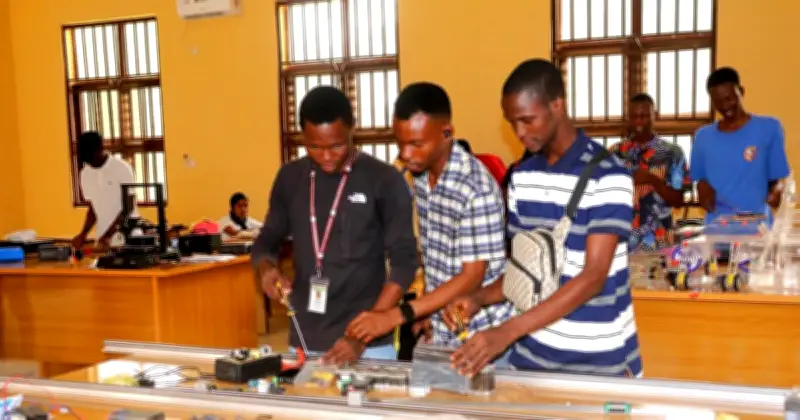
The reforms will strengthen training in engineering, applied sciences, technology, innovation, and technical and vocational skills. The goal is to produce graduates who can build, repair, design, automate, manufacture and solve real-life industrial problems.
More AI, Automation and Digital Skills
Another major part of the reform is updating what students learn in school. The government wants polytechnics to introduce more Industry 4.0 skills into their curriculum, including Artificial Intelligence (AI), automation, digital technologies, green technologies and advanced manufacturing.
Polytechnics are also expected to adopt Outcome-Based Education (OBE), where students are assessed more on what they can actually do with the skills they have learnt, instead of relying mainly on classroom theory.
What Happens to Accounting and Mass Communication?
For now, nothing has officially changed. The NOA stressed that no immediate ban has been placed on specific courses. However, as the reforms progress, polytechnics may gradually reduce programmes considered outside their statutory mandate while expanding technical and technology-based courses.
Exactly which programmes will eventually be affected will depend on future decisions by the Federal Government, NBTE and individual schools.
The controversy started when Education Minister Dr Maruf Tunji Alausa announced plans to strengthen engineering, technology and applied science programmes in Nigerian polytechnics. On August 6, during the inauguration of the Governing Board of the National Board for Technical Education, Alausa encouraged polytechnics to "gradually phase out non-technical programmes" outside their statutory mandate while strengthening engineering, applied science and technology programmes. He also pushed for modern curricula that include artificial intelligence, automation, digital technology, green technology and advanced manufacturing.
For now, students already enrolled in polytechnics have not been asked to leave their programmes. The bigger picture is that future admissions and course offerings may increasingly favour technical disciplines as Nigeria tries to align its education system with industry needs and improve graduate employability. Until detailed implementation guidelines are released, the government's message remains clear: this is a gradual reform—not an overnight cancellation of courses.