The Federal Government has sparked a major controversy in the education sector with its sudden decision to revoke the 2022 National Language Policy (NLP). This policy, designed to promote indigenous Nigerian languages and enhance early childhood learning, was terminated barely three years after its implementation.
A Policy Reversed: The Government's Stance
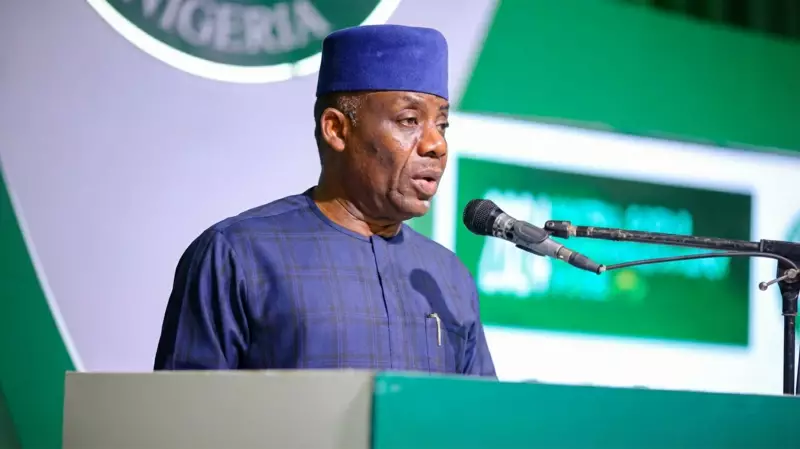
Announcing the revocation at the Language Education International Conference in Abuja on November 12, 2025, the Minister of Education, Dr. Tunji Alausa, declared that English would now be the sole language of instruction from primary school to tertiary level. The NLP had mandated the use of the mother tongue or language of the immediate community as the medium of instruction from early childhood to Primary Six.
Dr. Alausa justified the cancellation by claiming that extensive data analysis revealed poor performance in public examinations like WAEC, NECO, and JAMB in certain geopolitical zones. He attributed this failure to the over-subscribed adoption of mother-tongue instruction in those areas.
Stakeholder Backlash and Counter-Arguments
The minister's rationale has been met with fierce criticism and described as unfounded by key education stakeholders. Professor Aderemi Obilana, CEO of Prakis Educational Services, labeled the revocation as "premature, unfounded and harmful to Nigeria’s cultural and educational development."
Critics argue there is no empirical evidence linking mother-tongue education to mass failure. Instead, they point to substantial global research, including UNESCO's stance and the landmark Ife Six-year Primary Project, which proves that instruction in a child's first language enhances comprehension, literacy, and cognitive development.
The Human Rights Writers Association (HURIWA) condemned the move, calling it a "government-sponsored cultural, scientific and educational suicide." Stakeholders accuse the minister of a "classic case of misdiagnosis" and acting without adequate consultation, noting he shocked attendees at an October meeting of the National Education Group (NEG) with his declaration.
The Core Issues and a Path Forward
The debate highlights two fundamental ideals of the original policy: preserving Nigeria's linguistic heritage from the overwhelming influence of English, and improving foundational learning outcomes. With over 460 indigenous languages, the challenge of implementation is acknowledged, but not unique to Nigeria.
Countries like China, with about 300 local languages, have successfully integrated indigenous languages into their school systems. Experts insist that observed challenges in implementation should lead to expert-led reviews and solutions, not outright cancellation. The preservation of local languages is seen as crucial for cultural identity, history, and social cohesion.
The call is now for the Federal Government to revisit this decision, engage in proper consultation with all stakeholders, and explore ways to salvage a policy aimed at protecting a core part of the nation's sovereignty and heritage.