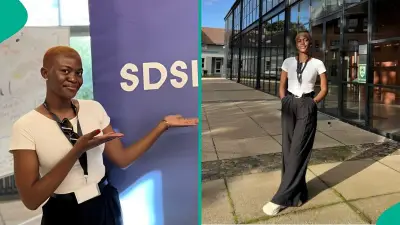
For countless Nigerian students, science class is a world of theory, memorization, and imagination. Rachel Israel, reflecting on her own journey to a Master's in Chemical Engineering, recalls learning in classrooms devoid of laboratories. This experience, shared by many, especially in rural areas, involved memorizing chemical reactions never seen and machines never touched. In an article dated 16 December 2025, 7:57pm WAT, Israel presents a compelling vision: mixed reality could be the transformative force that changes science education in Nigeria forever.
From Chalkboard Drawings to Interactive 3D Worlds
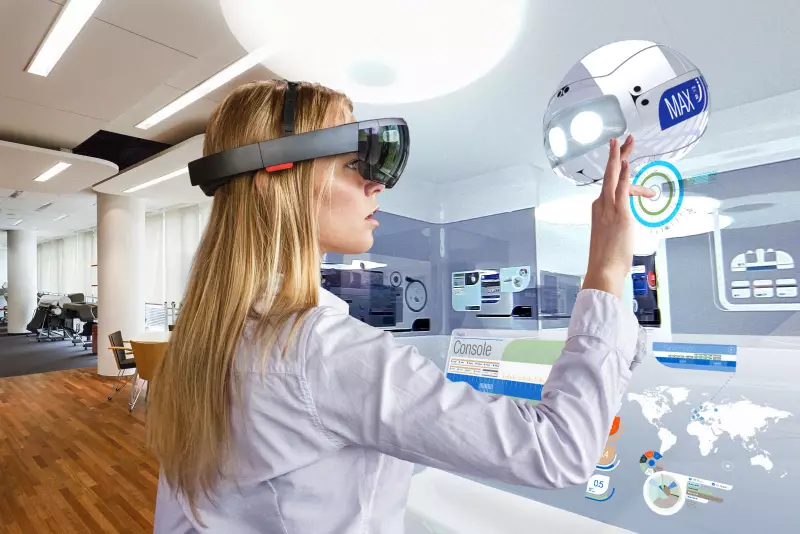
The traditional model is familiar. A teacher sketches a beaker on a chalkboard, explaining a reaction while students copy notes and memorize equations. Mixed reality shatters this limitation. It allows students to witness molecules colliding, observe reactions safely, and interact with three-dimensional laboratory equipment—all without a physical lab. This shift moves education from cramming to genuine understanding.
In physics, abstract topics like force and electricity become tangible. Students can visualize current flow, simulate motion, and manipulate variables in real-time. Concepts that once caused confusion suddenly click into place. For biology students, exploring a beating human heart or the intricate structure of a plant cell in three dimensions replaces rote memorization of flat diagrams. The result is profound: participation increases, fear reduces, and confidence grows.
Accessibility and Awakening Ambition
A key advantage of mixed reality is its accessibility. It does not demand perfection or vast resources. With basic smartphones, affordable headsets, offline science content, and solar-powered charging, even schools in remote areas can participate. One trained teacher with a shared device can revolutionize an entire classroom's learning experience.
The impact goes beyond academic comprehension. When a child virtually steps inside a laboratory, a refinery, or a cutting-edge research facility, science ceases to be a distant, abstract subject. It becomes a realm of possibility. This exposure can awaken ambition, planting the seed for a future as an engineer, scientist, or innovator. Exposure changes direction.
The Collective Effort Required for Change
However, this transformation cannot occur without a concerted commitment from all stakeholders. Parents must support this new mode of learning, help protect educational devices, and reinforce the value of science education. Schools must embrace innovation and move past a fear of technology.
Furthermore, private organizations, universities, and education-focused NGOs must invest in pilot programs. These initiatives should start with science subjects where student failure rates are currently highest. Nigeria cannot continue to teach science as pure theory and expect meaningful technological progress. The nation risks losing brilliant minds simply because the learning process is abstract and discouraging.
Mixed reality is not a magic bullet that will replace teachers. Instead, it is a powerful tool that will empower them. It will not fix every systemic problem in the education sector, but it will unlock a deeper level of understanding for students. Most importantly, it offers the average Nigerian child something many have never had: the chance to truly see, interact with, and understand the wonders of science.
The future of Nigeria's innovation and technological advancement is directly tied to the educational experiences provided to children today. The argument is clear: the time to bring science to life for every student is now.