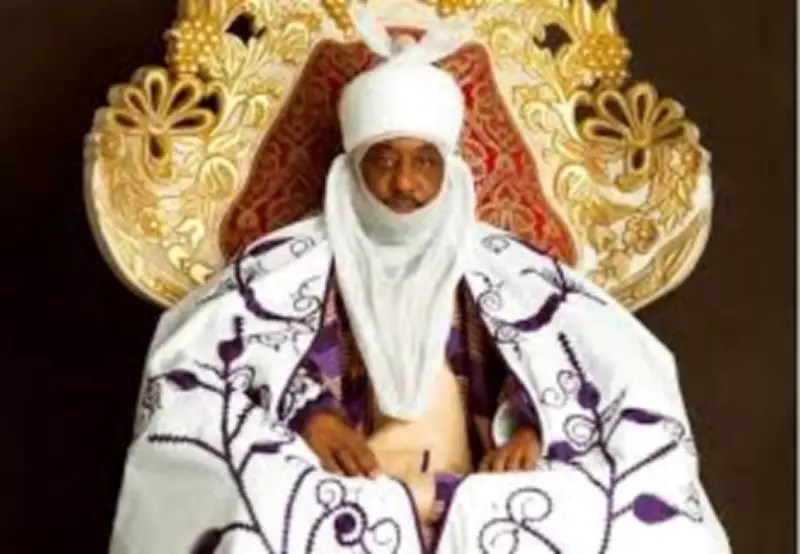
The 16th Emir of Kano, His Highness Muhammadu Sanusi II, has identified a critical shortage of educational institutions as the primary catalyst for the alarming rise in early child marriages across Northern Nigeria. The respected monarch delivered this powerful analysis during an exclusive interview on Channels Television on Wednesday, February 4, highlighting systemic failures that perpetuate this social crisis.
Constitutional Rights Versus Harsh Realities
According to the former Governor of the Central Bank of Nigeria, while the Nigerian constitution explicitly guarantees every child the fundamental right to education, this provision remains largely theoretical for many families in the northern region. Sanusi II pointed to weak enforcement mechanisms and the glaring absence of basic school facilities as factors that render constitutional protections ineffective in practice.
The Structural Conditions Behind Family Decisions
The monarch explained that public discourse often focuses narrowly on the phenomenon of child marriage itself, while consistently overlooking the underlying structural conditions that force families into making such difficult decisions. "We're talking about child marriage, but you go to some parts of the North, there's a primary school and that's it," he stated bluntly, painting a picture of educational abandonment.
Sanusi II detailed how many young girls complete their primary education at remarkably early ages, typically around 11 years old, only to find themselves with no viable pathway for continued academic advancement or practical skills development. "So the girl finishes at 11. Between 11 and 18, what arrangements have you made for her?" he questioned rhetorically, emphasizing the seven-year gap that leaves adolescent girls particularly vulnerable.
Critical Infrastructure Gaps Identified
The Emir systematically listed the missing components that create this dangerous void in young lives:
- The absence of accessible secondary schools
- No skills acquisition centers for vocational training
- Inadequate social support systems for adolescent development
"There's no secondary school, there's no skill centre, there are no provisions for her life," Sanusi II summarized, describing how these deficiencies create a perfect storm for early marriage.
Fear as a Driving Force
Sanusi provided crucial insight into the psychological dynamics affecting impoverished families, noting that decisions to marry off young daughters often stem more from practical fear than cultural preference. "The poor man basically fears that she's 12 or 13, and he's afraid that she might get pregnant on the road," he explained, revealing the protective instincts that paradoxically lead to harmful outcomes.
This pervasive anxiety frequently results in parents accepting the first marriage proposal that presents itself. "So the next young man that comes, he marries her off," Sanusi described, illustrating the desperate circumstances facing many families.
The Enforcement Dilemma
The monarch highlighted the legal contradictions surrounding education rights, noting that "Our constitution says every child is entitled to education, so if you take a child out of school you're supposed to commit an offence." However, he immediately questioned the practicality of enforcing such laws when the state itself has fundamentally failed to fulfill its obligations.
"But how many people have ever been arrested for taking a child out of school? None of them," Sanusi observed, pointing to the complete absence of enforcement. He argued that this enforcement vacuum exists precisely because "the government has not provided the schools" necessary to accommodate children, particularly in remote rural communities.
A Call for Comprehensive Solutions
Emir Sanusi II stressed that effectively addressing the child marriage epidemic requires moving beyond superficial moral arguments or cultural condemnation. He insisted that sustainable solutions must involve substantial government investment in educational infrastructure and social support systems that provide young girls with viable alternatives to early marriage.
The monarch's analysis reframes the child marriage conversation from one of cultural criticism to one of governmental responsibility, emphasizing that creating educational opportunities represents the most effective pathway to protecting vulnerable girls and transforming communities across Northern Nigeria.