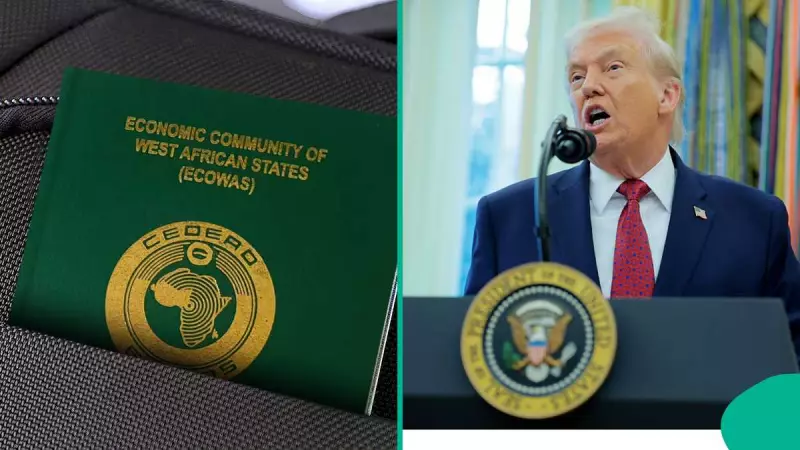
In a significant policy shift affecting international mobility, former President Donald J. Trump announced expanded travel restrictions on December 16, 2025, directly impacting Nigerian citizens. The proclamation placed Nigeria under a partial entry suspension, creating substantial new barriers for Nigerians aiming to visit, study, or work in the United States.
Specific Visa Categories Under Scrutiny
The White House justified the move, citing national security concerns, immigration enforcement priorities, and perceived deficiencies in Nigeria's vetting processes. Unlike a full ban, the partial restrictions specifically target key visa categories crucial for Nigerians.
Applicants for immigrant and nonimmigrant visas in the B-1 (business), B-2 (tourism), F (student), M (vocational), and J (exchange visitor) categories now face a much tougher process. This translates to intensified scrutiny, significantly longer waiting periods for processing, and a markedly higher probability of visa denial.
Overstay Rates and Security Justifications
Official data from the US Department of Homeland Security played a key role in the decision. The 2025 Entry/Exit Overstay Report highlighted a 5.56% overstay rate for Nigerian holders of B-1/B-2 visas. For student and exchange visas (F and J categories), the rate was even higher at 11.90%. US authorities stated these figures strain immigration resources.
Furthermore, Washington pointed to the presence of terrorist factions like Boko Haram and the Islamic State in West Africa Province (ISWAP) as evidence of regional instability. The US government argued this environment complicates reliable identity verification and risk assessment for applicants from certain areas.
Wide-Ranging Consequences for Nigerians
The repercussions are particularly acute for Nigerian students, who form one of the largest African educational cohorts in the US. Thousands now confront uncertainty, with delays and denials for F and J visas disrupting academic plans and family investments in overseas education.
Nigerian professionals and entrepreneurs are equally affected. Those traveling for conferences, training, or business meetings using the B-1 visa will encounter stricter checks and more complex procedures, potentially hindering economic and professional exchanges.
The proclamation also narrows exemptions for family-based immigrant visas. While case-by-case waivers remain a possibility, the broad carve-outs that previously facilitated family reunification have been reduced. This imposes additional hurdles for Nigerians hoping to join relatives residing in the United States.
In a related development, the United States Embassy in Abuja issued a stern warning on December 15, cautioning visa applicants against fraud. The embassy's statement on X emphasized that submitting falsified information or counterfeit documents could result in a permanent ban from entering the US.