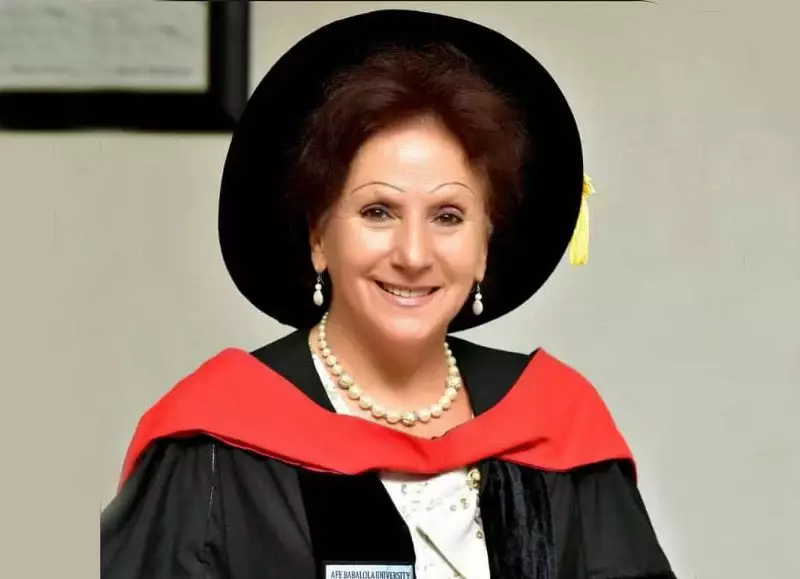
Prominent academics from Nigeria and the United Kingdom have issued a strong call for increased gender balance within the leadership structures of higher education institutions. The Vice Chancellor of Afe Babalola University, Ado-Ekiti (ABUAD), Professor Smaranda Olarinde, and Professor Adetoro Adegoke, a Professor of Health Inequalities at Buckinghamshire New University, UK, made the appeal during a major workshop focused on empowering women in academia.
Workshop Aims to Break Leadership Barriers
The three-day event, titled "Empower: Leadership Training for Women in Higher Education," was held on the ABUAD campus in Ado-Ekiti. With the theme "Leading Authentically in Higher Education: Life Experience and Leadership," the workshop convened on December 4, 2025. It was designed to tackle the noticeable scarcity of women in top academic leadership roles, a challenge identified both in Nigeria and the United Kingdom.
In her keynote address, Professor Olarinde outlined the dual qualities required of modern university leaders. "Higher education today demands leaders who are visionary yet compassionate, strategic yet flexible, firm yet fair," she stated. She argued that while women often naturally possess these complementary strengths, they must overcome significant internal and external hurdles to claim leadership positions.
Professor Olarinde identified self-doubt, intimidation, societal expectations, and systemic biases as key obstacles. She framed authentic leadership as a courageous, lived experience. "My own leadership journey has been shaped by resilience, service, consistent values, and a firm belief that change begins with courage," she shared. For her, authenticity means holding firm to integrity during adversity and using challenges to build a greater capacity to serve.
British Council Funding Targets Gender Equality
Professor Adetoro Adegoke provided critical context on the initiative's scope and funding. She revealed that the project is supported by the British Council, specifically aimed at promoting gender equality at the leadership level in universities. "The aim of the project... is to support aspiring women leaders so that we can be able to reach that level of leadership and to ensure gender balance when it comes to representation," she explained.
She highlighted a common trend where many women academics remain at lecturer or senior lecturer levels without progressing to headships, deanships, or vice-chancellorships. This "leaky pipeline" phenomenon is not unique to Nigeria. Professor Adegoke shared insights from the UK context, noting similar barriers related to mindset and imposter syndrome that hinder women's ascent.
"It's really difficult for women to ascend to the level of leadership, even within the UK," she emphasized, underscoring the global nature of the challenge. She also pointed to the intersectional disadvantage faced by women from ethnic minorities, citing her own position as only the 61st black female professor in the UK.
A Call for Purposeful and Authentic Leadership
Both professors concluded that transformative leadership in academia requires authenticity and purpose. Professor Olarinde urged women to confidently "take up space" without apology. She described leadership as demanding sacrifice and constant service, which becomes truly purposeful when it emanates from one's core values and experiences.
The workshop at ABUAD represents a concrete step, backed by international funding, to equip women with the tools and confidence to navigate the path to leadership. It addresses a critical need for diverse perspectives at the helm of institutions shaping future generations.