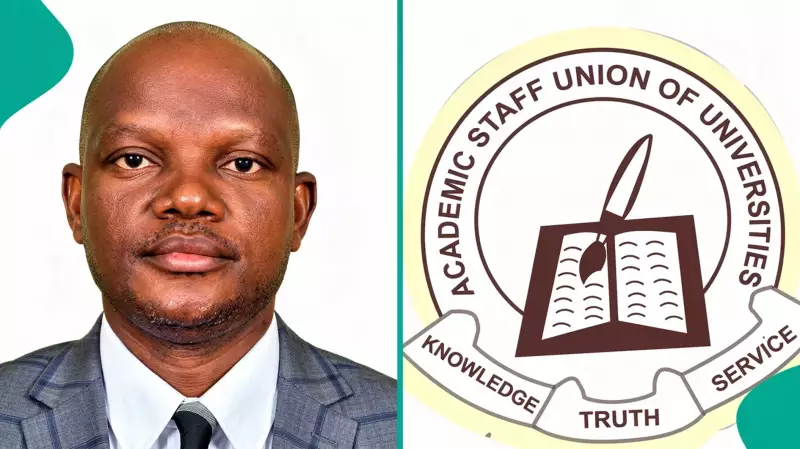
In a landmark event marking the end of a protracted struggle, the Academic Staff Union of Universities (ASUU) and the Federal Government of Nigeria have officially signed a renegotiated agreement. The signing ceremony, held on December 23, 2026, concludes a 16-year wait since the last agreement was inked in 2009.
A Long Road to Resolution
Professor Chris Piwuna, the President of ASUU, presented the historic document, noting that the 2009 agreement was due for review in 2012. He attributed the prolonged delay to a "poverty of sincerity" on the part of successive governments. The 2025 Renegotiated Agreement is the outcome of a process initiated in 2017 to revitalize Nigeria's crumbling university system.
The journey witnessed multiple government committees. It began with the Wale Babalakin committee in 2017, followed by the Munzali Jibril committee in 2021, and the Nimi Briggs committee in 2022. None yielded a final collective bargaining agreement. The breakthrough came with the Yayale Ahmed-led Renegotiation Committee, inaugurated in October 2024, which reached an agreement approximately 14 months later.
Professor Piwuna paid glowing tribute to Alhaji Yayale Ahmed, describing him as a patriot and diplomat who worked tirelessly behind the scenes. "Sir, you will go to heaven!" Piwuna stated, recounting moments when Ahmed almost gave up but staked his integrity on the process.
Core Issues and Lingering Challenges
The new agreement focuses on four critical areas: conditions of service, university funding, institutional autonomy, and academic freedom. It aims to reverse systemic decay, curb the alarming brain drain, and reposition universities for national development.
However, Piwuna highlighted unresolved issues threatening the system's progress. He decried the government's persistent encroachment on university autonomy, citing the arbitrary dissolution of Governing Councils and interference in Vice-Chancellors' appointments. "Such actions send a clear message that councils exist at the pleasure of government," he warned.
He also raised an alarm about the mismanagement of funds within universities, accusing some Vice-Chancellors of financial recklessness and turning institutions over to consultants. "Our universities are now run by consultants! It has become a clean way of 'cleansing' funds fought for by our Union," Piwuna alleged.
Research Funding and Eroding Standards
A key component of the agreement is a push for sustainable research funding. The deal stipulates that the National Research Council (NRC) Bill, proposing at least 1% of Nigeria's GDP for research, be sent to the National Assembly. Piwuna called on the Senate President and Speaker of the House to give the bill accelerated hearing.
The ASUU President also criticized the rapid and improper conversion of Chief Lecturers to Professors in newly upgraded Federal Universities of Education. He emphasized that the rank of Professor has a universal standard involving research output and external assessment, which must not be eroded.
A Call for Broader National Intervention
Piwuna connected the university system's challenges to the wider national crisis. He highlighted how neoliberal policies like subsidy removal and naira devaluation have crippled household purchasing power, making university education increasingly unaffordable despite initiatives like NELFUND.
He painted a grim picture of the national economy, noting that the current N70,000 minimum wage is worth only $47, compared to the N18,000 wage under President Jonathan, which was equivalent to $111. "It simply means our lives have been devalued," he stated.
Extending an olive branch, Piwuna told the Minister of Education, Dr. Tunji Moruf Alausa: "Tell your colleagues in government that they have an ally in ASUU. We are ready to work with you to make life better for Nigerians." He also invited the Chairman of the Presidential Fiscal Policy and Tax Reforms Committee, Dr. Taiwo Oyedele, to ASUU's next NEC meeting.
While expressing optimism about the agreement's implementation, Piwuna acknowledged a pessimistic side, given the historical "poverty of sincerity" from the government. The union hopes it will not need to issue a strike threat to ensure the full implementation of the 2025 ASUU-FGN Renegotiated Agreement.