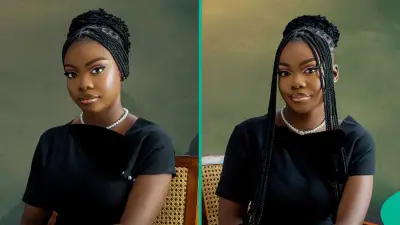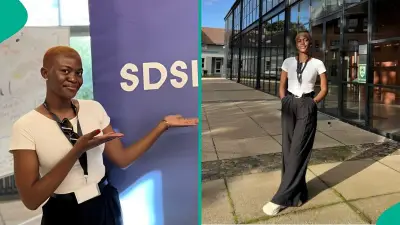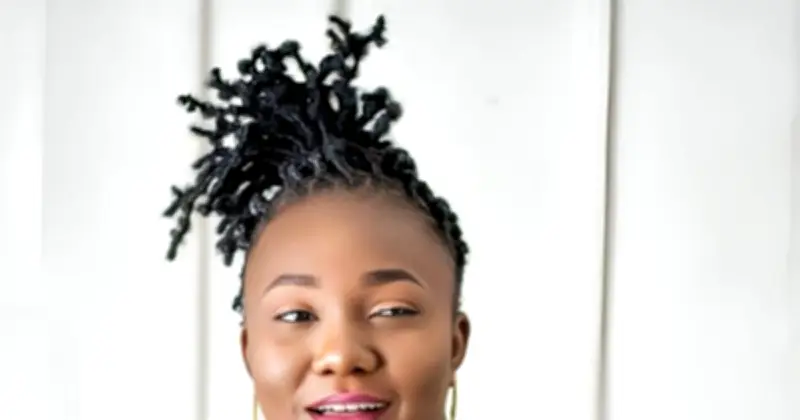
Tijesuni Michelle Ogunsua-Dixon scored 288 in the 2025 Unified Tertiary Matriculation Examination (UTME) for candidates with disabilities, securing admission to study Mass Communication at the University of Lagos (UNILAG) after waiting nearly eight years since finishing secondary school. She also won a JAMB scholarship as one of the highest-performing candidates in the disability category.
Diagnosis and Vision Loss
Michelle was diagnosed with a brain tumour at age 11. She recalled in an interview with Punch that persistent headaches and difficulty participating in sports led to the discovery. "In 2013, I was diagnosed with a brain tumour, and I remember I was 11 back then," she said.
While in secondary school, her peripheral vision began to fade. She kept bumping into objects and miscalculating distances. Eventually, she could no longer read even with the book held close to her face. Doctors recommended surgery but warned of a 50-50 chance of survival. After collapsing in late 2017, Michelle underwent two brain surgeries in January 2018. Although the operations successfully removed the tumour, her eyesight could not be saved. Doctors explained that this was a consequence of not extracting the tumour earlier.
Years of Waiting for Admission
After completing secondary school, Michelle faced a seven- to eight-year wait before gaining university admission. She sat for the 2025 UTME under the disability category and achieved a score of 288, which earned her a place at UNILAG. She also received a call from JAMB informing her of a scholarship. "I was skeptical. I was like, 'Is this not a scam?'" she said. She later discovered she was the only candidate with a disability among the award recipients.
Michelle credited her family, teachers, and friends for their unwavering support. "My family is everything to me," she said, noting that unlike many persons with disabilities who are abandoned, her parents and siblings never treated her differently.
Future Ambitions and Advocacy
Now a first-year student at UNILAG, Michelle aspires to become a broadcaster and producer. "I want to take the voice of people living with disabilities, of vulnerable and less privileged people to the world," she said. She also called on the government and educational institutions to improve disability inclusion by making schools more accessible and expanding educational opportunities.
According to Michelle, education remains one of the biggest barriers for people with disabilities in Nigeria. She ended with a powerful message: "Life doesn't end where your disability starts, life only begins. If life throws you spikes and balls, make a game out of it. Pursue a good education and don't give up on life."
Her story serves as a reminder that determination, family support, and access to opportunities can overcome even the most daunting challenges within Nigeria's education system.