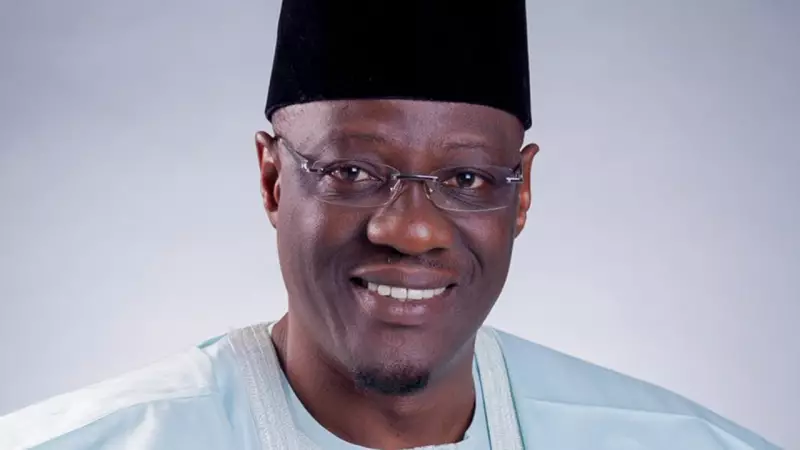
Former Kwara State Governor Mallam Abdulfatah Ahmed has called on Nigerian universities to embrace the glocalisation model in their academic and administrative frameworks to enhance their global competitiveness while addressing local challenges.
Addressing Brain Drain Through Contextual Education
The former governor made this appeal while delivering a keynote address at the Alumni colloquium during the University of Ilorin's 50th anniversary celebration. The event took place at the institution's main auditorium on November 27, 2025.
Ahmed expressed concern about what he described as avoidable misdeeds where Nigerian universities mimic foreign institutions while neglecting local considerations. He highlighted the urgent need for educational reform in the face of massive brain drain, noting that young Nigerians are migrating in record numbers seeking opportunities they believe are unavailable at home.
Climate change is rewriting the rules of agriculture, energy and urban planning, Ahmed emphasized during his speech titled 'From Unilorin to Glocalisation.' He pointed out that economic globalization and its accompanying dislocations are redrawing maps of opportunity, leading to damaging migration of able-bodied Nigerians to better climes.
Stanford and Oxford as Glocalisation Models
The former governor, who is an alumnus of Unilorin, clarified that glocalisation is not about pursuing international rankings or imitating Western universities. Instead, it involves integrating global knowledge with local context to create solutions that are both innovative and relevant - world-class yet homegrown.
Ahmed cited successful examples of this model, including Stanford University's partnership with Silicon Valley that produced innovations like Google and Hewlett-Packard. He also mentioned Oxford University's Begbroke Science Park, where academics collaborate with businesses, government agencies and local communities to test ideas in real time.
The world will not wait for us. It will not slow down to accommodate institutional inertia, Ahmed warned. We must evolve, not by abandoning our core values, but by deepening and expanding them.
Curriculum for the Glocal Graduate
Ahmed stressed the need to fundamentally rethink educational content and delivery methods. He proposed that every graduate should understand how to interpret data critically, evaluate algorithmic systems intelligently and recognize the ethical dimensions of technology in society.
The former governor painted a stark picture of professionals who would struggle in the twenty-first-century workplace, including teachers who cannot navigate digital learning platforms, doctors who cannot interpret AI-assisted diagnostics, and civil servants who cannot make evidence-based decisions using data.
Ahmed called on students, faculty and alumni to participate in shaping curricula, forging industry ties, supporting new research and mentoring the next generation. Let us pledge today to apply our knowledge, resources and networks to drive this transformation, he encouraged.
In his remarks, Vice Chancellor Wahab Egbewole urged the Alumni Association to establish platforms that would enable the university to track every graduate and provide avenues for meaningful engagement. He emphasized that alumni must serve as brand ambassadors, mentors and sources of financial, intellectual and moral support.
The vice chancellor added that the alumni body must familiarize itself with the university's strategic plans and build bridges with telecommunications firms, research platforms, industries, security agencies and both local and international institutions that can support institutional growth.