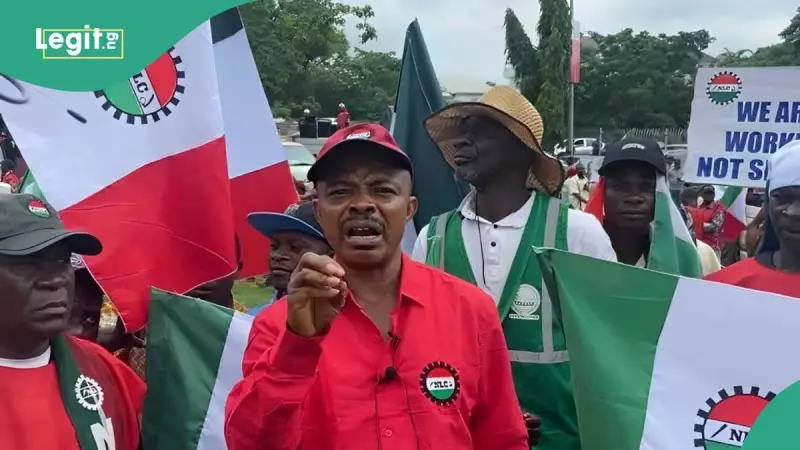
The President of the Nigeria Labour Congress (NLC), Comrade Joe Ajaero, has made a strong call for the unionization of private universities across Nigeria, urging the Academic Staff Union of Universities (ASUU) to initiate this crucial process.
Government's Failure to Honor Agreements
Speaking during The Toyin Falola Interviews Series on Sunday, Ajaero strongly condemned what he described as the "incessant harassment" of ASUU and its members by government authorities. He particularly questioned why agreements signed between the government and ASUU dating back to 2009 have remained unimplemented.
The NLC president recalled that ASUU was originally established to function independently of the NLC, but noted that the labour congress successfully challenged the government's classification of the academic union, establishing their right to intervene in matters affecting university staff.
Private Universities: Designed to Undermine ASUU?
Ajaero presented a compelling argument about the fundamental purpose behind the creation of private universities in Nigeria. He stated that private institutions were specifically designed to undermine ASUU's influence in the higher education sector.
"Private universities have been insulated from recurring ASUU strikes because there is no academic union in those institutions," Ajaero emphasized during the interview session titled "A conversation with the President of ASUU, Professor Christopher Piwuna."
The labour leader stressed that concerted efforts must now be made to unionize academic staff in private universities to create a unified front in the education sector. He also called for greater synergy among various university unions to harmonize their demands from the government.
ASUU President Defends Union's Position
Responding to the discussion, ASUU President Professor Christopher Piwuna defended the union's longstanding position. He emphasized that universities can only achieve the desired academic freedom when staff members have access to adequate facilities and working conditions.
Professor Piwuna firmly rejected claims that ASUU members are selfish in their demands, noting that academics consistently endure various forms of intimidation from government authorities while fighting for better educational standards.
Adding depth to the conversation, Professor Francis Egbokhare highlighted what he termed an "ideological problem" between the government and ASUU. He explained that while ASUU seeks to improve the tertiary education system through better welfare packages and enhanced research facilities, the government approaches union matters from a completely different perspective.
Professor Egbokhare stressed that achieving ideological convergence between both parties is essential to prevent continued suffering for Nigerian students who bear the brunt of prolonged academic disruptions.
The Sunday interview session has reignited crucial conversations about the future of university education in Nigeria and the role of unionization in maintaining academic standards across both public and private institutions.