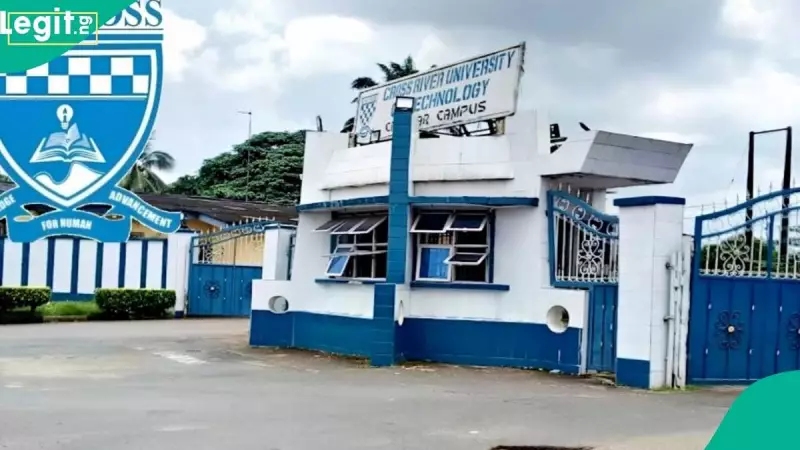
University of Cross River State Addresses Result Controversy
The management of the University of Cross River State (UNICROSS) has officially responded to mounting allegations regarding the tampering of students' academic results. During a comprehensive media briefing held in Calabar, university authorities categorically denied any intentional manipulation of student records while providing detailed explanations for the reported delays and discrepancies that have affected graduation timelines.
Management Breaks Silence on Social Media Criticism
Following sustained criticism across various social media platforms concerning delayed results and graduation backlogs, UNICROSS leadership decided to address these concerns publicly. The university's decision to hold the media briefing came after weeks of growing student frustration and public speculation about the integrity of the institution's academic processes.
Inherited Systemic Challenges and Reform Efforts
Professor Stella-Maris Okey, the Deputy Vice-Chancellor (Academic), emphasized that the current management team has been in office for only six months, having assumed leadership in January 2025 with confirmation occurring in July 2025. She explained that the administration inherited significant systemic challenges from previous administrations while simultaneously implementing comprehensive reforms to stabilize the university's academic systems.
"We must correct widespread misconceptions about how results are processed at our institution," Professor Okey stated during the briefing. "The current management felt it was necessary to speak out and set the records straight regarding result administration and the reasons behind certain delays that have occurred."
Examination Portal Transition Complications
Engineer Dr. Anderson Etika, the Director of Exams and Results, provided technical details about the challenges stemming from the transition between examination portals. He revealed that the university was already in the process of migrating from an old examination portal to a new system when the current Vice-Chancellor assumed office.
"Incompatibility between the two systems and unresolved financial obligations on the old portal led to its premature shutdown before data migration could be completed," Etika explained. "This unfortunate situation resulted in results stored in the cloud on the old platform becoming completely inaccessible to both students and administrators."
Massive Data Retrieval Operation
The university management directed all academic departments to retrieve hard copies of student results as an emergency measure. This monumental task involved accessing academic records dating back to 2002, requiring the processing of more than five million individual data entries across various faculties and departments.
Addressing Graduation Backlogs
To tackle the significant graduation backlog that has developed, management approved the accelerated migration of results covering the 2017/2018 through 2022/2023 academic sessions. Etika described this effort as compressing several years of academic work into an extremely condensed timeframe to ensure affected students could graduate according to their original schedules.
New Administrative Controls Implemented
The current administration has introduced substantial reforms aimed at improving transparency and preventing potential result manipulation in the future. Under the new system, lecturers now have real-time access to upload examination results, but uploaded results can no longer be altered without explicit approval from the Vice-Chancellor's office.
"Lecturers are now required to upload results within two to three weeks following examinations," Etika emphasized. "Those who default on this timeline face significant sanctions, including potential salary withholding as a disciplinary measure."
Financial Assurance for Affected Students
University management provided clear assurances that no additional fees would be charged to students for delays caused by systemic issues. Furthermore, affected students would graduate in the academic sessions originally scheduled for them, with the university committing to absorb any administrative costs associated with resolving the backlog.
Internal Resistance and Disciplinary Actions
Etika acknowledged that some staff members had resisted the implementation of these reforms, contributing to internal tensions within the university. The administration has taken disciplinary measures against those found culpable, including suspensions, removal from office, and salary stoppages where appropriate.
Government-Directed Platform Implementation
Clarifying the institutional context, Etika noted that the result management platform currently in use is state-owned and government-directed. He emphasized that the decision to change the examination system predated the tenure of the current Vice-Chancellor, placing the transition within broader governmental educational reforms.
The Director of Exams and Results assured students and stakeholders that results from academic sessions prior to 2017 would be migrated once the present challenges have been stabilized. "Our primary focus remains restoring confidence in our academic systems and ensuring every student receives what is rightfully theirs," Etika concluded.