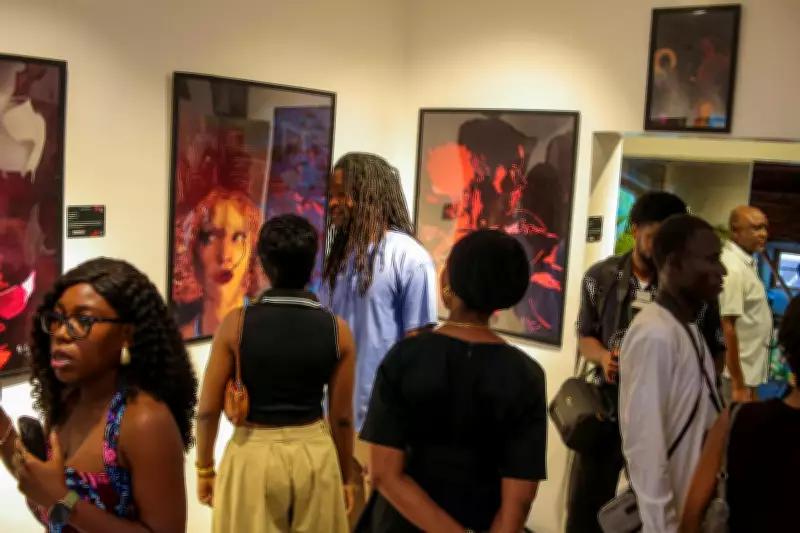
Jessica Ajuyah's 'The Shape of Memory' Exhibition Explores Identity and Womanhood
An art exhibition titled 'The Shape of Memory' has concluded its run at the Terra Kulture Gallery in Lagos. The showcase, which ran from February 15 to March 8, featured works by artist Jessica Ajuyah that delve into themes of identity, resilience, and the lived experiences of women. The exhibition was timed to coincide with International Women's Day, providing a contemplative space for visitors to engage with concepts of self-love, empowerment, and personal growth.
Exploring Memory and Identity Through Digital Art
Jessica Ajuyah's exhibition uses a series of layered digital paintings to investigate how memories accumulate over time and leave lasting imprints on the self. According to the artist, the works represent a deeply personal and conceptual exploration of memory and identity. "The Shape of Memory is a cohesive body of work exploring memory, materiality and the lived experiences of women," Ajuyah explained. "The series examines how memory shapes identity over time and how those experiences are carried within the body and expressed through surface."
Ajuyah's creative process involves building complex visual layers that mimic the way memories overlap, fade, and resurface. She noted that texture, repetition, and visible brushwork are integral to her digital paintings, allowing the material itself to mirror the instability of recall. "What remains clear, what becomes blurred, and what is consciously held onto are all part of the visual language of the series," she said.
Reflections on Womanhood and Empowerment
The paintings in the exhibition explore the importance of a woman taking time to understand herself, her desires, her boundaries, and her voice. They reflect the reality of navigating expectations from family, society, and relationships while choosing to remain grounded in one's own growth. Ajuyah emphasized that memory is not fixed or linear but is layered, emotional, and often abstract. "The Shape of Memory speaks to the idea that who we become is rarely formed in a single moment," she stated. "It is shaped gradually through experiences, relationships, and reflections that accumulate across our lives."
Beyond its visual appeal, the exhibition aims to spark conversations about empowerment and self-acceptance. Ajuyah added that such ideals are built through personal decisions rather than abstract concepts. "The exhibition contributes by creating space for reflection and conversation around what empowerment and self love actually look like in everyday life," she said.
Critical Acclaim and Cultural Significance
Curator at the Terra Kulture Gallery, Barrister Yakubu Yahaya, described the exhibition as an important addition to contemporary African art discourse. "The Shape of Memory positions Jessica within a lineage of African artists who treat memory as both fragile and resilient," Yahaya said. "Her work is not only aesthetically compelling but also socially urgent, reminding us that memory is the raw material from which identity and culture are continuously edited."
Yahaya likened Ajuyah's artistic process to film editing, noting that her technique reflects the fluid nature of memory. He further explained that her work is informed by conversations with women about their lived realities, situating memory as an embodied experience rather than an abstract concept. Yahaya also highlighted the exhibition's broader cultural significance within Lagos.
Visitor Reactions and Artistic Innovation
One of the visitors, cultural figure Dede Mabiaku, described the experience as both visually striking and spiritually uplifting. "The Shape of Memory is first of all a classic title for an art exhibition of that nature," Mabiaku said. "The experience I had was a spiritually uplifting feeling of a rare format of art expression."
Mabiaku noted the uniqueness of Ajuyah's digital painting technique, which mimics traditional painting styles despite not using physical brushes. "It is very rare to find people who do not paint with the traditional brush and yet it looks so real, like a watercolour expression, and in some works it even looks like acrylic, as though a brush was used," he remarked. He applauded the artist's creativity and innovation, questioning how such realistic effects were achieved without traditional tools.
The exhibition has been praised for its innovative approach and its contribution to discussions on identity, memory, and womanhood in contemporary art.