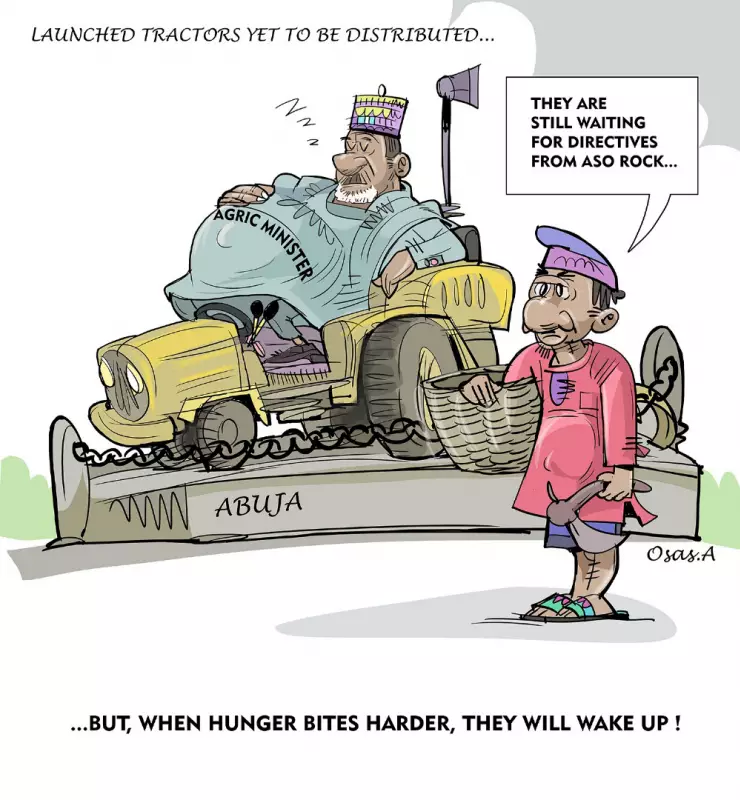
The editorial pages of Nigeria's leading newspapers often serve as a mirror to society, reflecting its triumphs and tribulations through various lenses. One of the most potent forms of this reflection is the editorial cartoon, a medium that combines artistry with sharp commentary. The Guardian Nigeria, a stalwart of the nation's media landscape, continues this tradition with its latest offering, identified as Cartoon 510. This piece stands as a significant entry in the publication's long-running series of satirical illustrations, designed to provoke thought and spark conversation among its readership.
The Art of Satire in Nigerian Media
Editorial cartoons are not mere drawings; they are visual editorials. In the Nigerian context, where public discourse is vibrant and often complex, cartoonists wield their pens as powerful tools for critique and observation. The artist behind Cartoon 510 for The Guardian employs familiar symbolic imagery and caricature to distill multifaceted national issues into a single, impactful frame. This approach allows for immediate communication with the audience, transcending literacy barriers and delivering a message that is both accessible and profound. The cartoon likely follows the publication's established style of focusing on current socio-political and economic realities facing the nation.
Decoding the Visual Narrative
While the specific imagery of Cartoon 510 is derived from the source, its creation follows a deliberate process. Typically, such a cartoon would select one or two core themes dominating the news cycle. These could range from governance and leadership challenges, economic hardships like inflation and unemployment, to social issues such as security, infrastructure, and national unity. The cartoonist personifies these abstract concepts, often depicting public figures or symbolic characters in scenarios that highlight irony, contradiction, or absurdity. The power lies in exaggeration and metaphor, prompting viewers to recognize the underlying truth behind the humorous or grotesque portrayal.
The effectiveness of a cartoon like this one depends on its timeliness and relevance. It captures a specific moment in the national consciousness, serving as a historical snapshot of prevailing public sentiment. For regular readers of The Guardian's opinion section, these cartoons provide a consistent thread of critical commentary, complementing the written editorials and op-eds. They encourage readers to engage critically with news stories beyond the headlines, looking for the deeper patterns and systemic issues at play.
Impact and Role in Public Discourse
The publication of Cartoon 510 contributes to the essential watchdog function of the press. By employing satire, it can critique power structures and societal flaws in a manner that might be more palatable or impactful than straightforward reportage. It can highlight the gap between political promises and lived realities, or underscore the human cost of policy failures. This form of journalism holds a mirror up to society and its leaders, demanding accountability and reflection.
In a media environment sometimes fraught with tension, the editorial cartoon remains a vital space for protected speech and creative dissent. It fosters a culture of questioning and does not allow complacency to set in. For the audience, it offers a moment of catharsis—a chance to laugh or sigh in collective recognition of shared struggles. Moreover, in the digital age, such cartoons are highly shareable, extending their reach and influence far beyond the newspaper's physical pages, sparking debates on social media platforms and in online forums.
Ultimately, Cartoon 510 is more than just a piece of art in a newspaper; it is a cultural and political artifact. It represents the enduring role of The Guardian Nigeria in facilitating national conversation. It reminds citizens and leaders alike of the ongoing challenges and the collective aspiration for progress. As with all potent satire, its goal is not merely to criticize but to inspire a longing for a better, more functional, and just society, using wit and artistry as its primary weapons.