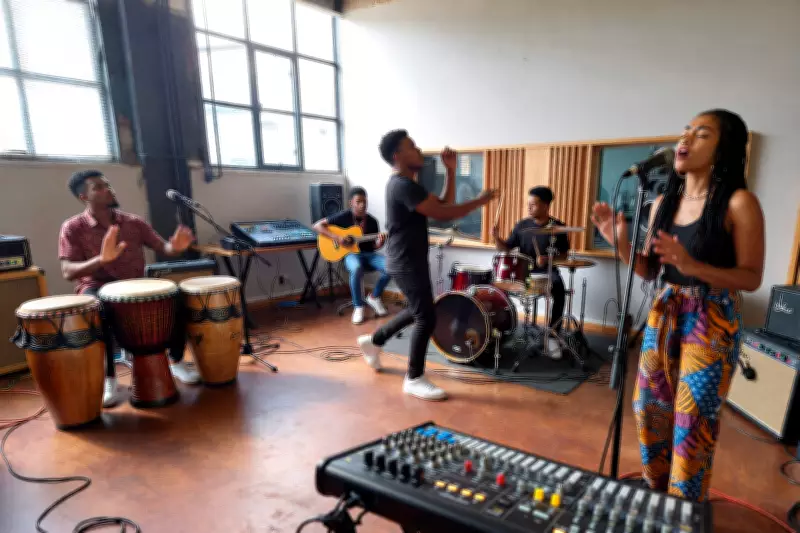
Exploring the Vibrant Soundscape of Nigerian Music: Tradition Meets Innovation
Nigerian music stands as one of the most electrifying and culturally rich soundscapes globally, blending ancient traditions with modern innovation. This article is based on extensive research into Nigerian musical traditions, live performances from Lagos to Abuja, and personal immersion across its diverse forms. After experiences like the Calabar Carnival, traditional drumming ceremonies in Yoruba villages, and witnessing Afrobeats stars command stadiums, it is clear that Nigerian music defies simple categorization.
The Dual Nature of Nigerian Music
What strikes most powerfully about Nigerian music is its operation as both ancient tradition and modern innovation simultaneously. Rhythmic patterns passed down through generations blend seamlessly with electronic production techniques developed in studios like those in Yaba. It is akin to weaving a tapestry where golden threads from centuries past intertwine with neon fibers from tomorrow's fashion show.
The Federal Ministry of Arts, Culture and Creative Economy recognizes Nigerian music as vital cultural heritage, documenting how diverse ethnic groups have created distinct musical traditions over centuries. From the rhythmic complexity of Yoruba juju to the soulful melodies of Igbo highlife, and from the percussion-heavy Hausa kalangu to the global phenomenon of Afrobeats, Nigerian music embodies the creative spirit of Africa's most populous nation.
Personal Insights and Musical Diversity
I recall a memorable moment in a cramped studio in Surulere, where a producer named Tunde layered five different percussion patterns—including talking drum, shekere, conga, trap hi-hats, and a sampled water bottle—while a singer improvised melodies across three scales. The result was both ancestral and futuristic, capturing the essence of Nigerian music.
The sheer variety is staggering, with over 371 distinct ethnic groups contributing unique musical traditions, instruments, scales, and performance practices. The difference between traditional Hausa music from Kano and traditional Ijaw music from the Niger Delta is comparable to that between Italian opera and Japanese taiko drumming, yet all remain distinctly Nigerian.
What Nigerian Music Sounds Like
Music in Nigeria features polyrhythmic percussion patterns that compel movement, call-and-response vocals that engage listeners, and melodic structures blending pentatonic African scales with Western harmonies. Walk through any Nigerian neighborhood, and you will encounter layered soundscapes: church choirs, street vendors blasting Afrobeats, traditional drummers, and youth playing rap beats.
The rhythmic foundation defines Nigerian music most distinctly, with master talking drummers in Ibadan creating conversations using pitch variations and rhythmic patterns that literally speak Yoruba tonal language. Percussion dominates, with instruments like the talking drum, shekere, gangan, and ekwe creating interlocking rhythms more complex than many orchestral compositions.
Beyond drums, Nigerian music includes haunting ballads, jazz-influenced compositions, and spiritual songs. Yoruba praise singers deliver emotionally intense performances, preserved by the National Institute for Cultural Orientation as irreplaceable cultural treasures.
Contemporary Production and Cultural Significance
Contemporary Nigerian music production has reached world-class sophistication, with Lagos studios rivaling those in Los Angeles or London. Even modern Afrobeats tracks incorporate traditional elements, such as shekere patterns or talking drum flourishes, honoring heritage while pushing boundaries.
Nigerian music is special due to its infectious joy, rhythmic complexity, and cultural authenticity. It transforms listeners into participants through call-and-response structures that foster community. Guardian Nigeria has explored how traditional music practices influence modern education, highlighting music's role in cultural transmission.
Innovation is key, as seen when Fela Kuti invented Afrobeat in the 1970s, creating a new genre rather than copying Western trends. Cultural diversity fuels healthy competition and cross-pollination among Yoruba, Igbo, and Hausa traditions, while economic necessity has made Nigerian musicians resourceful and entrepreneurial.
Spiritual and Social Dimensions
The spiritual dimension is significant, with much traditional music serving religious or ceremonial purposes. Even secular contemporary music often carries spiritual undertones, as seen in Burna Boy's references to African spirituality. Social commentary is embedded in Nigerian music, from Fela's anti-government anthems to contemporary artists addressing corruption and inequality.
The Federal Ministry of Information and National Orientation recognizes entertainment's cultural and economic significance, noting that the Nigerian music industry contributes over 1.4% to GDP while shaping national discourse.
Major Nigerian Music Genres
Afrobeats: National, with drums, synths, and bass at 100-128 BPM, serving as a global export and youth culture powerhouse.
Juju: Yoruba region, featuring talking drum and guitar at 90-120 BPM, used for social ceremonies and storytelling.
Highlife: Igbo region, with guitars and horns at 100-130 BPM, expressing joy in celebrations.
Fuji: Yoruba region, using Sakara drums at 110-140 BPM, with Islamic influences and political commentary.
Apala: Yoruba region, with talking drum and omele at 85-110 BPM, for traditional ceremonies and spirituality.
Hip Hop: National urban centers, with electronic beats at 80-100 BPM, reflecting youth expression and social commentary.
These genres demonstrate Nigerian music's diversity, each serving distinct cultural functions while influencing one another to create fusion sounds.
How to Experience Nigerian Music
To genuinely appreciate Nigerian music, follow these steps:
- Start with context by exploring specific genres or regions systematically, rather than relying on algorithmic recommendations.
- Attend live performances to understand participatory nature, with venues like Terra Kulture in Lagos offering traditional and modern showcases.
- Study instruments to decode their language, using resources like YouTube tutorials for traditional Nigerian instruments.
- Connect music to cultural events and ceremonies to understand its social functions.
- Learn basic Yoruba, Igbo, or Hausa to access lyrical depth and cultural references.
- Follow Nigerian music journalists for informed perspectives, avoiding Western oversimplifications.
- Support artists through official streaming platforms and purchases to sustain the industry.
Dominant Genres and Economic Impact
Afrobeats currently dominates commercially and culturally, generating billions of naira annually and topping global charts. However, genres like juju, fuji, highlife, gospel, and hip hop maintain substantial audiences across demographics and regions. Generational and regional preferences prevent complete homogenization, with older Nigerians favoring traditional genres and youth leaning toward Afrobeats.
The economic impact extends beyond artists to producers, engineers, and other professionals, with social media democratizing access while streaming platforms reshape revenue models. Nigerian music is poised for continued global expansion, leveraging the diaspora's influence.
Fundamental Characteristics
Nigerian music is rhythmically complex, culturally diverse, emotionally expressive, and participatory by design. It features polyrhythmic percussion, call-and-response vocals, and blends ancient traditions with contemporary production. The emotional range spans joy, melancholy, anger, spirituality, and romance, with tonal languages enabling unique melodic expressions.
Underlying apparent simplicity is sophisticated complexity, with multiple percussion instruments interlocking to create magical patterns. Spiritual dimensions and storytelling traditions are embedded, preserving history and cultural continuity.
Conclusion and Key Takeaways
Nigerian music represents a vibrant cultural expression, combining rhythmic complexity refined over millennia with contemporary innovation. Its global success, as seen with Afrobeats, highlights cultural authenticity that refuses dilution. Key takeaways include engaging actively with music, supporting artists through official channels, and exploring beyond Afrobeats to traditional genres for a deeper understanding.
As Nigerian music continues to evolve, it remains a testament to the creative spirit of a nation, honoring its past while shaping the future of global music.