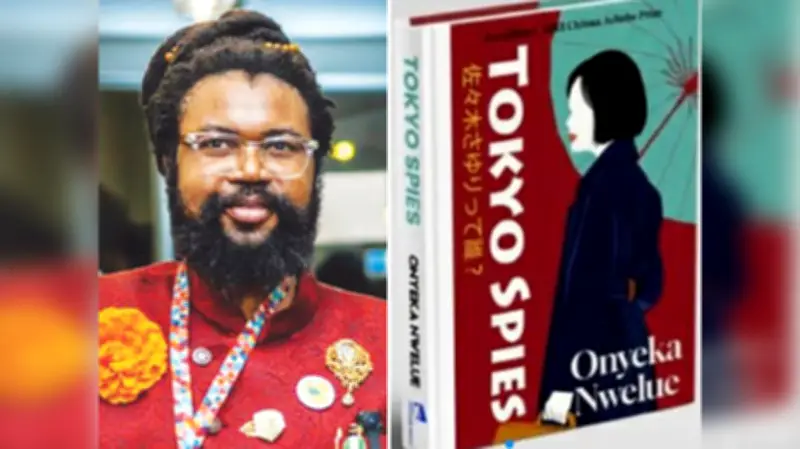
Onyeka Nwelue's Tokyo Spies is a slender, haunting new novel that delves into the theme of cowardice redeemed. The recurring phrase, "a single stroke reveals the truth of a man," spoken by the stern calligraphy master Gao, serves as both guidance and judgment, and Nwelue applies it ruthlessly to his protagonist, Zenjiro Ito.
The Protagonist's Flawed Journey
Zenjiro Ito is far from a hero. He is a young Japanese man who abandons his family under quarantine, deceives two women simultaneously, loses his artistic integrity through dishonesty, and only rediscovers himself after complete ruin. The narrative spans Meiji-era Kawasaki, Tianjin, and back home, making Tokyo Spies less a traditional spy novel than an exploration of identity performance—the masks we wear and the exhausting toll they take.
Calligraphy as a Moral Compass
Calligraphy is not merely decorative in this book; it functions as a moral register. When Zenjiro's brushwork falters, it signals his deceit. When it becomes raw, imperfect, and truthful—in the hands of a street beggar stripped of pretense—the catharsis is palpable. Japanese publishers recognized this resonance, acquiring the book for 85 million yen (about $600,000) before it reached other markets, reflecting a readership that saw itself in the story.
Filmic Prose and Cultural Depth
Nwelue, who reportedly dreamed the book into existence, writes with a filmmaker's instincts—kinetic, image-driven, and culturally layered. At its core, Tokyo Spies tackles filial debt, the weight of abandoned parents, and the necessity of destroying one's old self to be rebuilt. It is compact but not slight, delivering a quietly devastating impact.