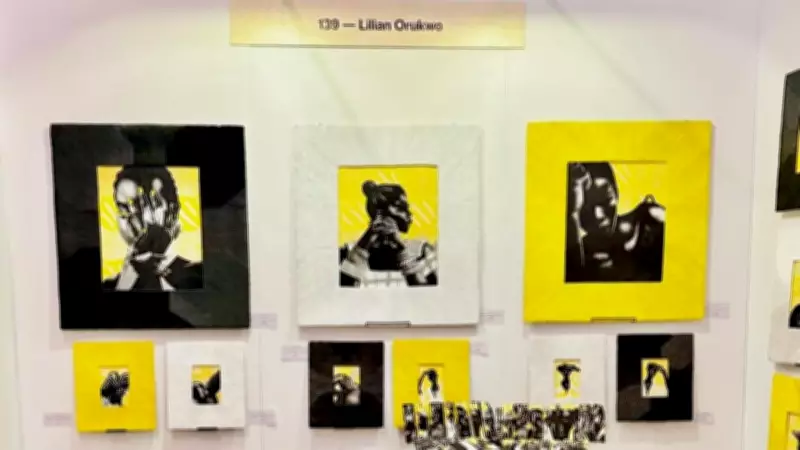
Nigerian-born painter Lilian Orukwo has carved a unique niche in the art world by evoking cultural identity and memory, particularly for those in the diaspora, through her exploration of Mgbusi, a traditional Ogba tribal marking. Her journey from Nigeria to the United Kingdom has not been a dramatic upheaval but a subtle expansion of her creative horizon, adding new layers of meaning to her already richly textured work.
Rooted in Heritage
Orukwo's art is deeply rooted in her Ogba heritage from Rivers State, southern Nigeria. Mgbusi, the word for tribal markings, holds a special place in her memory. As a child, she was fascinated by the patterns on her parents' and grandparents' bodies, which carried stories she felt but did not fully understand. Over time, these marks began to disappear, viewed by some as relics of the past. Orukwo took these fading symbols and reimagined them on canvas, creating a visual language of pride and continuity.
Distinctive Style
Her distinctive style features silhouetted figures standing against symbolic backgrounds, each a tapestry of patterns often using only three colors. These patterns evoke both global tie-dye fashion and local Nigerian crafts. The characters appear as bold black with white highlights, with repeated motifs that are stylized echoes of Mgbusi. Orukwo explains, "I wanted to keep the memory of Mgbusi alive. In my paintings, they become like a modern fabric that connects the people I paint to their ancestry."
Materiality and Philosophy
What makes her approach striking is its materiality. She builds textures into her work using a mix of drawing and painting techniques, and hand-crafts textured mounts from recycled cardboard. This recycling is not just practical but philosophical. "Every cardboard I use has had another life. By giving it new purpose in my art, I'm reminding myself that our own stories are remade too. We carry our past in us, but we're always shaping it into something new," she says. The resulting pieces feel tactile and alive, as if the stories behind them could be heard alongside the patterns.
Recent Showcase
Her style has evolved noticeably since she first started showing her work. In her recent showcase at The Other Art Fair in London, from March 5 to 8, 2026, visitors saw how much her work connects. The silhouettes are more confident, and the interplay of color feels even more intentional. For example, one new triptych uses a restrained palette of yellow, black, and white, invoking warmth and memory to fill a scene of a family tableau. The colors themselves narrate the ties between past, present, and future. Attendees were drawn to how her art blends tradition and innovation, and commented on the finesse of her patterns, which are intricate but not overwhelming, letting the painted person stand out while reminding viewers of a cultural backdrop that shapes their identity.
Contemporary Themes
Orukwo's work is not just about aesthetics. It speaks to contemporary themes such as sustainability and representation. By reusing materials and focusing on symbolism of community, she creates art that resonates with these concerns. During her TEDx Port Harcourt "Beautiful Rubbish" exhibition in 2023, she highlighted how creative recycling can breathe life into waste, an idea she carried into her London exhibition. Viewers at The Other Art Fair could sense this ethos, knowing that the surfaces beneath her paint once had ordinary uses, adding a layer of meaning.
Bridging Cultures
Her story illustrates that creativity can be a bridge across cultures. Her paintings invite viewers into a space where Nigerian heritage and British creativity meet. With each exhibition, she continues to spark conversations about identity, memory, and the stories our bodies carry. Her art asks: Who are we beyond borders? In the careful weave of her marks, viewers find an answer that is both personal and universal.
Future Ambitions
Looking ahead, Orukwo remains quietly ambitious. She envisions immersive installations where viewers walk through a room alive with the colors and rhythms of her homeland, or interactive digital murals that respond to voices, merging technology with tradition. Wherever her journey takes her, one thing is certain: Orukwo says she will keep speaking the language of Mgbusi, ensuring its narrative echoes across continents. Her art is a testament to the power of storytelling, the kind that lives in color, form, and the very textures of the materials she cherishes.