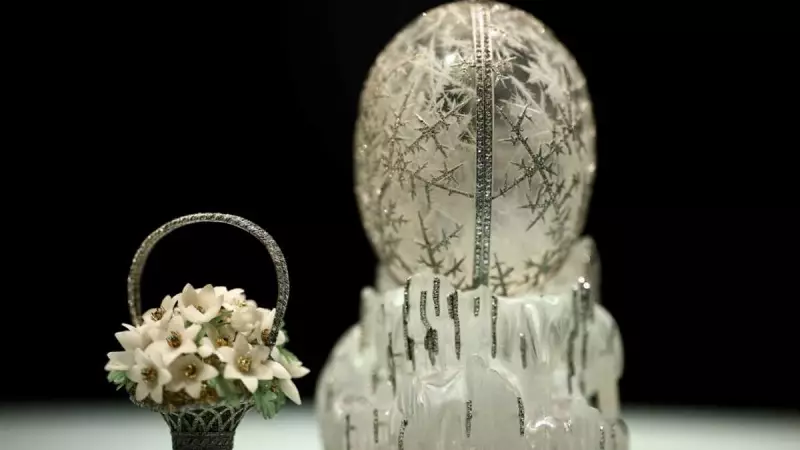
A stunning piece of imperial Russian history, the Fabergé Winter Egg, has shattered auction records, selling for a staggering £22.9 million (approximately $30 million) at Christie's in London. The sale on Tuesday, December 2, 2025, establishes a new world auction record for any work by the legendary jeweller Carl Fabergé.
The Imperial Legacy of a Masterpiece
This exquisite crystal egg was originally commissioned by Russia's last Tsar, Nicholas II, as an Easter gift for his mother, the Dowager Empress Maria Feodorovna, in 1913. It is one of only 50 Imperial Easter Eggs created by Fabergé for the Romanov family over a 31-year period, a tradition started by Tsar Alexander III in the 1880s. Nicholas II maintained an annual order for two eggs—one for his mother and one for his wife—until the dynasty's fall in the 1917 Revolution.
Today, only 43 of these imperial eggs are known to exist, with seven still missing, making each surviving piece exceptionally rare and valuable. Margo Oganesian of Christie's highlighted that the sale celebrates "the rarity and brilliance of what is widely regarded as one of Fabergé's finest creations, both technically and artistically."
Unpacking the Winter Egg's Dazzling Craftsmanship
Carved from delicate rock crystal to resemble an orb of ice, the Winter Egg stands just 14 centimetres (5.5 inches) tall. Its surface is adorned with an astonishing 4,500 rose-cut diamonds, set to mimic glistening frost and platinum snowflakes. The egg rests on a base sculpted from the same crystal.
Its magic continues inside, where a surprise awaits: a delicate bouquet of white quartz anemones, their stems made of gold wire, all gathered in a tiny platinum basket. "It's really hard to comprehend how Fabergé created it," Oganesian remarked, emphasising the item's exceptional technique.
A Turbulent Journey Through History
The egg's story mirrors Russia's tumultuous 20th century. After the revolution, it was moved from Saint Petersburg to Moscow in 1920. Like many other Romanov treasures, it was later sold by the Soviet government to raise foreign currency. Between 1929 and 1933, it was acquired by the London jeweller Wartski.
The Winter Egg then passed through several British collections but vanished from public view in 1975, considered lost for nearly two decades. It was miraculously rediscovered and brought to Christie's in Geneva in 1994. Its previous auction record was set in New York in 2002, when it sold for $9.6 million. The latest sale at £22.9 million more than doubles the previous Fabergé record held by the Rothschild Egg, which sold for nearly £9 million in 2007.
The record-breaking bid was placed by an as-yet-unnamed buyer, amid strong interest from international collectors, particularly wealthy Russians seeking to reclaim pieces of their national heritage. This sale reaffirms the enduring power and fascination of Fabergé's imperial legacy in the world of high art and collectibles.