Beetlejuice, Tim Burton's loud, striped-suited bio-exorcist, has haunted audiences since 1988 and returned in 2024's Beetlejuice Beetlejuice to gross over $452 million worldwide. This makes him the most iconic character in Burton's universe, which is packed with equally unforgettable outsiders: pale-skinned misfits, lovelorn corpses, and brooding antiheroes that keep gothic fans obsessed decade after decade.
How the Rankings Were Determined
Rankings are based on cross-referenced cultural impact, merchandise popularity, fan voting data from Ranker and WatchMojo, critical consensus, and box office performance sourced from Box Office Mojo and ScreenRant. Recency of cultural relevance, including streaming records and social media reach, was also factored in. Characters are ordered from #15 down to #1.
From Vincent to Edward Bloom
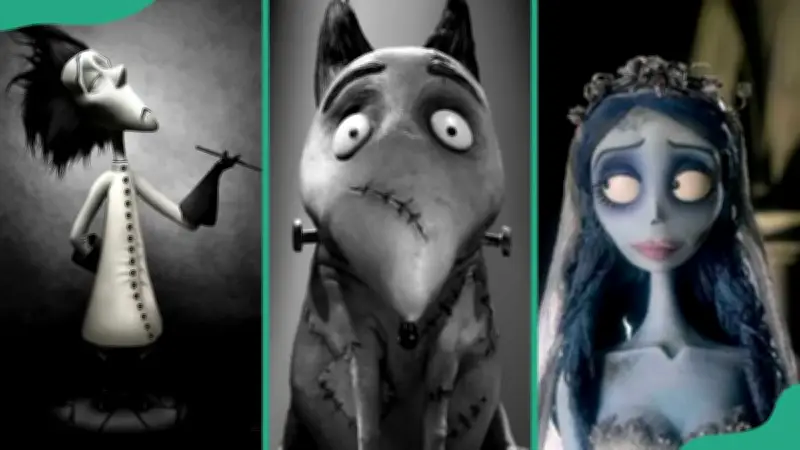
15. Vincent Malloy (Vincent, 1982) – Vincent Malloy is one of the oldest Tim Burton characters on record, serving as the protagonist of Burton's first animated short, Vincent (1982). He is a seven-year-old boy who idolises American actor Vincent Price and the poetry of Edgar Allan Poe. The character is widely read as a self-portrait — a lonely, imaginative child who escapes suburbia through dark fantasy. Burton spent much of his own childhood as a recluse, drawing cartoons and watching old movies, especially films featuring Vincent Price.
14. Sparky (Frankenweenie, 1984 / 2012) – Sparky is a common fan favourite and the loyal, playful pet dog of Victor Frankenstein. He sits at the heart of Burton's recurring resurrection theme — a story about grief, love, and the refusal to accept loss. The full-length 2012 animated feature Frankenweenie was nominated for the Academy Award for Best Animated Feature Film. Sparky's big eyes and clumsy affection make him one of Burton's most purely sympathetic creations.
13. Edward Bloom (Big Fish, 2003) – Edward Bloom isn't a ghoul or a person with scissors for hands — but he might be Tim Burton's most fascinating character. His life story has grown so large with embellishment that his own son can no longer separate truth from legend. Much of the film unfolds in flashbacks, where we see his father, Edward Bloom, telling these marvellous tales. Big Fish stands apart in Burton's filmography as his warmest and most emotionally generous work.
Gotham's Outsiders and Gothic Heroes
12. Bruce Wayne / Batman (Batman, 1989; Batman Returns, 1992) – Burton gained significant prominence with Beetlejuice (1988) before directing Batman (1989). Michael Keaton's Bruce Wayne brought a brooding, neurotic quality that aligned perfectly with Burton's outsider sensibility. Burton's Gotham City conjures an overall Gothic effect through a mishmash of disparate architectural styles, from Japanese-influenced design to New York brownstone. Keaton's portrayal remains a touchstone for the character to this day.
11. The Penguin (Batman Returns, 1992) – The Penguin is one of the most physically grotesque characters Burton ever put on screen — a sewer-dwelling, fish-eating villain rejected by his parents at birth. This ghoulish effect is seen in many of Burton's characters, from Willy Wonka to Betelgeuse in Beetlejuice, to Barnabas Collins in Dark Shadows, and even to the creepy figures of Batman Returns. Danny DeVito's feral performance transformed a comic-book villain into a genuinely tragic monster, one whose origins Burton clearly designed to evoke sympathy.
10. Selina Kyle / Catwoman (Batman Returns, 1992) – Selina Kyle / Catwoman from Batman Returns (1992) is among the greatest Tim Burton characters ever created. Michelle Pfeiffer played the character as a meek secretary who undergoes a violent, gothic transformation — her white, stitched vinyl suit becoming one of cinema's most iconic costumes. The contrast between gothic darkness and the ordinary world highlights Burton's ability to use visual design to enhance narrative themes of outsider status, conformity, and the human desire for connection.
9. Ichabod Crane (Sleepy Hollow, 1999) – Burton is known for his gothic horror and fantasy films, and Sleepy Hollow (1999) stands among his most celebrated. Johnny Depp played Ichabod Crane, a faint-hearted, science-minded constable who repeatedly faints at the sight of blood — a darkly comedic subversion of the heroic lead. For Sleepy Hollow, Burton created a Headless Horseman whose appearance was both historically grounded and nightmarishly stylised, placing Ichabod at the centre of one of the director's most visually rich productions.
Stop-Motion Icons and Modern Phenomena
8. Emily the Corpse Bride (Corpse Bride, 2005) – For the 2005 stop-motion film Corpse Bride, Burton created a titular character whose ghostly beauty challenges conventional notions of what makes a character appealing. Emily is a murder victim trapped in the Land of the Dead, who accidentally becomes engaged to a living man named Victor. Despite being from different worlds — one living, one dead — they connect over their shared sense of isolation and desire for love, a testament to how Burton brings humanity to even the most supernatural figures.
7. Willy Wonka (Charlie and the Chocolate Factory, 2005) – Willy Wonka is among the most beloved Tim Burton characters, appearing in Charlie and the Chocolate Factory (2005). Depp played an unsettling, childlike eccentric — equal parts eerie and whimsical. Burton's films wouldn't have the same magic without actors like Johnny Depp, who knows how to bring weird and wonderful characters to life; Depp is practically Burton's on-screen alter ego. The film grossed over $474 million worldwide, cementing Wonka as one of Depp's most commercially successful Burton collaborations.
6. Lydia Deetz (Beetlejuice, 1988) – Burton has worked with some of Hollywood's biggest names, including Winona Ryder, who has portrayed some of his most famous characters. Lydia Deetz — a morbid teenager who can see the dead — resonated deeply with an entire generation of young audiences who felt like outsiders. Characters like Lydia serve as alter egos for the director, taking on the same outsider roles that define the Burtonesque universe. Ryder reprised the role in Beetlejuice Beetlejuice (2024), welcomed back by legions of fans.
5. Sweeney Todd (Sweeney Todd: The Demon Barber of Fleet Street, 2007) – The film retells the melodramatic Victorian tale of Sweeney Todd, an English barber and serial killer who seeks revenge on Judge Turpin, and with the help of his accomplice Mrs. Lovett, processes his customers into meat pies. The film took home the Academy Award for Best Art Direction, while Johnny Depp earned a Golden Globe for his portrayal of the wronged barber. Grossing over $152 million worldwide against a $50 million budget, Sweeney Todd became an immortal cult classic.
4. Wednesday Addams (Wednesday, 2022–) – Wednesday marked a milestone in Tim Burton's career, as the show served as his television directorial debut. Wednesday surpassed 1.02 billion total hours viewed in just three weeks following its debut, with over 150 million households streaming the series. It quickly became a global cultural phenomenon, inspiring viral social media trends, with the hashtag #wednesdayaddams accumulating billions of views on TikTok. Season 2 arrived on Netflix in a split-release format starting in August 2025, continuing the show's massive critical and audience success.
Top Three: Sally, Jack, and Beetlejuice
3. Sally (The Nightmare Before Christmas, 1993) – Only Burton could create a freakish, crudely sewn-together rag doll and make audiences fall in love with her. Sally is a patchwork creation longing to be free and to be loved — a figure of quiet resilience in a world of loud monsters. The character of Sally has resonated with audiences on such a huge level that even pop star Billie Eilish, who wasn't born when this film came out, performed "Sally's Song" at a live performance of The Nightmare Before Christmas. She remains one of the most-cosplayed Burton characters of all time.
2. Jack Skellington (The Nightmare Before Christmas, 1993) – Written and produced by Tim Burton and directed by Henry Selick, The Nightmare Before Christmas (1993) became a monumental critical and commercial success. To Disney's surprise, Jack Skellington became one of the brand's most recognisable merchandise icons. The Pumpkin King from Halloween Town embodies the universal quest for meaning beyond the familiar. While Chris Sarandon gave the character his distinct speaking voice, composer Danny Elfman lent his talents to Jack's iconic singing. Beneath his frightening exterior lies a well-meaning heart that drives his charmingly misguided attempt to take over Christmas.
1. Beetlejuice / Betelgeuse (Beetlejuice, 1988; Beetlejuice Beetlejuice, 2024) – The 1988 classic Beetlejuice turned Tim Burton into a household name and cemented his Hollywood legacy — the terrifying yet hilarious ghoul Betelgeuse became an 80s icon and is still one of cinema's most famous movie characters. Beetlejuice is perhaps Tim Burton's most iconic character — so iconic that he returned for a sequel, Beetlejuice Beetlejuice, over 35 years later, causing more mischief for the Deetz family. Beetlejuice Beetlejuice drummed up $110 million in its premiere weekend, becoming the second biggest September opening of all time. The film went on to gross a worldwide total of $452 million.
Frequently Asked Questions About Tim Burton's Characters
Who is Tim Burton's most famous character? It's impossible to discuss Burton's career without finishing with Betelgeuse — so iconic that he returned for a sequel more than 35 years after his debut. Beetlejuice tops every major fan poll and critical ranking, and the 2024 sequel confirmed his status as the franchise's irreplaceable heart.
What are common characteristics of Tim Burton's characters? Many of Burton's protagonists are outsiders and misfits struggling in restrictive societies — characters who don't conform to social norms, reflecting his interest in the Gothic theme of normalising the outlier. His characters typically have big eyes, thin bodies, and pale skin; he uses lots of black and white with small pops of bright colour, mixing scary things with cute things to create a feeling that is both creepy and funny.
Is Wednesday Addams officially a Tim Burton character? Cartoonist Charles Addams created Wednesday Addams in 1938, long before Burton was involved. However, Burton directed Netflix's original Wednesday and also served as executive producer, making this iteration firmly part of his cinematic universe.
Did Tim Burton direct The Nightmare Before Christmas? Burton conceived and oversaw the general design of the stop-motion film The Nightmare Before Christmas (1993), which Henry Selick directed. Burton developed the story and characters but didn't direct it — a fact that sometimes surprises fans, given how deeply "Burtonesque" the film looks and feels.
What makes Tim Burton's visual style so distinctive? Burton's visual style — characterised by dark, bold colours, angular designs, and a mix of practical effects and stop-motion animation — became his trademark and defined his career. His trademark style traces back to German Expressionism, a movement characterised by "tilting, impossible sets, high angles, and deep shadows."
Tim Burton's most iconic characters have captivated audiences through their gothic appearances, unusual personalities and stories of outsiders searching for belonging. From Beetlejuice's chaotic humour to Edward Scissorhands' gentle nature and Jack Skellington's restless curiosity, each character reflects Burton's distinctive creative vision. Decades into his career, these unforgettable figures continue to influence pop culture, attract new fans and keep his darkly imaginative world alive.