Grammy 2026: Tattooed Singer's Powerful Jesus Declaration Captivates Global Audience
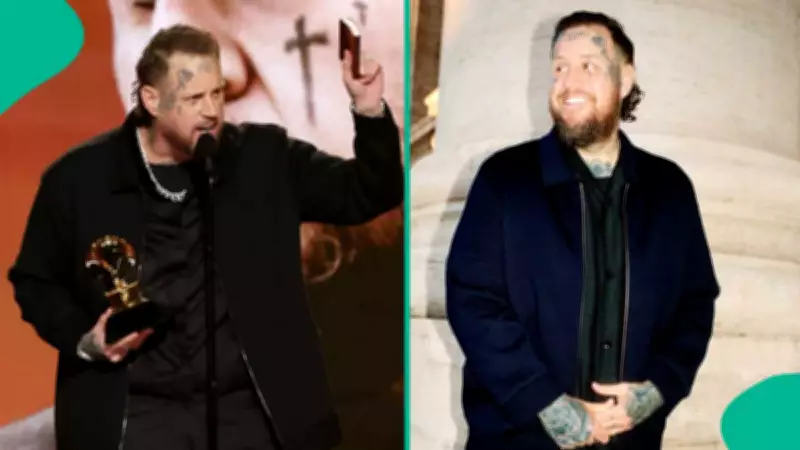
The 66th Grammy Awards ceremony held on Sunday, February 4, 2026, witnessed a moment of profound spiritual declaration that has since captured the world's attention. American singer Jelly Roll, known for his distinctive facial and body tattoos, delivered an emotionally charged acceptance speech that has rapidly spread across social media platforms, sparking widespread discussion about faith, redemption, and personal transformation.
An Unforgettable Acceptance Speech
Jelly Roll, whose real name is Jason DeFord, received the prestigious Best Contemporary Country Album award for his critically acclaimed 2024 release Beautifully Broken. As he approached the stage, the singer carried a Bible in hand, creating an immediate visual contrast between his heavily tattooed appearance and the sacred text. Before addressing the audience, he shared a tender moment with his wife, Bunnie XO, planting a kiss that symbolized their journey together.
In his heartfelt remarks, Jelly Roll openly credited both his wife and his faith for saving his life. "I want to thank my beautiful wife. I would have never changed my life without you. I'd have ended up dead or in jail. I'd have killed myself if it wasn't for you and Jesus. I thank you for that," he declared with visible emotion. The singer went on to acknowledge his record label and country radio supporters before delving deeper into his spiritual testimony.
A Universal Message of Faith
The most impactful segment of Jelly Roll's speech came when he delivered what many are calling a powerful evangelistic message to the global audience. "I believe that music had the power to change my life, and God had the power to change my life," he stated, reflecting on his personal transformation from a troubled past to Grammy-winning artist.
He continued with a declaration that has resonated across cultural and religious boundaries: "I want to tell y'all right now: Jesus is for everybody. Jesus is not owned by one political party. Jesus is not owned by no musical label. Jesus is Jesus and anybody can have a relationship with him. I love you, Lord." This inclusive message, delivered by an artist whose appearance challenges traditional religious stereotypes, has struck a chord with millions worldwide.
Nigerian Connection and Social Media Reactions
Interestingly, Jelly Roll's viral speech coincides with ongoing discussions within Nigerian social media circles regarding Pastor Kingsley Okonkwo's recent decision to get a tattoo. This parallel conversation has created a unique cultural moment where discussions about faith, personal expression, and religious identity intersect across continents.
The video of Jelly Roll's Grammy speech has generated thousands of reactions from Nigerian social media users and international audiences alike:
- princeomoha1 commented: "JESUS CAME THROUGH HIM TO SEND A MESSAGE TO ALL THE ATTENDANCE and viewership. JESUS IS TRULY the KING."
- lisaloveslife0229 wrote: "Jesus is King!!! The most powerful speech at the Grammys!!"
- jackryan_golf observed: "We made the right man famous! What an incredible man & role model"
- rasheedatt10 praised: "JESUS IS JESUS AND ANYONE CAN HAVE A RELATIONSHIP WITH HIM ....preach it bro."
- fresko noted: "Now this a Grammy speech … praise you my brother for talking about what matters and using your movement to be about you and your family NOT about anything else."
Broader Grammy Context
The 2026 Grammy Awards ceremony featured several notable moments involving Nigerian artists, including Davido's participation and subsequent reactions from Nigerian celebrities. Socialite Cubana Chiefpriest publicly commented on Davido's experience at the awards, suggesting there were attempts to pressure the singer while encouraging him to continue his musical journey.
Jelly Roll's speech stands out as a particularly memorable moment from the ceremony, demonstrating how award shows can transcend entertainment to become platforms for meaningful personal testimony and cultural dialogue. The singer's willingness to share his faith journey so openly, despite his unconventional appearance for religious testimony, has challenged perceptions and inspired conversations about the nature of spiritual authenticity.
As the video continues to circulate across digital platforms, it serves as a reminder of music's power to bridge divides and convey messages that resonate across geographical and cultural boundaries. The convergence of this international Grammy moment with Nigeria's own discussions about faith and personal expression creates a fascinating case study in how global media events can spark localized conversations about identity, belief, and artistic expression.