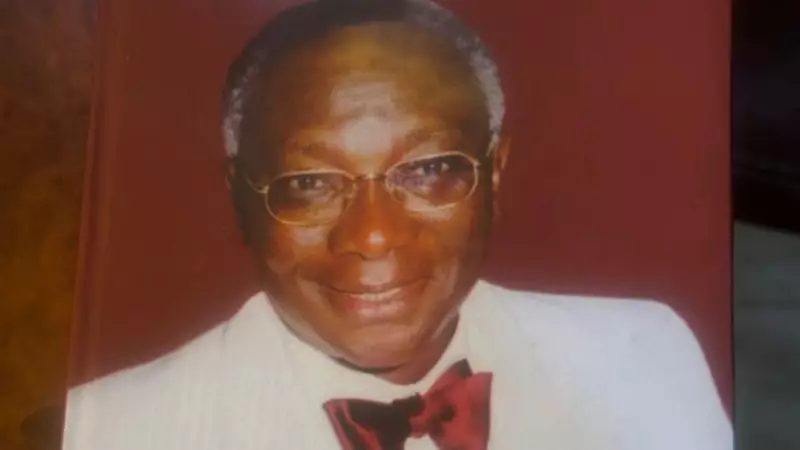
A special book honouring one of Nigeria's most distinguished public servants, Philip Chikwuedo Asiodu, has sparked a profound reflection on the nation's lost potential. The event, held at the Metropolitan Club in Victoria Island, Lagos on December 3, 2025, presented the Hallmarks of Labour Special Edition Series dedicated to the 91-year-old icon.
The gathering was a reunion of Nigeria's intellectual and leadership elite, though it received scant media attention. Attendees included Vanguard publisher Sam Amuka-Pemu, former Daily Times MD Tola Adeniyi, The Nation's Sam Omatseye, and captains of industry like Fola Adeola and Atedo Peterside. Scholars, retired permanent secretaries, and legal luminaries like former Appeal Court President Justice Ayo Salami were also present.
Former Head of State, General Yakubu Gowon, chaired the launch. The book review was delivered by another esteemed retired permanent secretary, Dr. Goke Adegoroye, whose analysis framed a central, troubling question for the audience: How did a nation that once produced brilliant public officers in their thirties now struggle to raise a competent civil service?
The 1975 Purge: The Day the Locusts Ate
The book and its review pinpoint the massive purge of the federal civil service in 1975 as the pivotal moment of decline. Initiated under the Murtala Mohammed regime, this event is described as a traumatic act that dismantled the service's foundation.
"The traumatic massive purge of about 10,000 officials over a period of two months, without due process... destroyed the professional, non-partisan, fearless, prestigious, merit-driven Civil Service," a passage from the book notes. The action swept away institutional memory, core values, and international connections, replacing them with a culture of "make hay while the sun shines"—a direct precursor to the systemic corruption plaguing the nation today.
Abandoned Plans and a Nation Adrift
Closely tied to the purge was the tragic abandonment of the Third National Development Plan (1975-1980). Asiodu, a key architect of Nigeria's early plans, recalls this decision with "great pain and regret."
The book argues that Nigeria was on a stellar economic trajectory before this derailment. The first plan achieved 6% average annual growth, while the post-civil war period saw an impressive 11.75% growth from 1970-1975. Asiodu contends that ten more years of such growth would have lifted Nigeria from underdevelopment.
Instead, abandoning the discipline of planning led to "over four decades of floundering." The book laments how successive governments, even in democracy, discarded the principle of national development planning, a tool that once provided clear direction.
A Vision for the Future and a Call for Leadership
Beyond diagnosing past failures, the book channels Asiodu's enduring advocacy for a national reset. His proposals include a language policy to foster integration, where secondary school students learn a major Nigerian language from another region alongside English.
Most urgently, he calls for a new National Vision and Agenda 2040, broken into actionable 4-5 year plans. This vision requires a specific type of leader. Asiodu's hypothesis, "A Great Role Waiting For A Player," seeks a patriotic, visionary leader ready to commit to revolutionary change beyond party, tribe, and religion.
The book reveals his failed attempts to persuade President Olusegun Obasanjo to implement the earlier Vision 2010 and his disappointment with the subsequent "flirtation" with Vision 2020. His message, delivered to audiences from presidents to schoolchildren, remains consistent: Things must change, and change requires visionary leadership and the right education.
The launch of this book on Philip Asiodu serves not just as a tribute, but as a stark audit of Nigeria's governance and a compelling manifesto for its redemption, rooted in lessons from a fading generation of nation-builders.