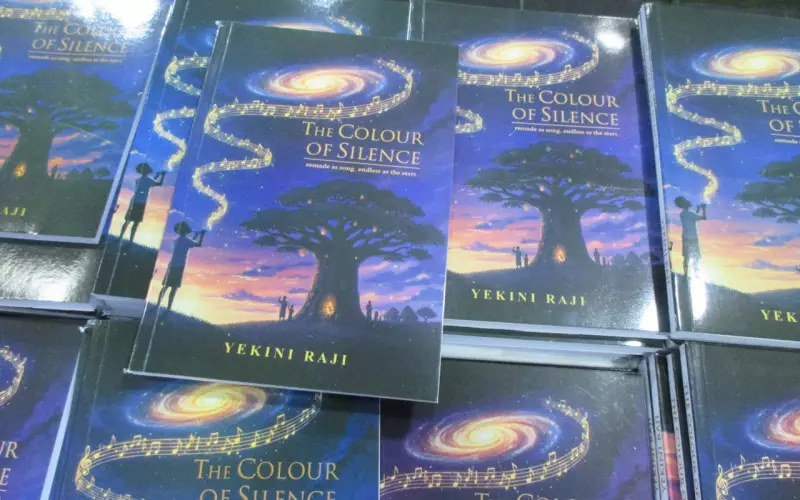
Yekini Raji's 'The Colour of Silence' Finds Its Voice at Lagos Book Launch
The literary scene in Lagos was illuminated on January 21, 2026, with the launch of The Colour of Silence, a new children's fantasy novel by author Yekini Raji. Held at the prestigious Chartered Institute of Personnel Management in Alausa, Lagos, the event drew a diverse crowd of writers, educators, medical professionals, and avid literature lovers, all gathered for an evening of deep reflection and celebration.
A Gathering Honoring Creativity and Thoughtful Narrative
Chairing the occasion was Dr Imran Ademola, Managing Director of Beachland Hospital, who warmly welcomed guests and set the tone for the evening. In his opening remarks, Dr Ademola described the book as a poignant reminder that silence is far from empty. He emphasized that silence can speak, observe, and demand deeper listening, urging attendees to engage with the novel's themes on a profound level. Expressing his gratitude to special guests, partners, and the dedicated team behind the event, Dr Ademola highlighted that this gathering was not merely about celebrating a publication but about honoring creativity and the power of thoughtful storytelling.
Keynote Reflections on Themes and Moral Depth
The keynote speech was delivered by Dr Kabir Alabi Garba, Editor of Weekend Guardian, who provided an extensive analysis of the book's themes and moral depth. He characterized The Colour of Silence as a quiet yet confident work that eschews spectacle in favor of rewarding attentiveness. Dr Garba noted that the story could only have been crafted by someone who views listening as an active and courageous act, challenging conventional perceptions of silence in modern society.
While the novel presents itself as a fantasy tale—featuring a young boy named Abba, a world devoid of colour and sound, and an ancient flute imbued with memory—its true strength lies in its emotional intelligence. Dr Garba explained that rather than portraying silence as a mere antagonist, the book frames it as a product of unspoken grief, buried pain, and neglected memory. He observed that this narrative mirrors society's tendency to amplify noise while neglecting genuine listening, urging readers to recognize that silence itself is not the problem, but rather unacknowledged sorrow.
Highlighting the story's restraint, Dr Garba pointed out that Abba does not conquer silence through destruction but through understanding and transformation, offering a nuanced moral vision that resonates with both children and adults.
Educational Recommendations and Authorial Insights
In his review, Prof AbdulLateef Kelani, Chief Executive Officer of Mafazat Comprehensive High School, recommended the book for senior secondary school students, undergraduates studying English, literature, or communication, and candidates preparing for the Unified Tertiary Matriculation Examination. He praised the book's lyrical tone and suggested that misconceptions about its themes should be clearly addressed in educational settings. Prof Kelani also encouraged the author to consider developing a study guide to facilitate classroom use, underscoring the novel's potential as a valuable educational resource.
During his remarks, author Yekini Raji shared the inspiration behind the book, revealing that it was loosely influenced by his 12-year-old son and his flute. He emphasized that while The Colour of Silence is written for children, it also serves as a guide for parents, reminding adults that teaching children is a continuous process of learning and mutual growth.
A Celebration of Literary Excellence in Nigeria
The launch of The Colour of Silence stands as a testament to the vibrant literary culture in Nigeria, bringing together diverse voices to explore themes of silence, memory, and emotional resilience. This event not only celebrated Yekini Raji's creative achievement but also fostered meaningful dialogue on the role of storytelling in addressing complex human experiences.