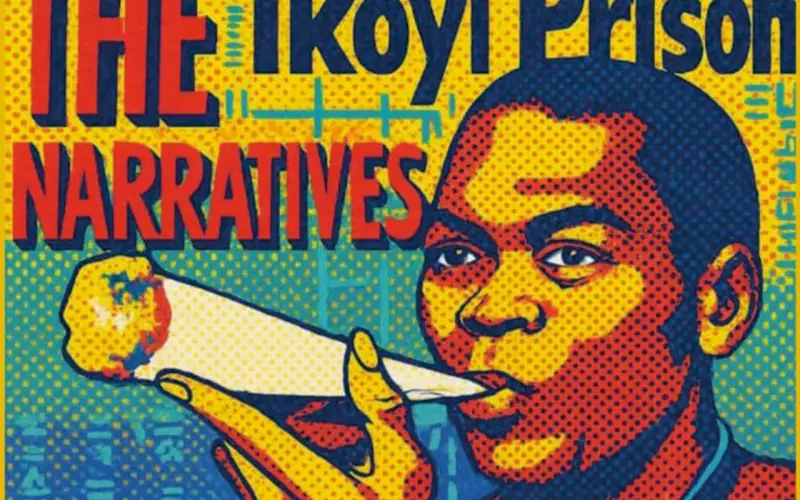
Majemite Jaboro's The Ikoyi Prison Narratives: A Deep Dive into Fela Kuti's Legacy and Nigeria's Ongoing Struggles
In the confined space of an Ikoyi prison cell, a powerful narrative unfolds, transcending the mere biography of Fela Kuti to become a profound reflection on Nigeria itself. Majemite Jaboro's The Ikoyi Prison Narratives unlocks the doors of that cell, releasing a torrent of history, music, and resistance that reshapes our understanding of the nation. Through intimate conversations with Fela, Jaboro blurs the lines between personal story and national reckoning, revealing a country forever altered by the clash of creativity and oppressive power.
The Crucible of Confinement: Birth of a Revelatory Testament
This book is not just about a musician; it serves as a prism through which Nigeria's contradictions are refracted—its brutalisms and beauties, its silences and songs. With unflinching prose, Jaboro excavates the roots of Fela's rebellion, exposing the faultlines of a nation still grappling with its destiny. Prepare to be unsettled, provoked, and illuminated by a narrative that insists the past is not past—it's the soundtrack to Nigeria's present.
In transforming a prison cell into a crucible of memory and resistance, Majemite Jaboro crafts a masterpiece that goes beyond Fela Kuti, becoming a searing portrait of Nigeria itself. The Ikoyi Prison Narratives is an unflinching mirror held to the nation's soul, reflecting its beauty, brutality, and unyielding spirit. This isn't just a book about music or a nostalgic homage; it's a vital, unsettling intervention in Nigeria's ongoing conversation with itself—a clarion call to confront the truths that linger, unaddressed, in the shadows of power.
Roots in Yoruba Spirituality: Fela's Quest for Authenticity
Jaboro's work demands serious engagement, not just as a chapter in music history, but as a roadmap to understanding the complexities of a nation still wrestling with its destiny. The book takes the reader through a provocative premise: a Nigerian prison cell becomes a repository of national memory, holding within its walls the echoes of history, pain, and resistance. In this bold work, the author goes beyond chronicling Africa's iconic musical rebel, Fela Kuti's life, to challenge how Nigeria reckons with its past.
Through Kuti's story, Jaboro crafts a nuanced exploration of power, resistance, culture, and the state's complex legacy. By examining the intersections of music, politics, and identity, he sheds new light on Nigeria's ongoing struggles with justice, freedom, and self-definition, making The Ikoyi Prison Narratives a vital contribution to the country's literary and intellectual landscape.
Forging Afrobeat as a Weapon of Resistance
The Ikoyi Prison Narratives is built on a striking foundation: the unlikely convergence of two men in a cell, giving birth to a testament of resistance and resilience. Between January and April 1993, Majemite Jaboro shared a prison cell with Fela Anikulapo Kuti, the iconic musician and activist, as they awaited trial for a murder case. During those fraught months, Fela's words flowed—a torrent of life, philosophy, and politics—as he spoke to pass the time, and Jaboro listened, recorded, and absorbed.
The result is a revelatory oral testament, born from the crucible of confinement, where memory and improvisation blur the lines between history and testimony. The Ikoyi Prison becomes more than a backdrop; it's a potent metaphor for Nigeria's contradictions, a space where the nation's turbulent soul is laid bare, and the power of resistance is distilled.
Confronting State Violence and Fela's Defiance
The opening chapters of the book plunge the reader into the rich, pulsating world of Yoruba history and spirituality, situating Fela Kuti firmly within the ancestral currents of his people. With deliberate care, Jaboro navigates the sacred landscapes of Oduduwa, Obatala, Shango, and Ifa divination, illuminating the indigenous metaphysics that fueled Fela's worldview.
This emphasis is no mere academic exercise—it's the key to understanding Fela's radical rejection of imposed ideologies. His turn away from Christianity, Marxism, and Western political models wasn't a rejection of meaning, but a quest for authenticity, a search for epistemic liberation. Fela's Blackism was more than a slogan—it was a conviction that Africa's path to freedom lay in reclaiming its own intellectual and spiritual traditions, unshackling itself from the conceptual chains of the West.
Music as a Counter-Archive: Amplifying Marginalized Voices
In Jaboro's telling, Fela emerges as a thinker who dared to root himself in his own cultural DNA, crafting a vision of liberation that was as subversive as it was profoundly Yoruba. The chapters chronicling Fela's 1969 trip to the United States ignite with transformative power, marking a pivotal turning point in his journey. Jaboro vividly reconstructs Fela's immersion in the fiery crucible of Black Power politics, his electrifying encounters with African-American radicals, and the profound impact of The Autobiography of Malcolm X—an encounter that shattered Fela's intellectual and emotional foundations.
With unflinching honesty, Jaboro exposes Fela's initial ignorance of African history, laying bare the painful confrontations that sparked his radical awakening. In this crucible, Afrobeat is forged as a conscious weapon—music wielded not merely to entertain, but to educate, mobilize, and liberate. Jaboro's riveting account reveals how Fela's sound evolved into a potent instrument of resistance, amplifying the struggles of the marginalized and challenging the structures of oppression.
Unraveling Fela's Contradictions: The Man Behind the Myth
One of The Ikoyi Prison Narratives' most searing achievements is its unflinching excavation of state violence, laying bare the brutal machinery of power. The destruction of Kalakuta Republic in February 1977 is reconstructed with visceral intensity, the narrative unravelling like a nightmare: soldiers storming, looting, raping, burning, leaving a trail of devastation in their wake.
The assault claims not just property, but dignity—Funmilayo Ransome-Kuti, the indomitable anti-colonial icon and Fela's mother, is thrown from a window, her body bearing the scars of state brutality. In the face of this horror, the state feigns innocence, compounding violence with denial. But Fela's response is defiant: he channels his rage into Sorrow, Tears and Blood, a soundtrack to resistance, and harnesses the power of law, suing the government in a bold rebuke of impunity.
Echoes in Contemporary Nigeria: Unresolved Questions and Social Faultlines
Jaboro's unflinching portrayal exposes the state's darkest impulses, while illuminating Fela's unbreakable spirit—a testament to the enduring power of resistance. In The Ikoyi Prison Narratives, music emerges as a potent force, simultaneously documenting history and fueling resistance. Jaboro brilliantly recontextualises Fela's iconic songs—Zombie, Alagbon Close, Expensive Shit—not as mere cultural artefacts, but as raw, unflinching political records, capturing the brutal truths the state sought to erase.
These sonic snapshots of oppression and defiance formed an alternative media ecosystem, a parallel narrative that subverted the tightly controlled official discourse of the time. Jaboro's incisive analysis reveals Afrobeat as a powerful counter-archive, amplifying the voices of the marginalised and challenging the state's monopoly on truth. In this light, Fela's music wasn't just a response to tyranny—it was a lifeline, a means of survival, and a clarion call to resistance.
The Ikoyi Prison Narratives takes a daring turn when it confronts the complexities of Fela's own shadow, refusing to sanitize the man behind the myth. Jaboro pulls no punches, laying bare Fela's darker impulses: his sexual domination, drug-fueled excesses, authoritarian grip on Kalakuta, and a messianic self-image that bordered on hubris.
These revelations shatter the simplistic heroic narrative, revealing Fela as a paradox: a liberator and a tyrant, a visionary and a flawed human being. By including these contradictions without flinching, Jaboro sidesteps the pitfalls of hagiography, instead crafting a nuanced portrait that resonates with messy, human truth. The book doesn't fully unravel these contradictions, but its willingness to confront them head-on makes it a radical act of intellectual honesty, inviting readers to grapple with the beauty and ugliness of a man who defied the odds.
The Ikoyi Prison Narratives resonates with eerie timeliness, its themes echoing like a haunting refrain in contemporary Nigeria. The questions Fela posed decades ago—about the unchecked power of the military, the suffocating grip of elite impunity, the disorienting loss of cultural identity, and the insidious psychological legacy of colonialism—remain starkly, painfully unresolved.
Jaboro's masterstroke is framing these urgent issues within the stark, unforgiving walls of a prison cell, a potent symbol of Nigeria's enduring social faultlines. In a country where incarceration often reflects and reinforces inequality, the book's setting becomes a searing metaphor for the nation's broader crises—a reminder that some battles, though fought in different eras, are tragically, achingly the same.