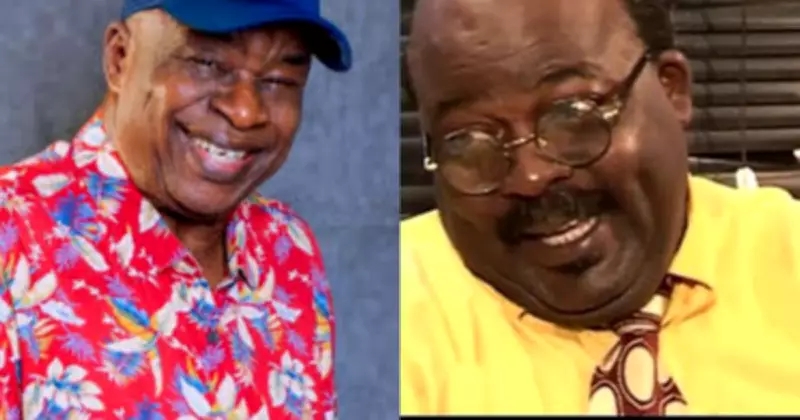
Wale Adenuga Counters Papa Ajasco Actor's Financial Claims, Questions Civil Service Benefits
Wale Adenuga, the renowned producer behind Nigeria's iconic sitcom "Papa Ajasco," has issued a comprehensive response to actor Abiodun Ayoyinka's recent revelations about financial struggles, challenging the narrative of exploitation and raising questions about the actor's civil service benefits.
The Controversy Erupts
Last week, Abiodun Ayoyinka, who has portrayed the beloved character Papa Ajasco for nearly three decades, disclosed in an interview with podcaster Lucky Udu that he earns ₦45,000 per episode, with approximately 13 episodes recorded annually. The actor revealed that since retiring from his position at the Lagos State Council for Arts and Culture five years ago, he has faced significant financial challenges, owning neither a car nor a house.
The interview sparked widespread concern among Nigerians who grew up watching the show, leading to viral discussions about compensation in the entertainment industry and the treatment of veteran actors.
Adenuga's Detailed Response
In a formal statement addressing what he termed "misinformation, emotional commentary, and uninformed public intervention," Wale Adenuga MFR, Chairman and Executive Producer of Wale Adenuga Productions, praised Ayoyinka's talent while firmly pushing back against the poverty narrative.
Adenuga emphasized that their professional relationship remains cordial, describing Ayoyinka as the actor who bears the closest resemblance to the Papa Ajasco cartoon character he created in 1976. He confirmed there has been "no irreconcilable difference" between them.
Questioning Civil Service Benefits
The producer pointed to Ayoyinka's extensive career with the Lagos State Government, where he served for over 30 years as a civil servant and was the face of the state's cultural troupe. This role brought him into contact with prominent political figures, including former Governor Bola Tinubu.
"Now, the question is: why is Abiodun Ayoyinka claiming to be broke? Where are the investments from his over 30 years of meritorious service with the Lagos State Government? What happened to his gratuities?" Adenuga questioned in his statement.
Addressing Specific Claims
Regarding Ayoyinka's assertion that he owns no car, Adenuga revealed that his production company had provided the actor with a vehicle at various points, as they did for co-star Pa James. He stated that Ayoyinka had used no fewer than five vehicles throughout their collaboration, including a Mercedes-Benz.
On the housing claim, Adenuga asserted that, to his knowledge, Ayoyinka owns a house in Ogun State, contradicting the actor's statement about being homeless.
Brand Protection and Production Schedule
Adenuga addressed copyright restrictions on the Papa Ajasco brand, explaining that these are standard protective measures. He clarified that Ayoyinka is free to undertake advertising work under his own name but must seek official approval from Wale Adenuga Productions before using the Papa Ajasco character commercially.
The producer noted that other cast members, including Pa James, Mama Ajasco, Boy Alinco, Miss Pepeiye, Akpan, and Oduma, regularly appear in film projects under their personal names without encountering issues.
"He cannot use the copyrighted brand name Papa Ajasco for personal ventures because it is our duty to protect the brand from inappropriate usage that could damage its reputation," Adenuga explained.
Production Realities and Industry Standards
Adenuga shed light on the production schedule, revealing that cast members are only required on set for six weeks annually. During this period, enough episodes are recorded to last the entire year, providing actors with substantial time to pursue additional income sources.
The statement concluded with a firm denial of any exploitation, with Adenuga asserting that his organization pays according to established industry standards and meets all financial obligations promptly.
"Any narrative suggesting financial abandonment or exploitation by our organisation is entirely false and misleading," he emphasized.
Broader Industry Implications
This ongoing controversy has reignited critical discussions about compensation structures within Nigeria's entertainment sector, the treatment of veteran performers, and economic challenges faced by artists after retirement. The exchange between Adenuga and Ayoyinka highlights systemic issues that extend beyond individual cases to the broader creative economy.
As the conversation continues to evolve, it raises important questions about financial planning for entertainers, the sustainability of acting careers in Nigeria, and the responsibilities of production companies toward their long-term collaborators.