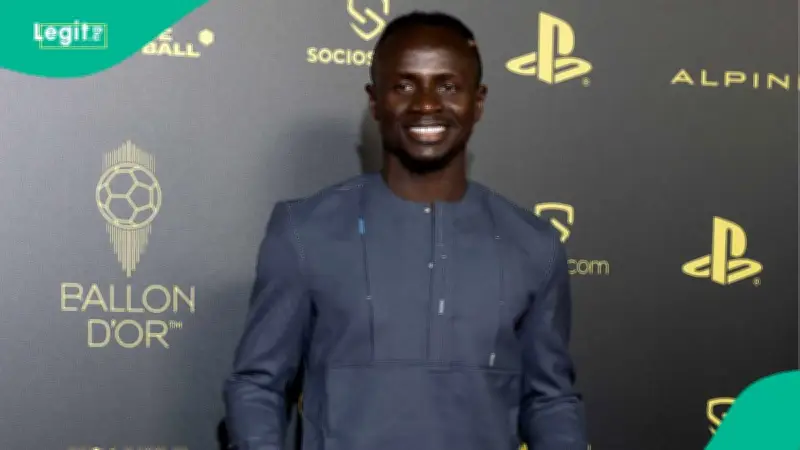
The official Ballon d'Or publication has shed light on a little-known chapter of Sadio Mane's early life, revealing that his father, an imam, actively prohibited him from playing football as a child, insisting he concentrate on religious studies instead. This revelation underscores the obstacles the Senegalese forward overcame before becoming one of Africa's greatest footballers.
Early Life in Bambali: Poverty and Prohibition
Mane was born and raised in Bambali, a small village in Senegal, where he grew up in poverty. His father, a religious leader, considered sport a distraction and forbade young Sadio from playing football, ordering him to focus on his religious education. This strict upbringing meant that football was off-limits for Mane during his formative years.
However, this chapter of his life changed abruptly when his father died, leaving Mane just 11 years old. Rather than feeling freed to pursue his passion, the young boy felt the weight of a new responsibility. Reflecting on that moment, Mane said, "I said to myself: Now I have to do my best to help my mother. That's a hard thing to deal with when you are so young."
A Vow Turned into Reality
That sense of duty became the engine behind everything that followed. At 15, he left Bambali for Dakar to chase a football career. He eventually earned a move to FC Metz in France, and from there his rise through European football continued steadily upward. Mane's career took him to some of Europe's biggest clubs, including Liverpool, where he won numerous titles, and later Al-Nassr in Saudi Arabia.
As noted by BBN Times, Mane has long since delivered on the promise he made to himself as a grieving child. Through the wealth and recognition that football brought him, he has provided his mother with a comfortable life, turning a vow made in hardship into a reality.
Ballon d'Or Recognition and African Legacy
In 2022, Mane finished second in the Ballon d'Or rankings, behind French forward Karim Benzema. That placing made him the African player to finish closest to the top of the award since George Weah won it outright in 1995. This recognition highlighted his exceptional performances, including his role in Senegal's AFCON triumph and Liverpool's successes.
Mane's journey from a small Senegalese village to the global stage is a testament to his resilience and determination. His story inspires many young Africans who face similar obstacles, proving that with hard work and dedication, dreams can be achieved despite the odds.
Retirement from International Football
Legit.ng previously reported that Sadio Mane retired from international football after Senegal were eliminated from the 2026 FIFA World Cup. The Al-Nassr forward, after leading Senegal to a second AFCON title in January, had previously confirmed that he would retire from the national team after the World Cup. This decision marked the end of an era for Senegalese football, as Mane leaves behind a legacy of excellence and leadership.
Mane's impact extends beyond the pitch. He has been involved in numerous charitable activities, including building schools and hospitals in his hometown of Bambali. His commitment to giving back to his community reflects the values instilled in him by his mother and the lessons learned from his challenging upbringing.
In conclusion, Sadio Mane's story is one of perseverance, family loyalty, and triumph over adversity. The Ballon d'Or's revelation about his father's prohibition adds another layer to his remarkable narrative, showing that even the strictest beginnings can lead to greatness when driven by purpose and love for family.