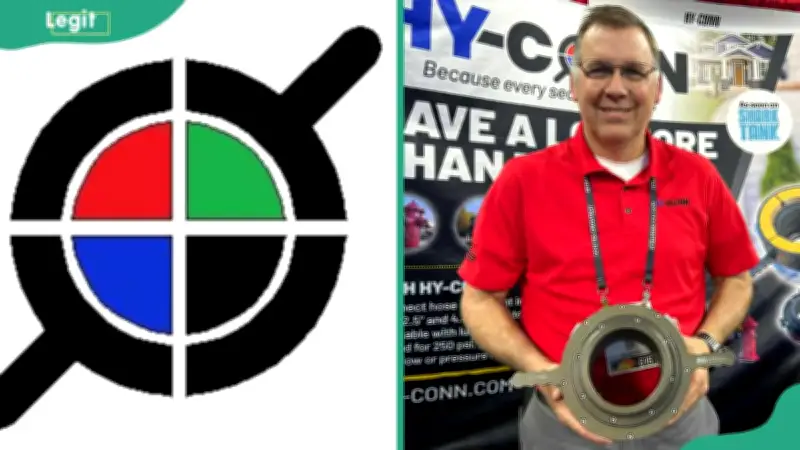
Hy-Conn, a revolutionary technology for manufacturing fire hose hardware, provides fast connectors for fire hydrants and hoses. The company gained popularity in 2024 after its founder made a captivating pitch to investors on Shark Tank. The Shark Tank pitch for Hy-Conn remains one of the most memorable in the show's history, but the most fascinating details happened entirely off-camera.
Key Takeaways
- Hy-Conn’s founder, Jeff Stroope, appeared on Shark Tank during its second season.
- His invention attracted three offers from three sharks, with Mark Cuban offering $1.25 million.
- At the end of the 12-minute pitch, Jeff went with Mark's offer.
- The deal between Hy-Conn and Mark collapsed over licensing disagreements.
What Happened to Hy-Conn After Shark Tank?
Hy-Conn’s founder, Jeff Stroope, kept the business independently owned and American-made in Arkansas after walking away from Shark Tank investor Mark Cuban's offer to buy the company. After nearly a decade of stagnation, Hy-Conn has experienced a massive resurgence. Stroope pivoted the company's business model, brought manufacturing back home, and successfully relaunched the brand. Without capital, Jeff struggled to manufacture the parts needed to fulfill large orders. He eventually took on a new investment partner, 101 Ventures, but scaling the mainstream consumer "garden hose" product line proved too difficult without retail distribution networks. To make ends meet, Stroope kept Hy-Conn open as a side venture while working full-time as a tool and die shop manager at an ammunition factory in Arkansas. Instead of chasing everyday homeowners, Hy-Conn now focuses strictly on commercial and government contracts, supplying city utilities, industrial plants, military bases, agricultural projects, and fire departments.
While originally designed for firefighting and heavy municipal use, the company has expanded its line to include the HoseShark and home/garden editions. The Hy-Conn Home Edition is a quick-connect attachment that allows you to effortlessly attach and detach garden hoses, sprinklers, or pressure washers to your spigots in seconds. Staying true to Stroope's original vision, all quick-connect adapters are manufactured entirely in-house at their facility in Cabot, Arkansas. According to the official Hy-Conn website, the facility runs high-end CNC machines around the clock, utilizing robotic automation to keep up with production demand.
Insights into Hy-Conn's Shark Tank Pitch
The original Shark Tank agreement between Mark Cuban and Hy-Conn founder Jeff Stroope was one of the largest and most dramatic buyouts in the early seasons of the show. In his pitch, Stroope demonstrated that the Hy-Conn hose connector's performance would save at least eight seconds of a standard hose connector connection process and asked for $500,000 in exchange for a 40% equity stake. Two sharks, Barbara Corcoran and Daymond John, fell out of the race. Daymond John argued that the industry did not believe in the Hy-Conn hose connector that went for at least $7,000 per unit. On the other hand, Barbara Corcoran was concerned about fire departments having budgets for such purchases. Mark Cuban agreed to purchase 100% ownership of the company for $1.25 million, a 7.5% royalty on all future sales for Stroope, and a guaranteed 3-year employment contract for Stroope with an annual salary of $100,000 during those three years. Mark Cuban's offer was countered by Kevin O'Leary and Robert Herjavec, who later opted out of the agreement. Kevin O'Leary's offer included $500,000 for 100% of the prototype Hy-Conn garden hose connectors, with a 3% royalty in perpetuity, leaving Stroope with full ownership of the lucrative industrial/firefighter side of the business. After season 2 of Shark Tank, the deal began dying because Stroope had second thoughts about working with Cuban.
Why Did Hy-Conn Fail?
Hy-Conn ultimately failed to scale and reach widespread market dominance because its Shark Tank deal with Mark Cuban collapsed during post-show negotiations. In a now-deleted Facebook post, Stroope reflected on the post-show negotiations, giving reasons for the deal's failure. He said: "In my opinion, and with all due respect, during the recording of the show Mark, let his 'ego' overload the reality of what he would do. After the cameras were off, he realized he didn't want to come up with the money." Jeff added: "I do not have any anger or bad feelings toward Mark Cuban. This is a part of the business that I have to get through. As it was said on Shark Tank by Robert Herjavec, never disrespect money." Reflecting on the disaster with Cuban, Stroope openly admitted in a public statement: "A lot of people have asked if I wish I would have gone with Kevin O'Leary. The answer is I wish I would have gone with Kevin or Robert. However, when on Shark Tank, you don't get a do-over."
Did Mark Cuban Buy Hy-Conn?
Mark Cuban never bought Hy-Conn because the deal fell through. Hy-Conn's founder, Jeff Stroope, wanted to maintain strict control over his invention and keep the product manufactured completely in-house in the United States. Unwilling to change the core terms, Cuban walked away, and Hy-Conn retained full ownership of its patents.
What Did Mark Cuban Do with Hy-Conn?
If Mark Cuban's offer to purchase Hy-Conn had gone through as originally agreed on Shark Tank, Mark planned to turn Hy-Conn into a licensing company. He wanted to license the quick-connect hose design to another company to reduce manufacturing costs and maximize royalties. Cuban planned to outsource or license the connector designs to larger manufacturers rather than build and scale in-house production. The strategy would heavily emphasize the home garden hose adapter to generate high-volume royalty revenue, rather than focusing exclusively on the professional fire hose and hydrant market. With the transition to a licensing model, Hy-Conn creator Jeff Stroope would no longer have been needed to run daily operations, which ultimately led to the breakdown of the deal.
Is Hy-Conn Still in Business?
As per Jeff Stroope's LinkedIn profile, Hy-Conn is still pursuing its goals of designing innovative hydrant systems. To protect quality control, all parts are strictly manufactured, machined, and assembled at their private Arkansas facility. From the company's website, Hy-Conn focuses exclusively on direct industrial, municipal, and commercial sales through authorized distributors. Commercial entities, industrial plants, and city utilities must contact Hy-Conn directly to secure pricing and fulfill orders. Products are distributed to fire departments through partnerships with specialized emergency outfitters, such as Atlantic Emergency Solutions. You cannot purchase Hy-Conn industrial and firefighting products on standard online storefronts or retail shelves, though you can purchase their home and consumer editions directly from them at the Hy-Conn Store.
Where Is Hy-Conn Now?
Hy-Conn is currently fully operational, in active production, and based out of its facility in Cabot, Arkansas. If you are looking to purchase equipment, products cannot be bought directly online; inquiries and orders must be placed through the official Hy-Conn Contact Page or via their vendor network.
How Much Is Hy-Conn Worth Today?
According to NerdWallet and BTCC Academy, Hy-Conn has an alleged net worth of $5 million. The company has a market reach across the United States, Canada, and Costa Rica.
What Is Hy-Conn’s Revenue?
Hy-Conn is a small private enterprise generating less than $5 million in annual revenue. Following its appearance on Shark Tank, the company grew its early sales to roughly $600,000 to $1 million within a few years. While official, audited financial reports are scarce for the private entity, market researchers like ZoomInfo estimate Hy-Conn's annual revenue at less than $5 million.
What Is Jeff Stroope’s Net Worth?
Jeff Stroope’s exact net worth is not publicly disclosed, as his company, Hy-Conn, is a private entity. However, financial reports from his business ventures—most notably his appearance on Shark Tank—indicate his net worth is estimated to be in the low millions.
What Is Hy-Conn?
Hy-Conn is a patented quick-connect fitting device that allows firefighters, industrial workers, and everyday users to instantly attach hoses to fire hydrants or water spigots. The device gained national attention in 2012 when Stroope appeared on the TV show Shark Tank. Invented by volunteer firefighter and CNC machinist Jeff Stroope, the tool aims to eliminate the slow, traditional threading process, allowing a secure connection in just three seconds and a release in one second.
Who Is the Hy-Conn Owner?
The American innovator Jeff Stroope is the founder and president of Hy-Conn. For more than 25 years, Stroope worked as the captain of the fire brigade and the maintenance supervisor while developing Hy-Conn. In 2011, he appeared before Kevin O'Leary, Barbara Corcoran, Daymond John, Robert Herjavec, and Mark Cuban on ABC Network's Shark Tank.
How Does Hy-Conn Work?
The Hy-Conn hose connector works by replacing slow, threaded hose connections with a fast, threadless click-and-lock mechanism. It eliminates the need to manually twist and screw hoses onto faucets or fire hydrants. You screw the permanent Hy-Conn adapter onto your water source (like a hydrant or outdoor spigot) once. A matching adapter screws onto your hose end. To connect, you push the hose adapter straight into the water source adapter. Internal spring-loaded locking jaws or levers snap shut instantly to hold it in place. To disconnect, you pull back on the outer sleeve or release handles. The locking mechanism retracts, allowing the hose to pop right off. Traditional fire hoses take up to 30 seconds of precise spinning to connect to a hydrant. Meanwhile, Hy-Conn connects in 3 seconds or less without tools, saving critical time and reducing delays during a fire. In high-stress situations, firefighters can easily cross-thread traditional metal fittings, ruining the connection. Hy-Conn also removes threads from the equation entirely. The internal rubber O-rings utilize the water pressure itself to expand and create a watertight seal that gets tighter as pressure increases.
Expert Opinions on Hy-Conn Technology
Hy-Conn technology is highly praised by industry experts for its innovation and life-saving potential. Firefighters and equipment reviewers commend the tool-free, rapid-connection system that locks onto hydrants in under 3 seconds. Some notable expert opinions are: independent testing confirms the precision-engineered adapter performs remarkably under extreme stress, withstanding pressures up to 1000 psi and passing life-cycle testing over 1000 uses. Fire service professionals rate Hy-Conn highly because it eliminates the need to manually thread heavy hoses or use large wrenches in high-stress, emergency situations. Products derived from this design—such as the Hose Shark—are highly rated by homeowners and DIYers for removing the frustration of cross-threading or twisting garden hoses.
Facts About Hy-Conn's Shark Tank Deal
- During the initial pitch, Kevin O'Leary made a highly competitive counteroffer against Mark Cuban.
- Stroope deeply regretted not choosing Kevin O'Leary.
- Hy-Conn and Mark Cuban's failed deal stalled the company for over a decade because other venture firms became wary of the company's valuation.
- Hy-Conn's founder, Jeff Stroope, publicly maintained that he had no anger or bad feelings towards Shark Tank's Mark Cuban despite the dramatic fallout between them. He recognized it as just a harsh reality of business and the entertainment industry.