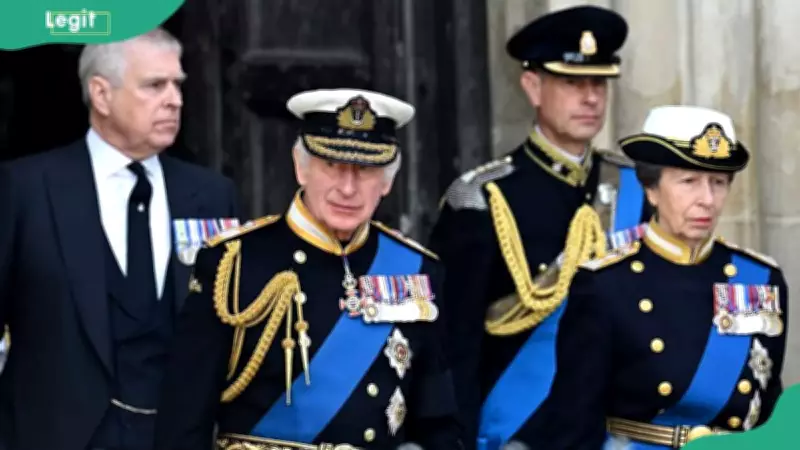
King Charles III's Siblings: The Royal Support System Beyond the Crown
While King Charles III holds the British throne, his three siblings - Princess Anne, Prince Andrew, and Prince Edward - form a crucial support network that brings diverse strengths and experiences to the modern monarchy. Each royal sibling has carved out distinct roles that contribute to the institution's stability and public engagement.
The Royal Trio: Supporting the Crown
King Charles III, born on 14 November 1948, ascended to the throne following the passing of Queen Elizabeth II. As the eldest son, he inherited the crown, but his three younger siblings continue to play significant roles within the royal framework. Despite varying public profiles, each sibling maintains specific responsibilities that support the monarchy's ongoing work and public presence.
Princess Anne: The Pillar of Royal Service
Princess Anne, born on 15 August 1950, has established herself as one of the most dedicated working royals. Known as the hardest-working member of the royal family, she consistently completes hundreds of official engagements annually. Beyond her ceremonial duties, Princess Anne serves as a trusted advisor to King Charles III, providing valuable insight and support.
Her athletic achievements remain particularly noteworthy. In 1976, she made history as the first British royal to compete in the Olympic Games, participating in equestrian events at the Montreal Olympics. This passion for sports earned her European gold medals and a lifelong position on the Olympic Committee.
Princess Anne's charitable work spans over five decades, with particular dedication to Save the Children and numerous other organizations. Married to Sir Timothy Laurence since 1992, she manages her Gatcombe Park estate while balancing her extensive royal responsibilities.
Prince Andrew: Navigating Royal Controversy
Prince Andrew, born on 19 February 1960, represents a more complex chapter in royal history. Once celebrated as a war hero for his service as a Navy helicopter pilot during the Falklands War, his reputation underwent significant transformation following associations with financier Jeffrey Epstein.
In October 2025, King Charles formally stripped Prince Andrew of his royal title, His Royal Highness, Duke of York. This decision followed years of controversy and public pressure regarding Andrew's connections to Epstein. The royal had previously stepped back from public duties in November 2019, acknowledging that the situation had become "a major disruption" to the royal family's work.
Despite denying allegations made by Virginia Giuffre regarding sexual assault, Prince Andrew's public role has been substantially reduced. As of early 2026, he remains a sidelined figure within the monarchy, currently in the process of relocating from Royal Lodge in Windsor to Marsh Farm on the Sandringham Estate.
Prince Edward: The Duke of Dedicated Service
Prince Edward, born on 10 March 1964, represents the monarchy's commitment to youth development and cultural engagement. Initially pursuing a career in television production after studying at Cambridge University, Edward founded Ardent Productions before transitioning to full-time royal duties in 2002.
Today, he focuses primarily on youth development through his leadership of the Duke of Edinburgh International Award Foundation. This prestigious program encourages young people worldwide to develop skills, confidence, and resilience through challenging activities.
Prince Edward also oversees numerous charities focused on arts, sports, and Commonwealth initiatives. As a Councillor of State, he provides essential administrative support to King Charles III, helping manage the monarch's demanding schedule. Married to Sophie Rhys-Jones since 1999, Edward maintains a stable family life while fulfilling his royal obligations.
Age Dynamics Within the Royal Siblings
The age differences among King Charles and his siblings reflect their varying life experiences and contributions to the monarchy:
- King Charles III: Born 14 November 1948 (77 years as of February 2026)
- Princess Anne: Born 15 August 1950 (75 years as of February 2026)
- Prince Andrew: Born 19 February 1960 (65 years as of February 2026)
- Prince Edward: Born 10 March 1964 (61 years as of February 2026)
These age gaps - two years between Charles and Anne, twelve years between Charles and Andrew, and sixteen years between Charles and Edward - have influenced their respective roles and relationships within the royal family structure.
The Royal Family's Evolving Dynamics
The current configuration of King Charles III's siblings reflects both continuity and change within the British monarchy. Princess Anne and Prince Edward continue as full-time working royals, providing consistent support and public engagement. Prince Andrew's reduced role demonstrates how personal controversies can impact royal standing, even among close family members.
Together, these siblings represent different aspects of modern royalty - from dedicated public service to navigating personal challenges while maintaining institutional stability. Their collective presence supports King Charles III's vision for a monarchy that remains relevant, responsible, and responsive to contemporary expectations while honoring traditional values.
As the royal family continues to evolve, the roles of King Charles's siblings will likely adapt to meet changing public expectations and institutional needs, ensuring the monarchy's continued relevance in the twenty-first century.