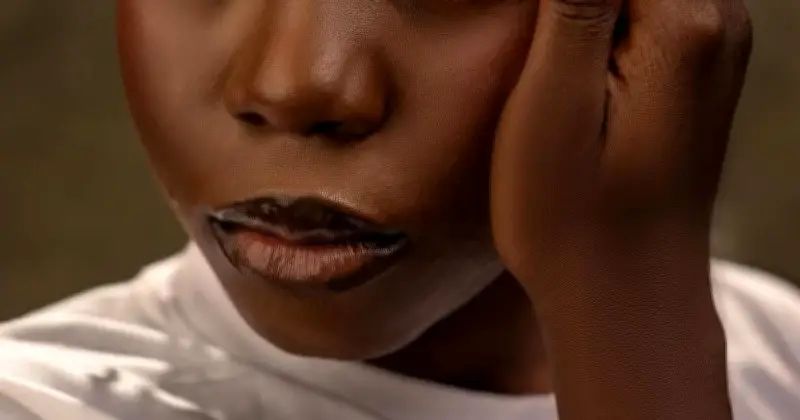
Blessing Opeyemi Oduola, a Nigerian woman living with vitiligo, has disclosed that her former boyfriend ended their relationship shortly after she developed the skin condition, attributing the breakup to changes in her appearance. In an interview with Punch Newspaper, she detailed the physical and emotional challenges of vitiligo, the stigma surrounding it in Nigeria, and her path to embracing her condition.
Relationship breakdown after vitiligo diagnosis
Blessing stated that she and her boyfriend officially began dating in January 2024, but the relationship soured within months. She said, 'My former boyfriend left me because of vitiligo. I felt he left because of vitiligo.' Instead of a direct explanation, he became distant. 'He just stopped talking to me and was giving me a lot of body languages,' she recalled. When she pressed for answers, he avoided clarity. Eventually, he ended things by saying 'he's not feeling the vibe again.'
Onset of vitiligo during NYSC preparation
The condition first appeared in 2024 while Blessing was preparing for her Passing Out Parade (POP) for the National Youth Service Corps (NYSC). What seemed like a minor scalp injury later developed into white patches. Initially, she suspected her hairstylist or makeup artist, but doctors later diagnosed vitiligo as an autoimmune disorder. 'I thought it was from salon tools or cosmetics,' she admitted, before the medical confirmation after months of uncertainty.
Emotional stress worsened the condition
The heartbreak compounded her struggle to accept the diagnosis. She constantly covered her skin with jeans, round-neck tops, and scarves to avoid questions. The emotional pain, she said, accelerated the spread of vitiligo. 'While I initially responded well to treatment and my skin started repigmenting, the stress I experienced caused the vitiligo to spread much faster,' she explained. Eventually, she stopped medication due to lack of improvement despite financial investment.
Misconceptions about vitiligo in Nigeria
Blessing debunked common myths linking vitiligo to curses, deities, or fire accidents. 'A lot of people have the misconception that it's caused by a deity called Obatala,' she said, noting that some have spent money on traditional rituals without results. 'I've even seen somebody that said he has gone to Kogi, spent money to appease the god... the vitiligo is still there.' She emphasized that vitiligo is not hereditary in the way many believe but is an autoimmune condition where the immune system attacks melanocytes, the pigment-producing cells.
A new chapter: acceptance and advocacy
Despite the past, Blessing has found love again. 'I have a new boyfriend, but he does not have issues with my vitiligo because he sees me before seeing my skin condition,' she shared. She has stopped hiding and become an advocate. 'I would not stop living. I will not hide. I will not shrink. I would keep making awareness,' she declared. Medical experts describe vitiligo as a chronic autoimmune condition that causes skin pigment loss. Though not contagious or life-threatening, those affected often face discrimination and mental health challenges due to societal stigma.