South Africa's justice minister has revealed that a local artist lost all her performance bookings across Africa due to backlash linked to the country's migration and xenophobia crisis. The admission comes amid growing criticism of anti-migrant violence that has displaced thousands of foreign nationals.
Minister confirms impact on arts sector
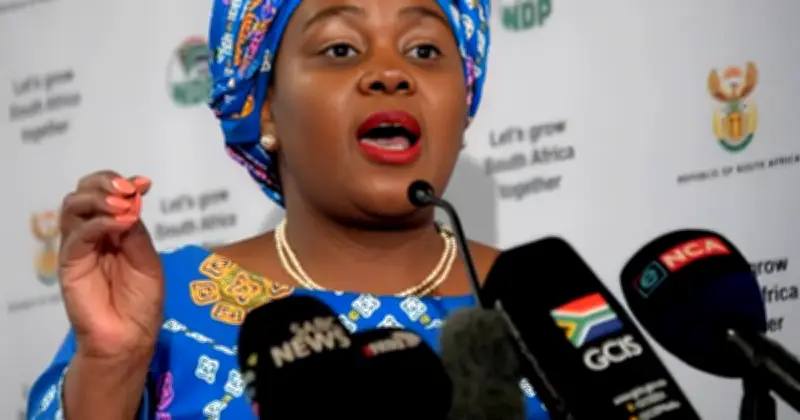
Mmamoloko Kubayi, who chairs the Inter-Ministerial Committee on irregular migration, made the disclosure during a briefing in Pretoria on Sunday. She acknowledged that the backlash linked to anti-migrant tensions was beginning to damage Brand South Africa in measurable ways. The artist was not named, but the minister described the situation as an income loss for a South African citizen, framing the conversation from an economic perspective.
Kubayi urged communities to reject vigilantism, warning that attacks on foreign nationals risked spilling over to South African citizens who share similar languages or physical appearances, threatening the country's internal social cohesion as much as its external reputation.
Background of the crisis
The crisis has been building since April 2026. Anti-immigrant threats and attacks have displaced thousands of foreign nationals. More than 3,000 Malawians, including hundreds of children, took refuge in an open field in Durban after fleeing violence. Nigeria repatriated a first group of over 260 nationals and planned further evacuations, with Ghana, Mozambique and Malawi carrying out similar operations.
Home Affairs Minister Leon Schreiber revealed that South Africa has only 832 home affairs inspectors, 56 of whom were deployed to assist with the repatriation of thousands of Malawians sheltering in Durban, illustrating the scale of the challenge relative to available resources. Over 40,000 undocumented migrants have been arrested since the start of the year, and more than 2,000 repatriated.
Economic consequences
Kubayi used the briefing to push back against the characterisation of South Africans as xenophobic, while acknowledging that the perception had taken root internationally and was causing real damage. South African businesses operating on the continent were facing backlash, and the arts sector, where many artists depend on continental touring as a primary income stream, was now feeling the pressure directly.
The 2026 wave of anti-migrant sentiment has been linked to organised online networks that have been developing for at least six years, with analysts describing the current cycle not as a spontaneous eruption but as the latest phase of a coordinated political narrative. For South African artists trying to work across the continent, the consequences of that narrative are now concrete and financial.