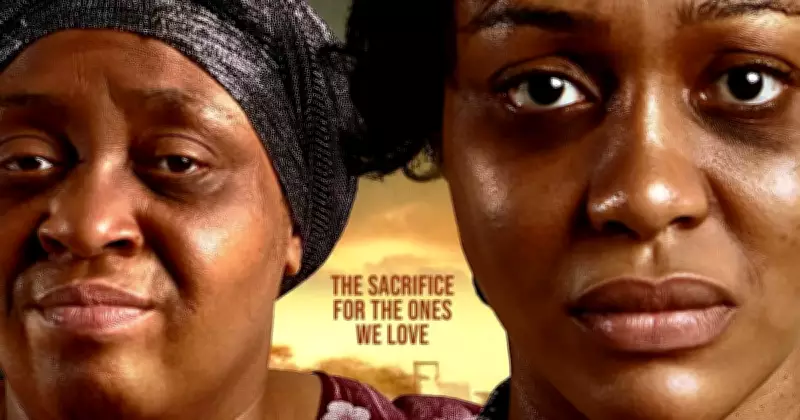
Is 'black tax' quietly breaking first-born daughters? That is the uncomfortable question Uche Montana throws at viewers in her trending YouTube film Monica, and honestly, it hits hard because it feels too real. The Nollywood actress and producer, whose full name is Uche Frances Nwaefuna, tells a deeply emotional story through the character Monica, a first daughter carrying the weight of her entire family. From the very start, you see her routine: helping her mother with business, preparing her younger siblings for school, then heading to her apprenticeship. It is exhausting just watching it, but she does it all with quiet strength.
For the first stretch of the film, Monica's sacrifices look almost noble. She gives up her food, her time, even her personal dreams, just so everyone else can be okay. But slowly, that 'good daughter' narrative begins to crack. Monica has become a digital phenomenon, with millions of viewers seeing their own lives reflected in its story of family burden and sacrifice.
The Weight of Family Expectations
What starts as love and responsibility turns into something heavier: pressure, exploitation, and emotional manipulation, especially from her mother. The film does not rush this transition; it builds it gradually, and that is what makes it unsettling. At some point, you begin to question everything. Why is the mother so harsh? Why deny her daughter a university education? Why ignore signs that she might be vulnerable to exploitation? The emotional tension keeps rising, and viewers are left frustrated, especially as Monica continues to endure it all without pushing back.
Uche Montana herself captured the essence of the story in a post: 'Home should protect you. A mother should shield you. But I guess the movie MONICA is what happens when the danger is inside the home?' That line pretty much sums up the entire film.
Emotional Abuse and Betrayal
There were moments it almost felt like the mother was not even her biological parent, that is how intense the treatment was. And just when you think Monica might finally break free, the story takes another turn, showing betrayal even from the siblings she sacrificed everything for.
Critique and Reception
Still, the film is not perfect. The timeline feels a bit off, trying to compress what looks like nearly two decades into one flow without clearly showing growth or change in setting, except for the house. Also, the story stays heavily in one emotional lane. Many viewers might have wanted Monica to snap, to resist, to choose herself at some point. But maybe that is the point. Not every real-life Monica gets that moment.
Despite those flaws, Monica stands out because it reflects a reality many people do not talk about openly, especially in African homes, where first-born daughters often carry financial and emotional responsibilities, sometimes at the cost of their own futures. And the audience response? Massive. The first film has pulled in over 18 million views within a month of its release on YouTube. Its sequel, Monica 2, released on May 2, 2026, is already making waves, racking up over 4.4 million views in just 15 hours and nearing 9 million views shortly after. That kind of traction shows just how much the story resonates. According to reports, the original film crossed 13 million views within just two weeks of its March 7 premiere, averaging close to one million views daily, an impressive run for a digital-first Nollywood release.
Shift to Digital Platforms
This also highlights a bigger shift happening in Nollywood. More filmmakers, including Uche Montana, are turning to YouTube and digital platforms to reach audiences directly, cutting out traditional cinema barriers and gaining instant feedback. From her early days in Poison Ivy to her breakout role in the Africa Magic series Hush (2016–2017), Uche Montana has steadily built a reputation for emotionally intense roles. Now, as both a filmmaker and storyteller, she is pushing deeper, tackling themes that spark conversation. In the end, Monica is not just a movie; it is a mirror. One that forces you to ask: where does responsibility end, and self-neglect begin?