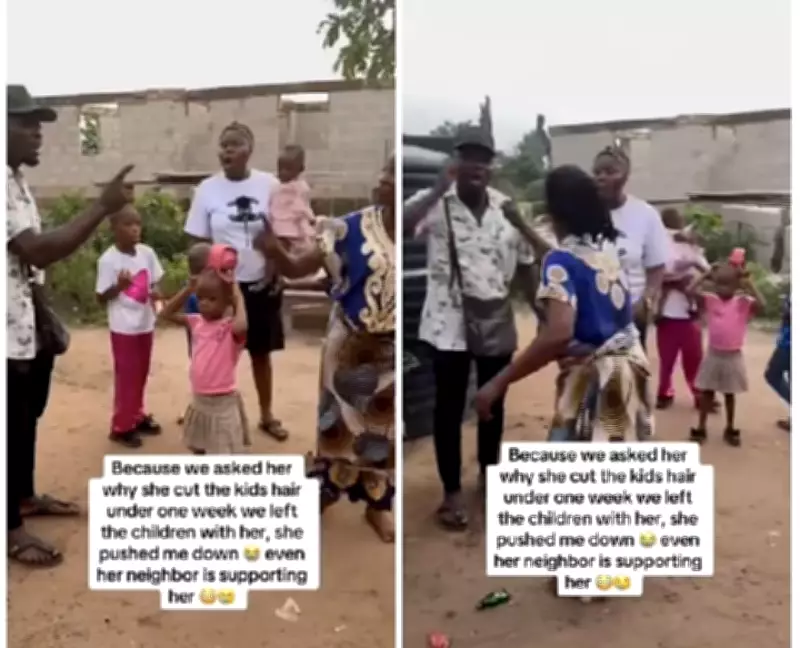
Woman Accuses Sister-in-Law of Shaving Her Four Children's Hair Without Permission
A Nigerian woman has taken to social media to publicly call out her sister-in-law after she allegedly shaved the hair of her four children without informing her or her husband. The incident, which has sparked widespread discussion online, reportedly occurred just one week after the children were left in the sister-in-law's care.
Shocking Discovery and Alleged Assault
According to the woman, she was completely shocked when she returned to find that all four of her kids had their hair completely shaved. "What made it more painful," she explained, "was that my sister-in-law's own children had their hair neatly platted at the same time." This stark contrast added to her distress over the unauthorized haircuts.
When the woman confronted her sister-in-law about the decision to shave the children's hair, things reportedly escalated dramatically. The woman alleged that her sister-in-law physically assaulted her during the confrontation. "She even beat me and pushed me down for questioning her," the woman claimed in her social media post, which included a video documenting the aftermath of the incident.
Social Media Outcry and Evidence
The woman shared her story on Instagram through a post that was later reposted by popular blog Linda Ikeji's official account on February 16, 2026. The video evidence accompanying the allegations has drawn significant attention from Nigerian social media users, with many expressing outrage over both the unauthorized hair shaving and the alleged physical violence.
This family dispute highlights several concerning issues:
- Boundary violations regarding children's appearance and bodily autonomy
- Potential escalation of family conflicts into physical violence
- The role of social media in airing domestic disputes publicly
- Power dynamics within extended family relationships
The woman's decision to take the matter public rather than handling it privately within the family suggests she felt traditional resolution methods had failed or were insufficient. Her allegations raise questions about consent, respect for parental authority, and appropriate conflict resolution within Nigerian family structures.