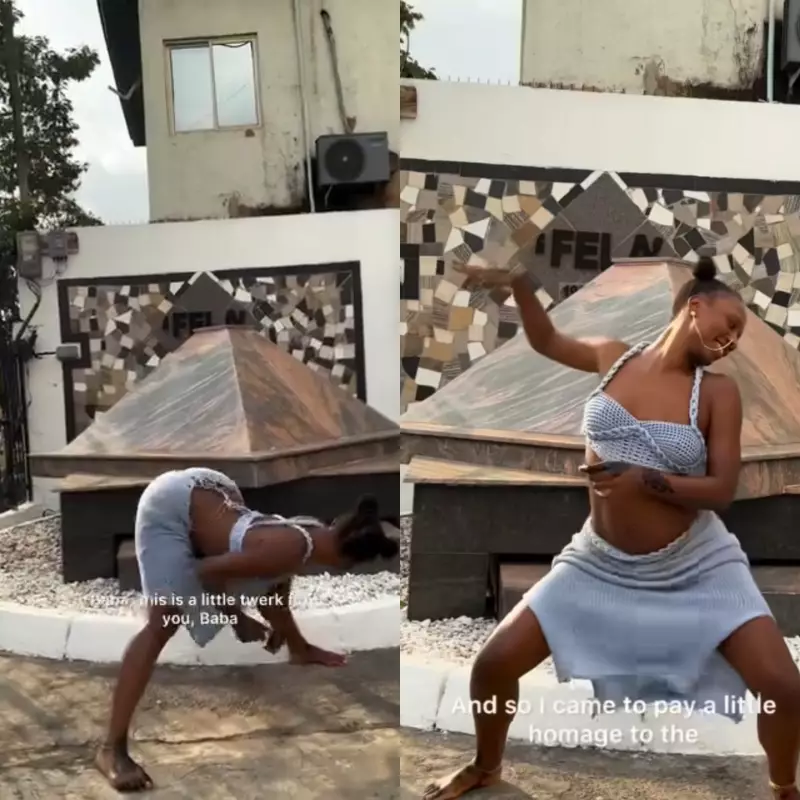
Nigerian-American dancer and singer Korra Obidi has sparked a wave of reactions after a video surfaced showing her performing a twerking dance on the grave of the legendary Afrobeat pioneer, Fela Anikulapo-Kuti.
A Controversial Visit to the Kalakuta Shrine
The incident took place during Obidi's recent visit to Nigeria from her base in the United States. On Friday, December 6, 2025, the entertainer paid a visit to the Kalakuta Republic museum and shrine in Lagos, the iconic residence and final resting place of Fela.
During her visit, she spent time with Seun Kuti, the youngest son of Fela and a renowned musician in his own right. Following this meeting, Obidi proceeded to the segment of the shrine where Fela is interred.
Twerking as a Personal 'Offering'
In a move that has divided public opinion, Korra Obidi began to dance energetically at the gravesite. The dance culminated in her twerking directly on the grave's surface.
She later explained her actions, stating that the provocative dance was her personal "offering" to the late music icon. Obidi defended her performance by asserting that Fela "enjoyed it" and that such displays were what he liked when he was alive.
Her justification references Fela's well-known, unapologetic celebration of African culture, sexuality, and freedom of expression, which often featured energetic and sensual dancing from his backup singers and dancers.
Public Reaction and Cultural Dialogue
The video, which was shared on popular blogs like Linda Ikeji's on December 6, 2025, has ignited a fierce debate online. Reactions are sharply split along generational and cultural lines.
Supporters argue that Obidi's act is in the true spirit of Fela, who championed artistic freedom and challenged societal norms. They see it as a modern, personal tribute from one performer to another.
Critics, however, have labeled the act as disrespectful and a desecration of a sacred space. They contend that while Fela appreciated dance, performing directly on his grave crosses a line of reverence for the dead, a core value in Nigerian tradition.
The event raises ongoing questions about the boundaries of tribute, the evolution of cultural expression, and how the legacy of a complex figure like Fela Kuti is interpreted by newer generations of artists.