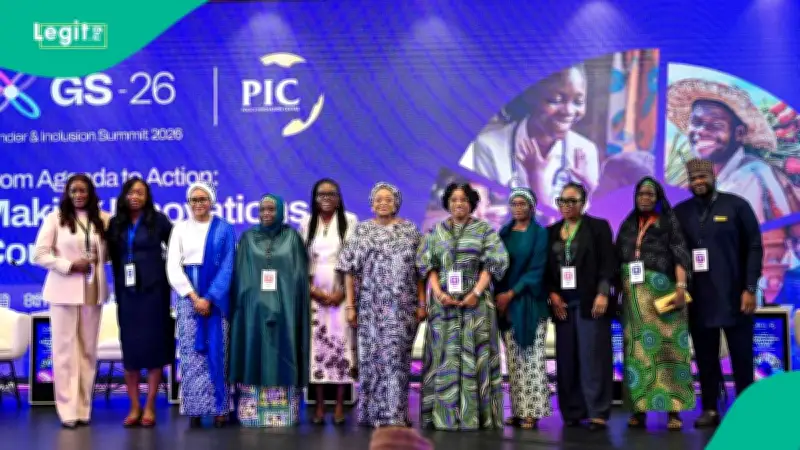
The fifth Gender and Inclusion Summit (GS26) concluded in Abuja on September 9, 2026, with stakeholders demanding that governments and development partners translate policy commitments into tangible outcomes for Nigerians at the grassroots level. The two-day event, held on September 8 and 9, was organized by the Policy Innovation Centre (PIC) under the theme "From Agenda to Action: Making Innovations Count for the Last Mile."
Keynote Address Reframes Inclusion as Development
Patrick Achi, President of the National Assembly of Côte d'Ivoire and former Prime Minister, delivered the keynote address, arguing that inclusion is fundamental to development. "Inclusion is not a social supplement to development. Inclusion is development," he said. Achi described the last mile as the point where women entrepreneurs connect to capital, farmers enter modern value chains, and citizens engage with government. "The last mile is not where development ends. It is where development becomes real," he added.
The summit brought together senior government officials, policymakers, development partners, private-sector leaders, and civil society representatives. PIC Executive Director Dr Osasuyi Dirisu challenged participants to assess whether innovations are actually reaching the communities they are designed for. "Do our solutions travel as far as the infrastructure goes, or do they stop?" she asked, identifying policy, partnership, financing, coordination, and community ownership as key factors determining whether change reaches local government, ward, and community levels.

Launches and New Research Unveiled
The summit featured the pre-launch of the Gender Legislative Agenda for Africa, the launch of the Nigerian Youth Dream Charter, and the unveiling of the SWOLE (Strengthening Women's Leadership in Academic Economics) Policy Transformation Toolkit. A major highlight was the release of findings from the Nigerian Survey on Gender Norms, Attitudes, Health and Wellbeing, described as Nigeria's first nationally representative data on the social and gender norms affecting adolescents' health.
Dr Iziaq Adekunle Salako, Minister of State for Health and Social Welfare, chaired a national dialogue tied to the findings and called on stakeholders to use the data as a foundation for a more equitable health system. "Let this dialogue be more than a conversation. Let it be a catalyst for change," he said.
Commitment to Accountability and Implementation
PIC Board Chairman Udeme Ufot announced that the organization would document the summit's outcomes in a publication called the Purple Book to support continued policy engagement and accountability. "Our task is not only to develop good ideas and make commitments, but to ensure that they are implemented, scaled and experienced in people's everyday lives," he said.
The summit closed with a renewed push for governments, institutions, and private actors to ensure that policies and investments translate into visible improvements for communities furthest from the centre of power. The Chairman of the Nigerian Economic Summit Group (NESG) also questioned whether years of commitments have actually reached the people who need them most, underscoring the summit's central theme of moving from agenda to action.