John Terry Sparks Controversy Over Burqa Ban Support in UK
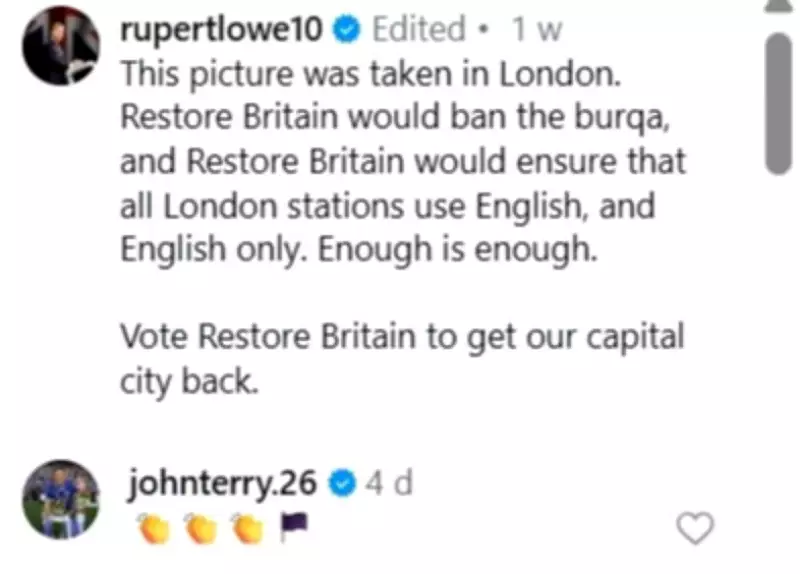
Former England captain John Terry has ignited a heated debate after appearing to endorse a proposal to ban the burqa in public spaces across Britain. The ex-Chelsea FC star reportedly responded with three clapping emojis to an Instagram post shared by Rupert Lowe, leader of the Restore Britain party, which outlined the controversial policy stance. This reaction has been widely interpreted as an endorsement, drawing significant attention and criticism from various quarters.
Details of the Controversial Proposal
The Instagram post by Rupert Lowe included a proposal to ban the burqa and require all signage at transport hubs to be in English only. It featured imagery of a woman wearing a burqa outside Whitechapel Station, alongside signage in Bengali, reflecting the local Bangladeshi community. Lowe later defended Terry, stating that the former footballer was being criticized for supporting a position he claimed reflects the views of many people in the UK.
Broader Context and Political Reactions
The issue of banning the burqa has long been contentious in the UK and Europe, with countries like France having already implemented restrictions under its secularism policies. In recent months, the debate has surfaced in UK politics, including discussions involving figures from Reform UK. However, opinions within political circles remain deeply divided, highlighting the sensitivity and complexity of the topic.
Terry has not publicly elaborated on his stance, and his representatives have not issued a formal comment, leaving his exact position unclear. This silence has only fueled further speculation and debate, with many calling for clarity on his views regarding religious and cultural freedoms in Britain.
Implications and Public Response
The controversy underscores the ongoing tensions between cultural integration and personal freedoms in modern society. Supporters of the ban argue it promotes security and social cohesion, while opponents view it as an infringement on religious rights and an expression of intolerance. As a high-profile figure, Terry's apparent support has amplified the discussion, bringing it into the mainstream and sparking conversations across social media and news platforms.
This incident serves as a reminder of the powerful role celebrities can play in shaping public discourse on sensitive issues, often without uttering a single word. The fallout from Terry's actions may influence future debates on similar policies in the UK and beyond.